The fraudster who takes out a loan they never intend to repay has to make a series of decisions before the application is submitted: which email address to register with, which phone number to give, whether to hide the browser inside a virtual machine or even sit beside an elderly relative and talk them through the form. Each decision leaves a trace, and each trace surfaces at a different point in the lending funnel.
There are two ways to describe lending fraud. One is through the type of attack, like synthetic identity, loan stacking or account takeover. The other is through the evidence the attack leaves behind at every stage, from signup to repayment. Attack labels help teams describe fraud, and evidence helps them stop it. Tactics change by the month while their traces barely change, and every fraudster leaves more than one.
Key takeaways
Start With the Fundamentals of Loan Fraud
From mortgage fraud and loan stacking to synthetic identities and first-party misrepresentation, our loan fraud guide covers what each attack looks like, how it works and what it costs lenders.
The Case for Reading Signals Together
Labeling fraud types and signal-based detection are not rivals. A rule for synthetic identity fraud is, underneath, a set of signals: a young email address, no digital footprint, a thin bureau file. The problem starts when the rule is built for the textbook version of the attack and nothing else.
Real applications rarely match the textbook. A loan request can carry a stolen identity with a genuine history, a fabricated income document and an applicant being coached over the phone, all at once. A synthetic identity rule looking for a young email and an empty footprint sees an old email and a real footprint, so it passes the application, and the rule for coached fraud was never written because nobody had yet named the pattern. A rule built for one named fraud type catches only the attacks that fit its definition. Reading the signals themselves and how they relate to each other catches the attacks that don’t fit any definition yet.
The second reason to start with signals is that every fraudster leaves more than one. The device used at signup is the same device that logs in to apply. The phone number provided at account creation is the same one used to receive the payout confirmation. The address on the application matches or does not match the IP location from six months earlier. Fraud is a series of connected actions, and the evidence is connected in the same way. Reading signals in isolation throws away that connection.
How the signals reach a lender varies. One customer creates an account and applies for credit in the same session. Another opened a bank account three years ago, passed every check at the time and is only now requesting a loan. Either way, the evidence falls into the same three stages: what is known at signup, what is added at application and what the account reveals after funding.
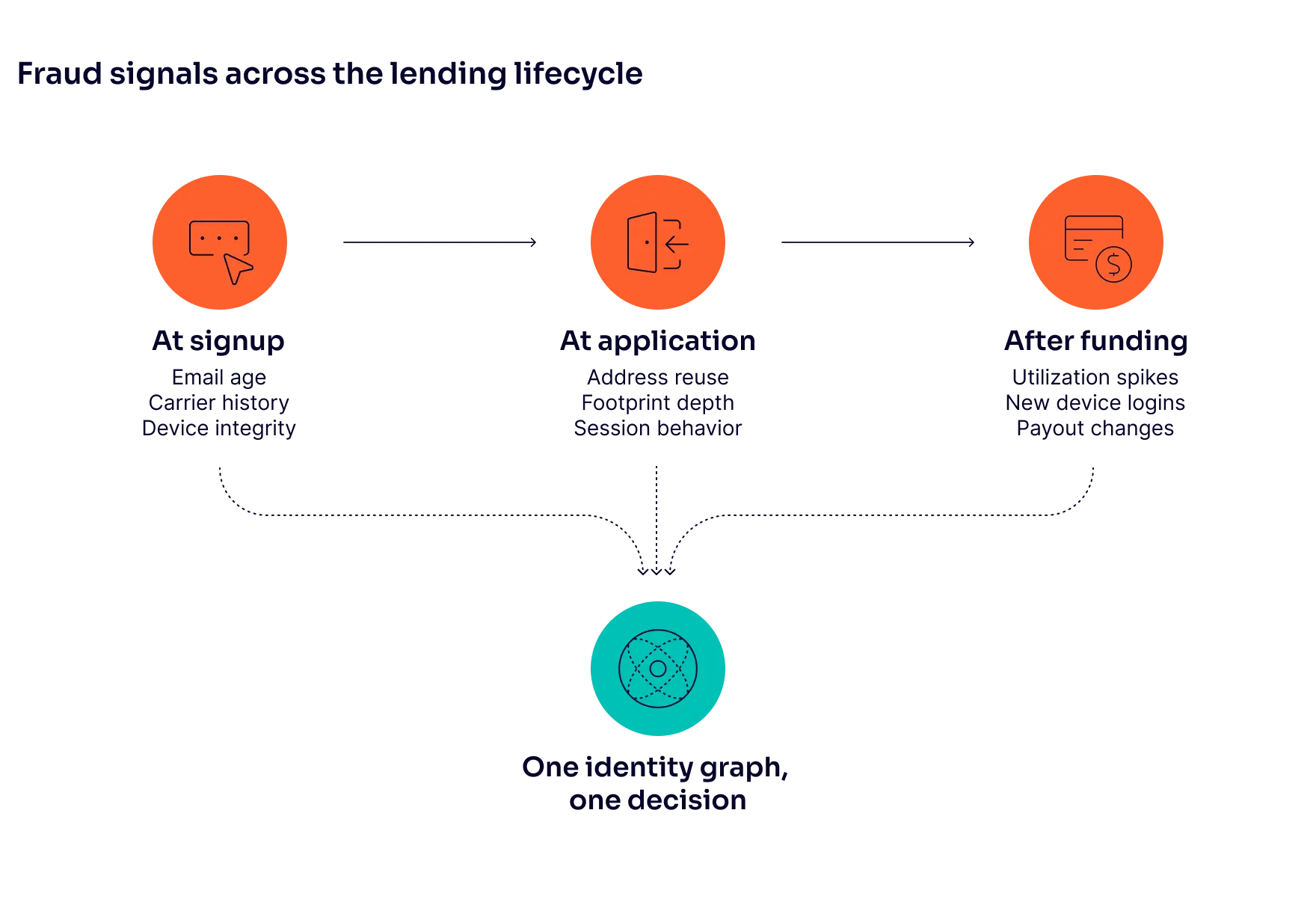
At Signup: The Signals That Fire Before Anyone Reads the Form
The richest fraud signals in lending are also the earliest available. An email address, a phone number and a device exist the moment an account is created, whether that is seconds or years before the loan application, and each carries more history than the application form will ever ask for.
The email address: history, or the lack of it
An email address created last week has no history to check, and that absence is the signal in itself. Age, domain type and presence in known data breaches together say whether an address belongs to someone who has been online for a decade or to a script that ran on Tuesday.
The breach signal is the one that surprises people: an address found in a historic data breach almost always belongs to a real person, because breaches leak real accounts. An address with no breach history, no platform registrations and a free or disposable domain is either an unusually careful individual or a fabrication. In lending, the second is far more common. Taken individually, each describes millions of legitimate people. Taken together, they describe almost none, and that combination is where a review flag earns its place.
The phone number: a biography written by carriers
Carrier data gives a phone number a biography: how long it has lived with its current carrier, whether it was recently moved to a new SIM card and how often it has hopped between networks. Eight years at one carrier suggests a settled life, even if the credit file is blank. Three ports in a month is a takeover being staged in advance. Neither number should decide anything alone, since carrier tenure is one of the easier signals to buy.
For lenders offering credit lines or wallets, where the phone becomes the recovery channel, a SIM swap within days of an application or a limit increase request is one of the sharpest signals available and a clear trigger for step-up verification. Pair it with a virtual or VoIP number, and the case for outright decline becomes hard to argue against.
The device: is anyone actually holding it?
Device intelligence answers a question no document can: is this a real machine in a real person’s hand? Anti-detect browsers, virtual machines and emulators are the tools of fraud at scale, with each leaving a fingerprint. A device that has already submitted four applications under four different names is the clearest signal of a fraud ring, and a device hash previously tied to confirmed fraud is one of the few signals that justify an automatic no. Region and language settings that contradict the device’s time zone are a quieter version of the same story.
Network data closes the loop. Using a VPN is not a crime, but a VPN exit in one country, a stated address in another and a phone carrier in a third is a story that doesn’t hold together.
One caveat applies to everything above. Fraudsters know these signals exist. They age synthetic identities onto legitimate, tenured devices, buy wholesale mobile numbers that match the applicant’s zip code and pass carrier checks as “true mobile,” and seed real bank accounts with fabricated transaction history. Individually valid data points are exactly what a well-built fake is made of. Tenure earns an applicant a lighter path, never a free one.
At Application: Reading the Form and the Person Filling It In
Once the applicant is inside the form, three new classes of signal appear: the address they give, the depth of the digital life behind their identity and the way the session itself unfolds.
The address: one location, many spellings
“Flat 4, 12 High Street” and “12 High St, Apt 4” are one address to a human and two to most systems, and fraud rings know it. Address normalization collapses all variants into a single ID, so every account tied to a physical location becomes visible in a single view. Several applications sharing a normalized address within a month is a loan stacking pattern. The same applications sharing a device or an IP range are also in a ring.
Digital footprint depth: the difference between thin-file and no-file
Presence across job boards, real estate platforms, subscription services and messaging apps is what a real adult life looks like from the outside. Its complete absence, behind an email and phone number that claim to belong to a working professional, is the synthetic identity’s signature, and it is a stronger read than tenure. Lenders see this in their own numbers. One found that applicants whose phone numbers had no WhatsApp account associated with them defaulted three times as often, and that applicants with no presence on any of the seven largest online platforms were three times as likely to miss their very first payment.
The same reading powers alternative credit scoring. A thin-file applicant with a deep footprint is a customer awaiting approval. A thin-file applicant with no footprint at all is a risk waiting to be declined. To the credit bureau, the two are indistinguishable.
Session behavior: how the form gets filled in
Every other signal examines who the applicant is. Session monitoring examines what they are doing while applying, and it is the only signal that catches coached fraud: a real person at their own device with their own identity, while someone on the phone tells them what to type. Every identity check passes. What gives it away is the behavior: long pauses between fields, values pasted rather than typed, a remote-control or screen-mirroring tool running in the background.
Bots leave the mirror image, with fields completed at metronomic intervals and no hesitation on the questions a human would stop to think about. Either pattern should put a voice or video check between the applicant and the money.
After Funding: Catching What Walked Through the Front Door
Some fraud cannot be caught at application because nothing has happened yet. The identity is real, the documents are valid and the intent is invisible. It shows itself only in what the account does next.
Credit utilization: a sudden spike after months of steady use
An account that repays flawlessly for months, earns its credit limit increases, then draws every available line in the same week and vanishes has passed every check that reads history alone. The repayment record is exemplary right up to the moment it stops, which is exactly why the final increase gets approved. Lenders call it bust-out fraud, and it defeats any check that relies solely on history.
The signal lives in the trajectory rather than any single balance: utilization climbing from 20% to 95% in a fortnight after months of stability, limit requests arriving in quick succession, cash-like transactions replacing the account’s old rhythm. Holding a limit increase when utilization has jumped sharply in a short window, and flagging a steady account that suddenly asks for two increases in a month, catches the pattern while the money is still recoverable.
Behavioral baselines: what normal looks like for this account
Every funded account establishes a baseline over time: typical transaction size, usual login device, active hours, regular counterparties. A departure from that baseline is a signal, even when each individual action would pass a static rule.
The same drift catches mule accounts, which rarely start as fakes. Most are real people paid for their ID and a selfie, after which the account changes hands. Onboarding saw a genuine person; only post-funding behavior sees the swap.
A borrower who has logged in from the same phone for a year and suddenly appears on a new device, changes the payout account and requests a transfer in one sitting has just described an account takeover in three moves. That sequence, new device plus payout change plus transfer in a single session, is a reliable trigger for step-up authentication, and one of the few post-funding rules that works across every lending product.
Turning Signals Into Decisions
A signal is only useful once it becomes a rule that approves, declines or holds an application. This translation is where most lending fraud programs go wrong, and the cause is nearly always the same: a rule that fires on a single signal and a hard threshold, blocking honest applicants and missing coordinated fraud in equal measure.
The problem is structural as much as technical. Most lending risk teams are stitching together four or five vendors with no way to correlate what each returns, so every decision leans on whichever score arrives last. Raw third-party risk scores misfire regularly, flagging good repayers as high risk, which is why a single vendor score should never carry the decision on its own.
Combination comes first. A SIM swap last week is suspicious, but a SIM swap last week on a device that has never been associated with this account before, followed by a payout detail change, is a case. Rules that fire only when several signals agree cut false positives without lowering catch rates, and they are far harder to defeat, because every extra signal is one more thing the fraudster has to fake consistently across the whole application.
Timing decides what the rule is allowed to do. At signup, a signal should route the applicant: down a frictionless path if the data looks clean, into a document check if it doesn’t. At application, once enough evidence has stacked up, a signal can justify a decline. After funding, the right move is usually a hold: pausing a limit increase or a transfer until someone has looked at it costs the lender very little if the account turns out to be genuine, while a hard decline at this stage risks losing a customer who has already been repaying.
Every rule also needs a limit that decides when it fires, and no lender should borrow that number from anyone else. The right value depends on market, product and applicant mix, and the only way to find it is to run the rule against past decisions and count what it would have caught and what it would have blocked. A rule that flags 40% of applicants is set too tightly. One that flags 2% and catches 80% of confirmed fraud is doing its job. And when a rule that used to work starts flagging more honest applicants, the fraud has moved, and the limit needs to follow.
How SEON Delivers These Signals
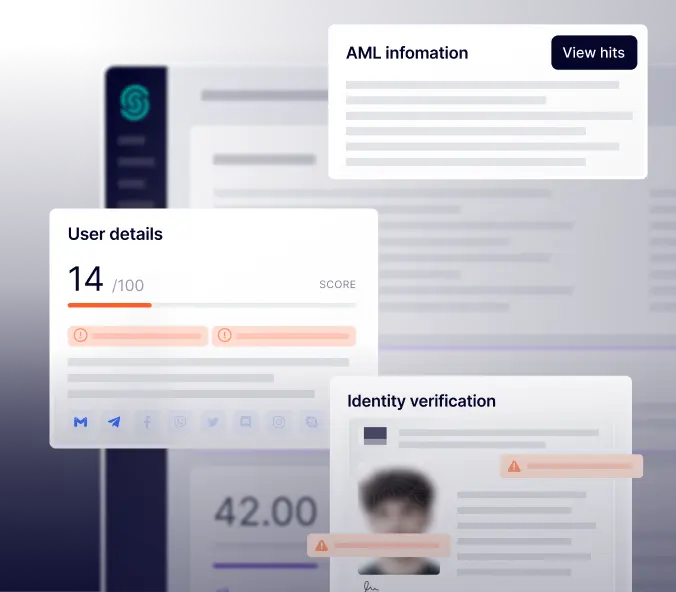
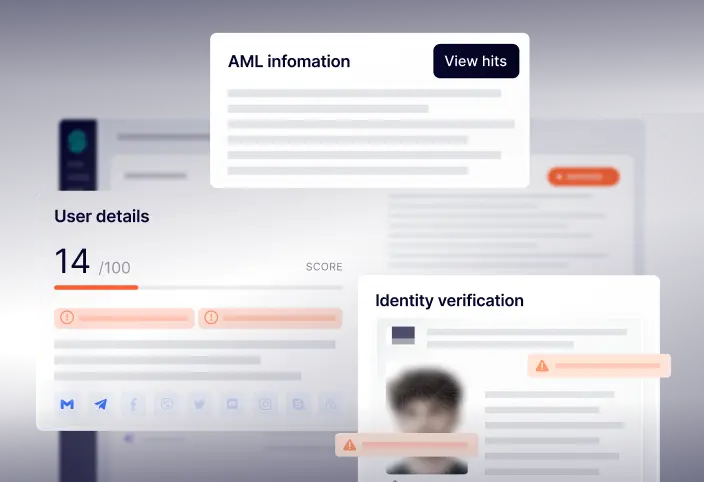
SEON delivers over 1,100 signals, from signup through repayment, in a single real-time API response. Before KYC, it reads email age and breach history, carrier and porting data for the phone number and device intelligence that flags anti-detect browsers, emulators and hardware already tied to confirmed fraud. At application, address intelligence connects accounts that share a physical location, however the address is written, digital footprint analysis runs more than 350 checks across social and digital platforms to measure the depth of the life behind an identity, and session monitoring reads how the form is being completed to catch coached applicants and bots. After funding, the same signals establish each account’s behavioral baseline, so any departure from that baseline triggers a hold before the money leaves.
None of it replaces the credit model already in place. SEON’s signals feed straight into existing scorecards and underwriting workflows alongside bureau data, supporting alternative credit scoring as much as fraud detection, and risk teams write, test and backtest their combination rules directly in the dashboard, with no engineering ticket in between.
See What Your Applicants’ Signals Already Reveal
Every applicant arrives with an email, a phone and a device long before the credit file is pulled. A SEON expert can show you what those three already reveal about your current pipeline, and where your rules are reading only one signal when they should be reading three.
Which signals detect synthetic identity fraud in lending?
Email age, presence in known data breaches, phone carrier history and digital footprint depth. A synthetic identity typically shows a recently created email with no breach history, a phone number with little carrier tenure and no registered presence on the platforms a real adult uses.
How do you detect coached fraud in a loan application?
Through session behavior rather than identity checks. Remote-access or screen-sharing software running during the application, a high ratio of pasted to typed fields, long pauses between fields and frequent tab switching are the primary indicators, since the applicant’s identity and documents are genuine.
What device signals indicate loan fraud?
Anti-detect browser use, emulator or virtual machine environments, a device hash previously linked to confirmed fraud and a single device submitting multiple applications under different identities.
Can email and phone signals be used for credit scoring as well as fraud detection?
Yes. The same signals that expose a fabricated identity, such as email age and phone carrier tenure, also evidence a genuine person with a stable history, which is why lenders use them as alternative credit data for thin-file applicants.
What is the difference between detecting fraud at application and after funding?
Application-stage detection identifies who the applicant is and how they behave during the application process. Post-funding detection reads what the account does over time, which is the only way to catch bust-out fraud and account takeover, where nothing suspicious exists until after the loan is live.