
Mule Account Detection
Stop Mule Accounts Before the Money Moves
Mule accounts pass KYC, then quietly turn your platform into a laundering channel. SEON scores live signals across sign-up, updates and transactions to flag them before funds clear.
Trusted by the World’s Most Ambitious Companies






How Mule Account Detection Works
Risk Scoring Across the Full Account Lifecycle
Every user journey event is scored as a risk signal, not just the payment, which allows mule accounts to surface before funds move.
Enrich Every Event
Every registration, update, login and transaction triggers real-time enrichment of email, phone, IP and device against 1,100+ signals.
Score Against Account History
Whitebox rules and ML models score the event against the account’s full history; risk from onboarding follows the account instead of resetting at each check.
Decide Before Funds Move
Automated thresholds approve, decline or route to review in real time before funds clear and without adding friction for genuine users.
Learn From Confirmed Mules
Confirmed mule outcomes feed back into your rules and models, sharpening every closed case and detection of the next ring.
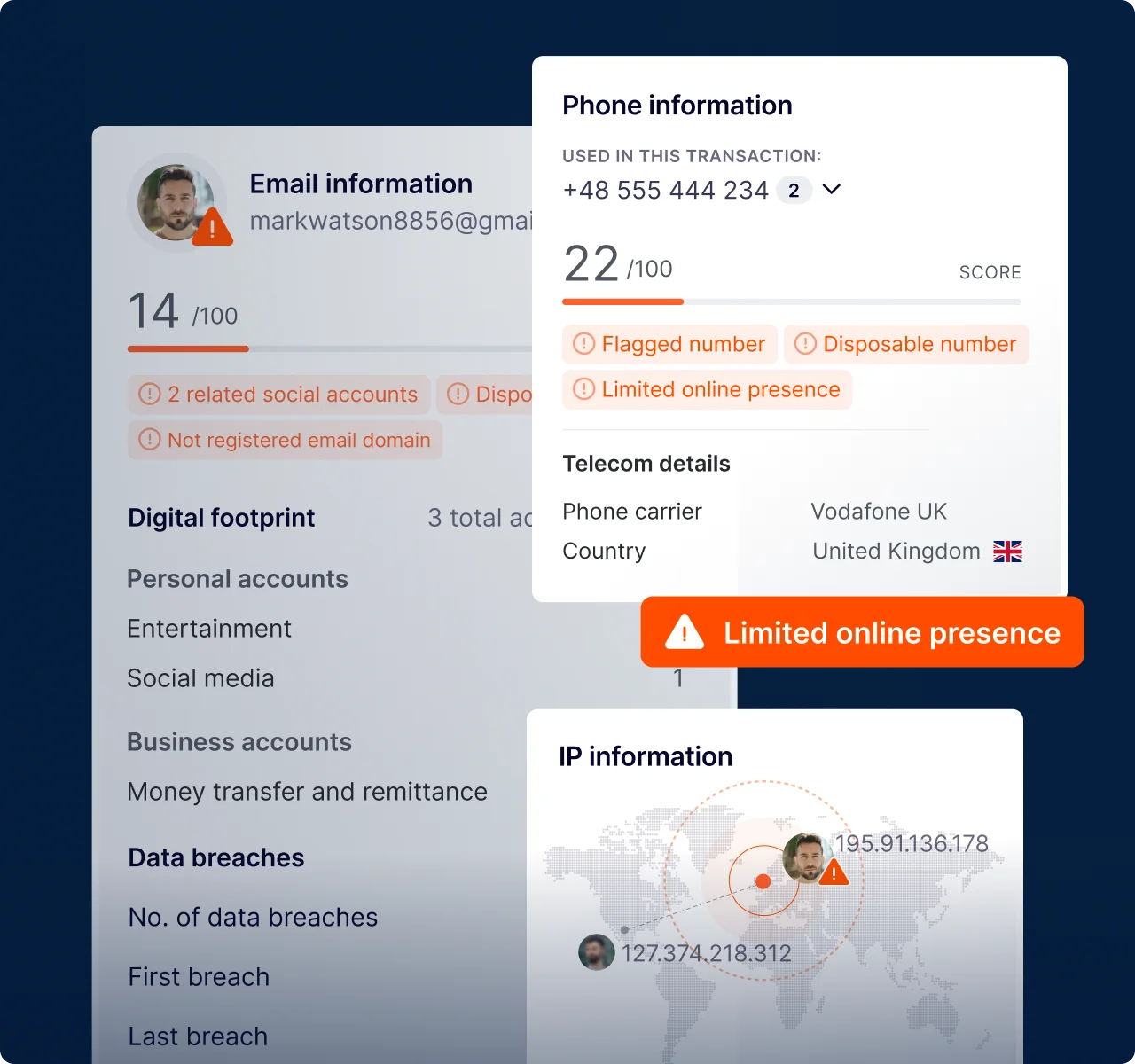
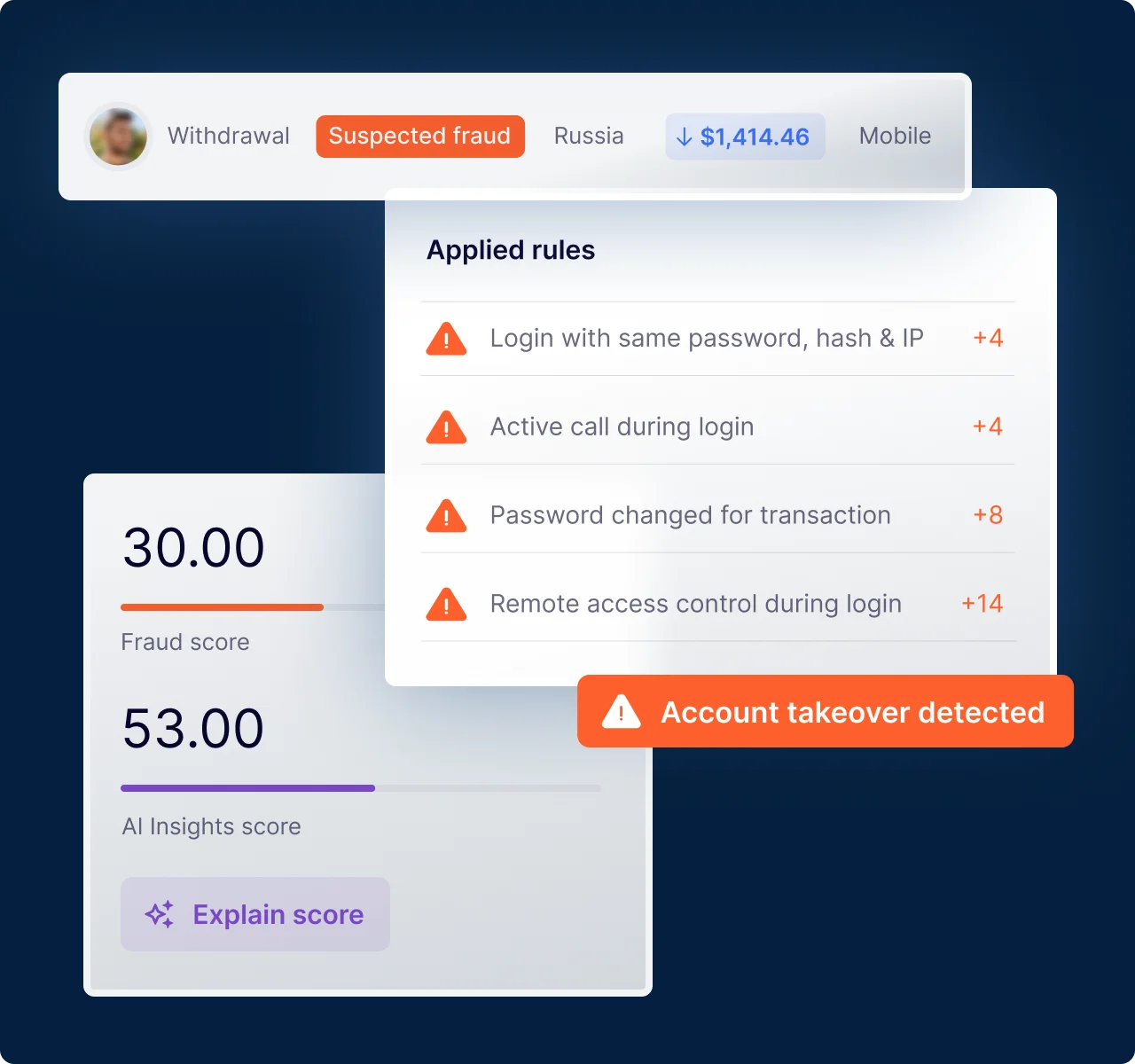
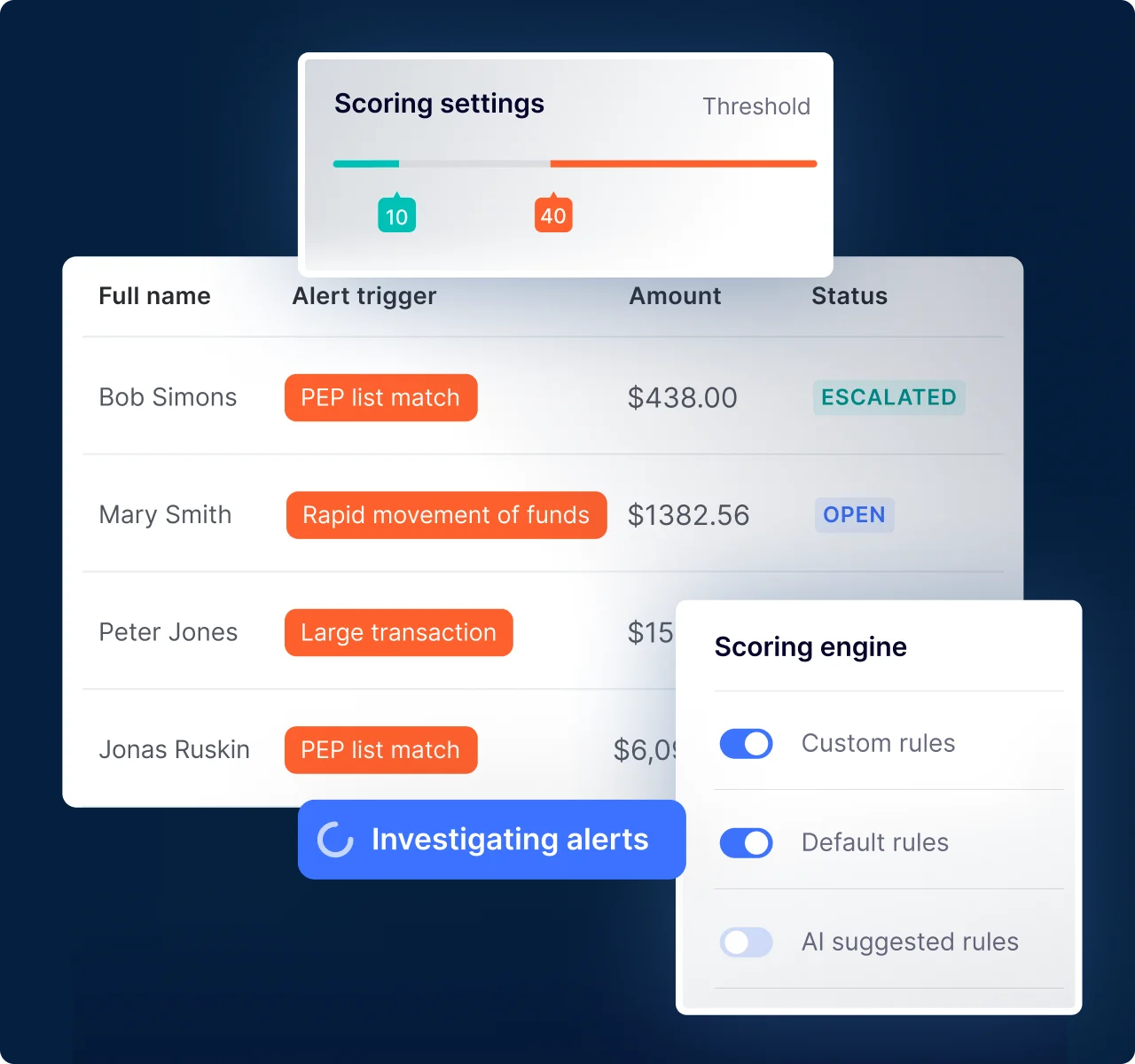
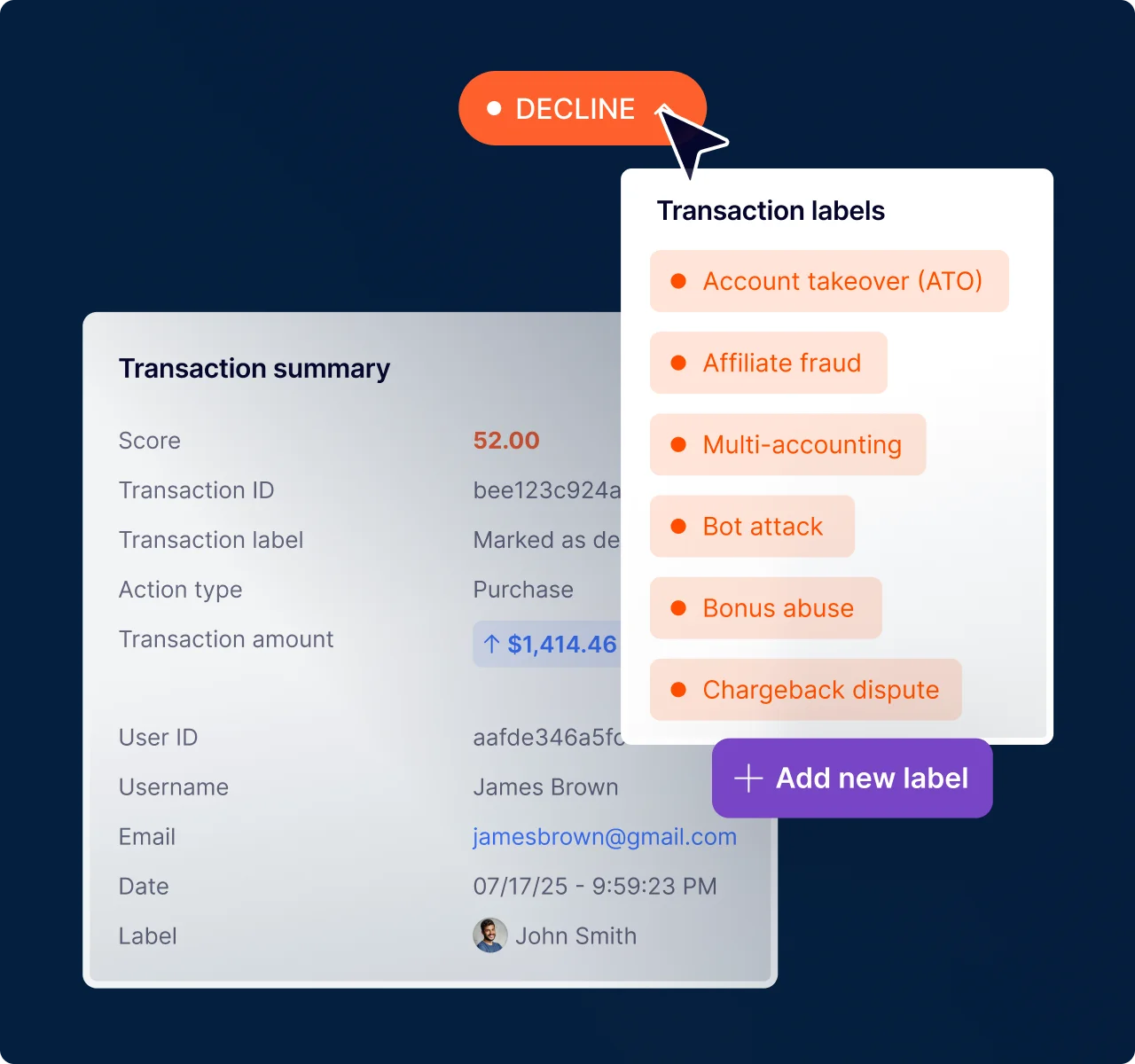
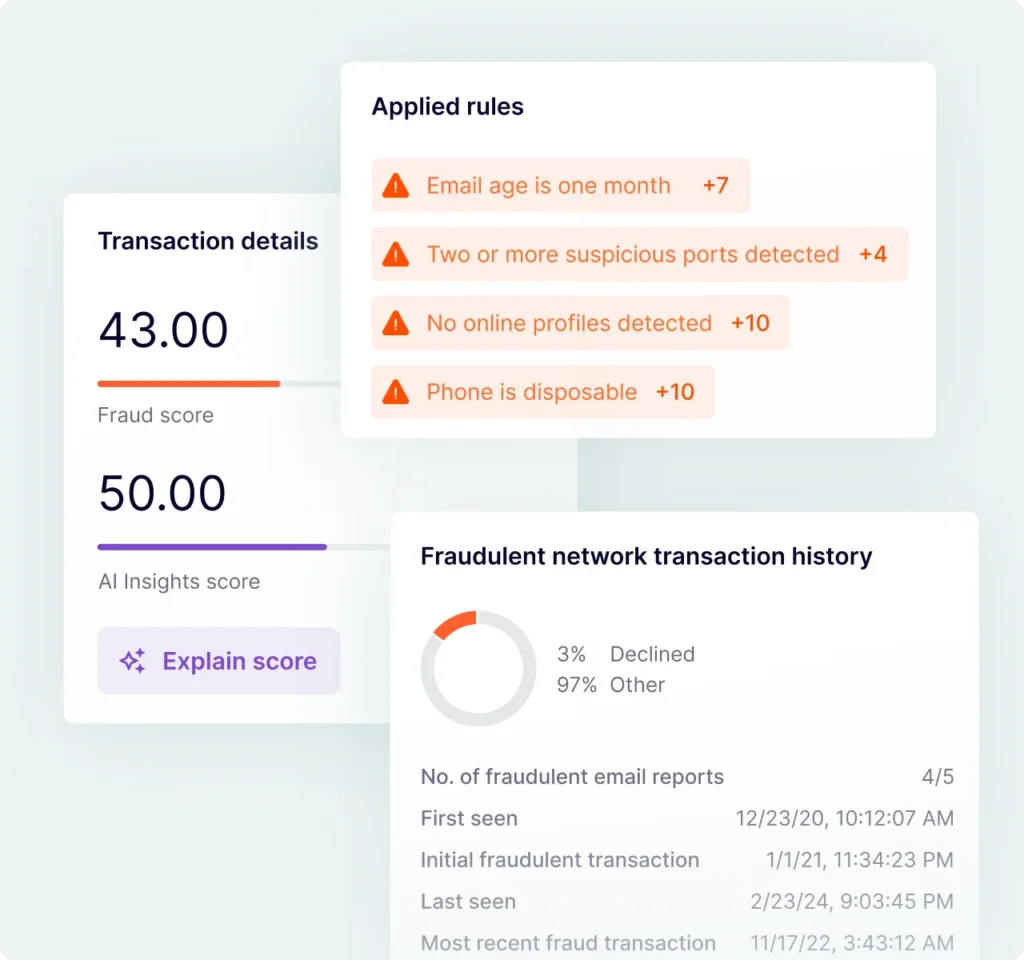
Spot Mule Accounts at Registration
Score Every Account Update as a Second Onboarding Event
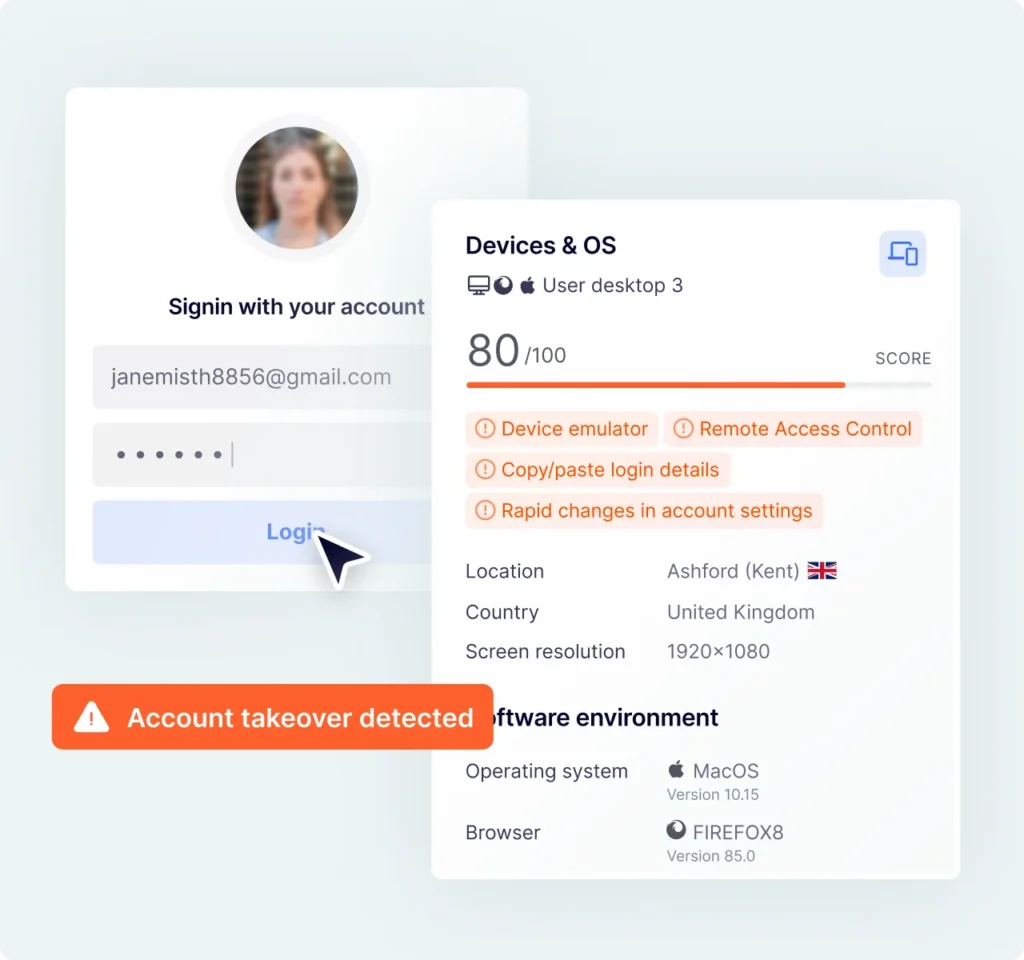
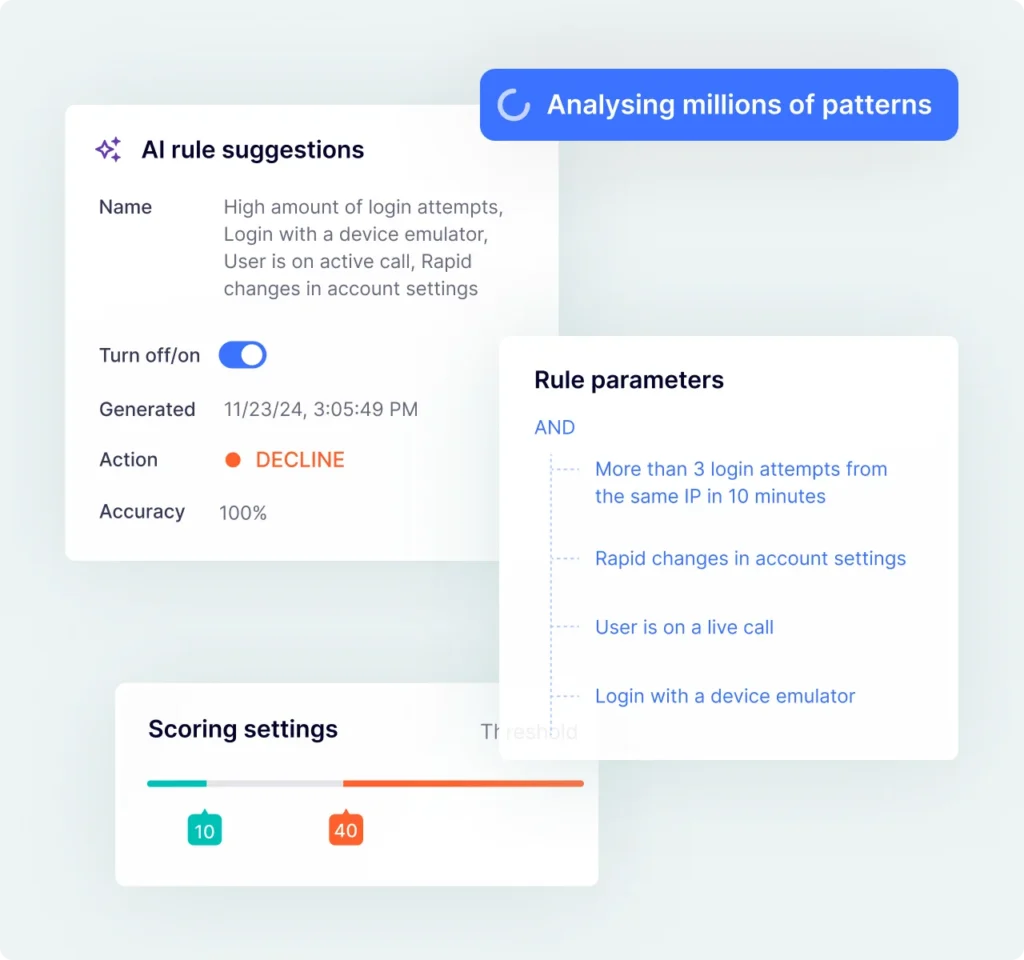
Detect Mule Activity Before It Escalates
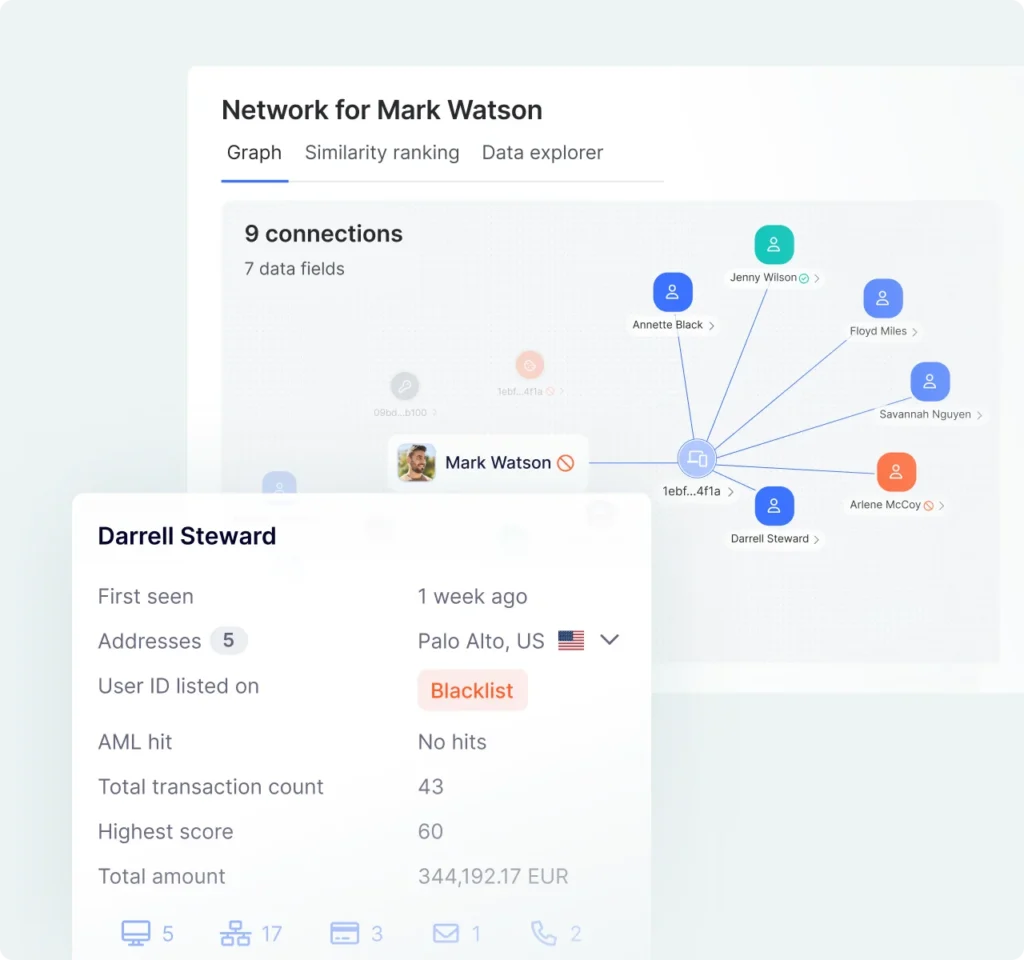
Block Lists Catch Actors While Association Scoring Catches Networks
Built for the Platforms Mules Target
Fintech and digital banks
Catch synthetic and hijacked accounts before they receive laundered funds
Payments and PSPs
Screen merchant and consumer accounts across onboarding and payout
Betting & Gaming
Stop mule accounts laundering funds through wallets and bonus cash-outs
Marketplaces
Detect mule seller accounts at signup and flag suspicious payout patterns before funds move
Proven Across the Account Lifecycle
-
See how Bilt scaled secure growth across multiple verticals using SEON’s flexible, real-time fraud prevention platform.
-
 Case study
How Payop Scaled Global Payment Coverage While Blocking Fraud Across 500+ Payment Methods
SEON helps Payop scale secure payments—blocking fraud rings, reducing chargebacks, and protecting merchants across global markets.
-
Lottoland used SEON to block bonus abuse and ATOs, boosting fraud detection efficiency and achieving 32x ROI on their prevention…




Choose How to Integrate with SEON
The choice is up to you: integrate directly with SEON’s APIs or through the AWS Marketplace.
Learn More About Mule Account Fraud
-
Waiting for a payout alert to investigate mule account fraud means intervening one stage too late. By that point, the…
-
Learn how the PIX incident exposed gaps in visibility and why dynamic, context-aware risk evaluation is the key to prevention.
-
New account fraud explained: how it happens, red flags, and ways to stop fake or stolen-identity signups during onboarding.



Frequently Asked Questions
How is mule account detection different from AML transaction monitoring?
AML transaction monitoring evaluates payments against compliance rules and reporting thresholds. Mule account detection scores the full account lifecycle, including registration, verification, account updates and behavioral patterns, to identify accounts built or converted for laundering before suspicious transactions occur. SEON runs both on one platform, so fraud and compliance teams work from the same risk picture.
Can mule account detection work for accounts that already passed KYC?
Yes. KYC confirms an identity at a point in time and does not detect synthetic identities engineered to clear verification or accounts hijacked after approval. SEON carries onboarding risk data forward and re-scores every account update, login and transaction against it.
Can mule detection avoid flagging legitimate customers?
Yes. SEON scores combinations of signals rather than single triggers. A new email alone is not risky; a new email plus a shared device plus a post-registration identity change is. Layered scoring with custom thresholds keeps friction away from genuine users while high-risk accounts route to review.
How do fraud teams detect mule networks that block lists miss?
Block lists catch exact matches to known bad actors, but mule rings share devices, IP ranges and card details across accounts that never appear on any list. Association scoring measures each account’s proximity to confirmed fraud across those shared signals, surfacing ring structures that exact-match checks cannot see.
How quickly can SEON’s mule account detection be implemented?
You can turn on lifecycle risk scoring through a single API, and most organizations go live within 14 days. You get immediate access to the full fraud signal suite and rule library, and our implementation team configures best-practice mule detection rules for your business with no engineering support needed.
Take the First Step Toward Stopping Mule Accounts
“Deploying SEON was like getting a magnifying glass to reveal much more about our users than we previously could, while cutting manual reviews by 90%.”
Gabor Galantai, COO and founder, Coincash
Trusted by 5,000+ global organizations:


Book Time With Our Experts
This form may not be visible due to adblockers, or JavaScript not being enabled.
Just like you, we hate spam. We won’t call you and we may only send you relevant emails, which you can opt-out of at any time. By submitting this form, you agree to our Terms Of Service and acknowledge that you have read and accept our Privacy Policy.