
Network Analysis
Expose Fraud Rings Hiding in Your Customer Base
Reveal links between separate accounts using AI network analysis. Automatically surface suspicious groups, understand how they are connected and investigate the wider operation.
Trusted by the World’s Most Ambitious Companies


See the Bigger Patterns Behind the Fraud Attack
Repeated accounts and related transactions can reveal synthetic identities, shared fraud infrastructure and other signs of coordinated activity.
Multi-accounting and promotion abuse
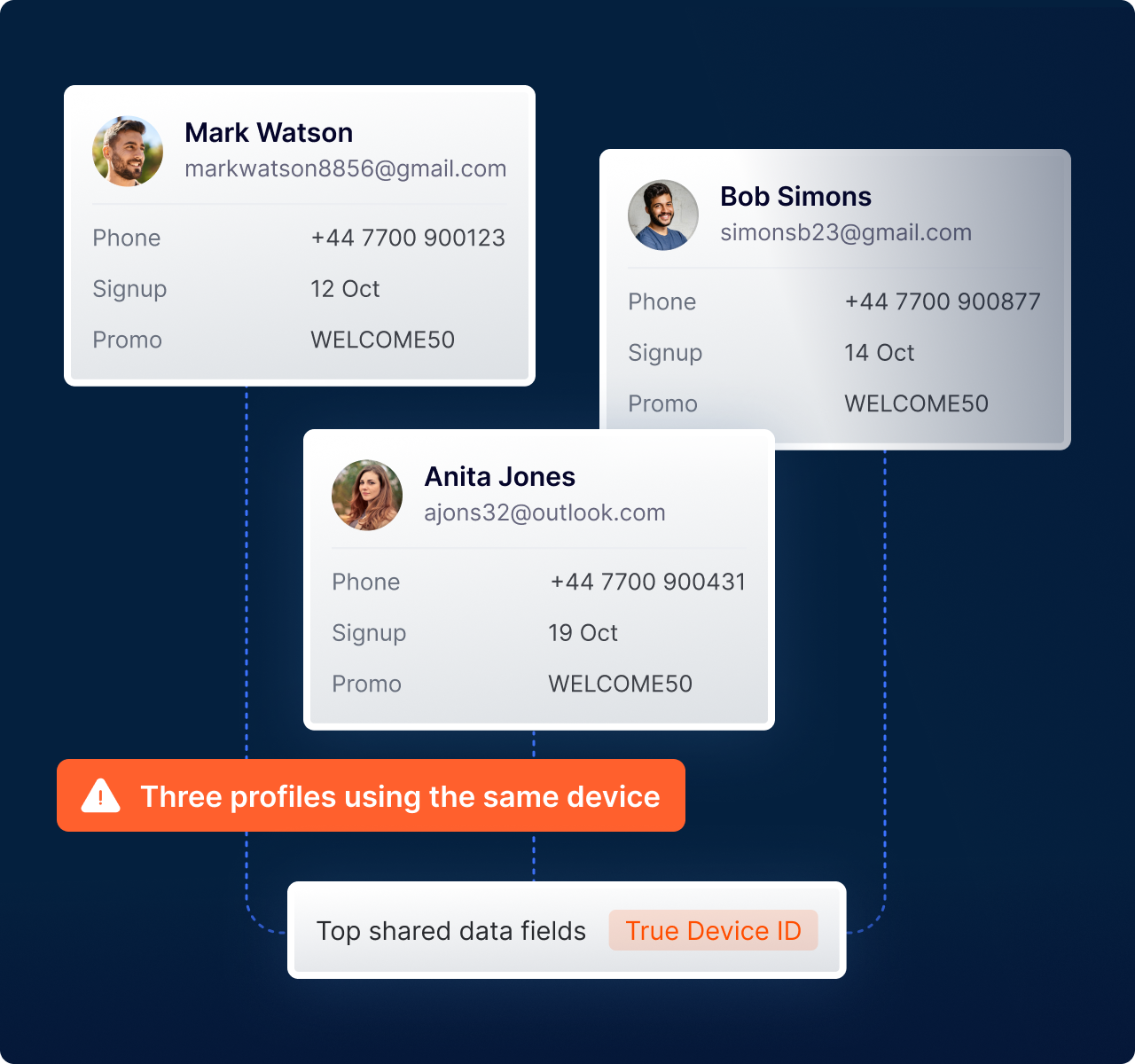
Identify accounts that may be controlled by the same person, even when profile details differ. Use shared device and other signals to investigate bonus abuse and referral schemes.
Bots and automation
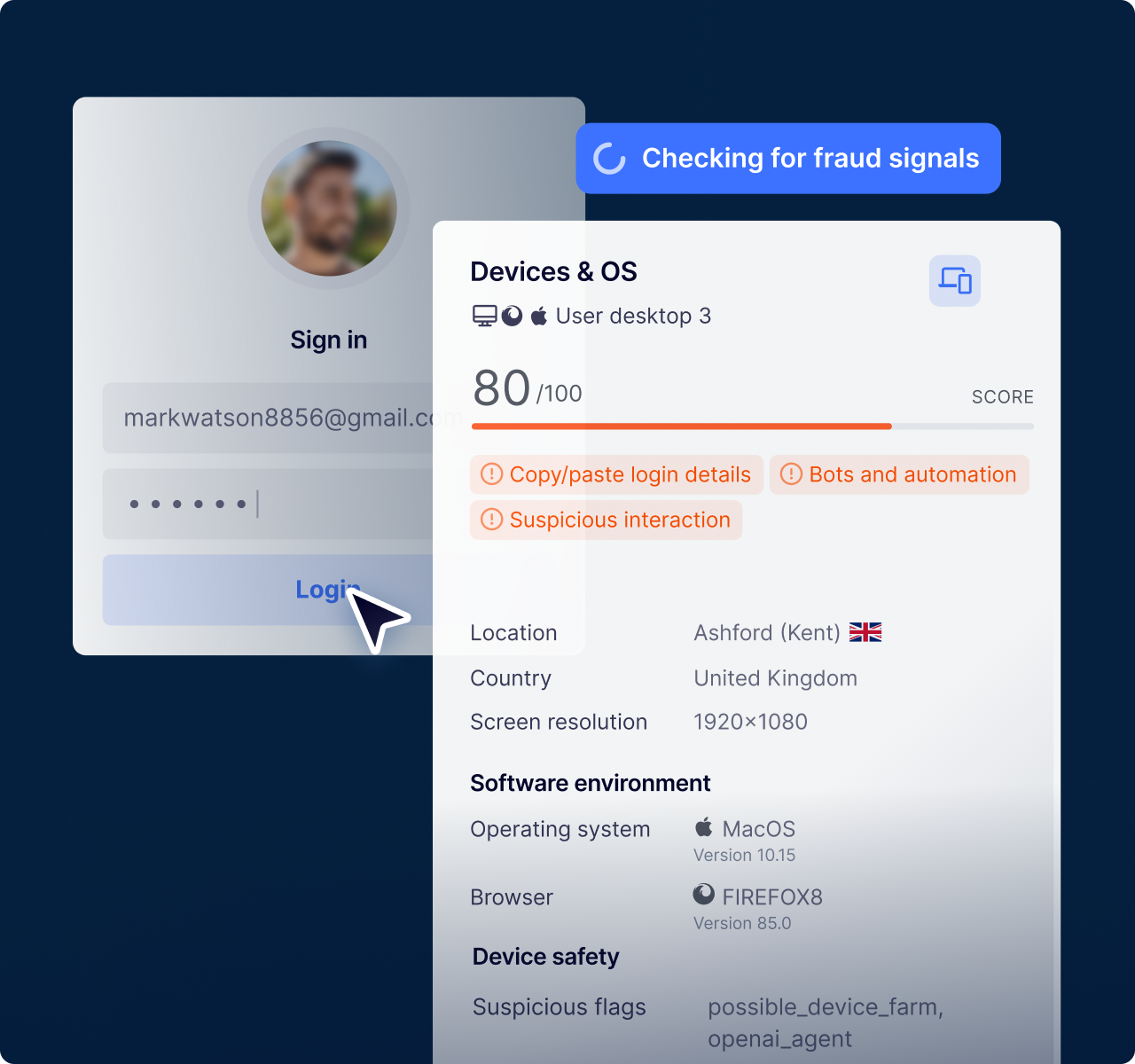
Investigate the device and network signals that link to the suspected automation. Identify infrastructure reused across accounts to help your team decide which identifiers to target with rules or lists.
Mule networks
Expand a suspected mule investigation to other accounts sharing devices or contact details. Review transactions together to assess whether the activities indicate a broader network at play.
Coordinated attacks
Investigate bursts of activity across accounts that reuse device or payment details. Identify the customers involved and assess the scope of a coordinated attack.
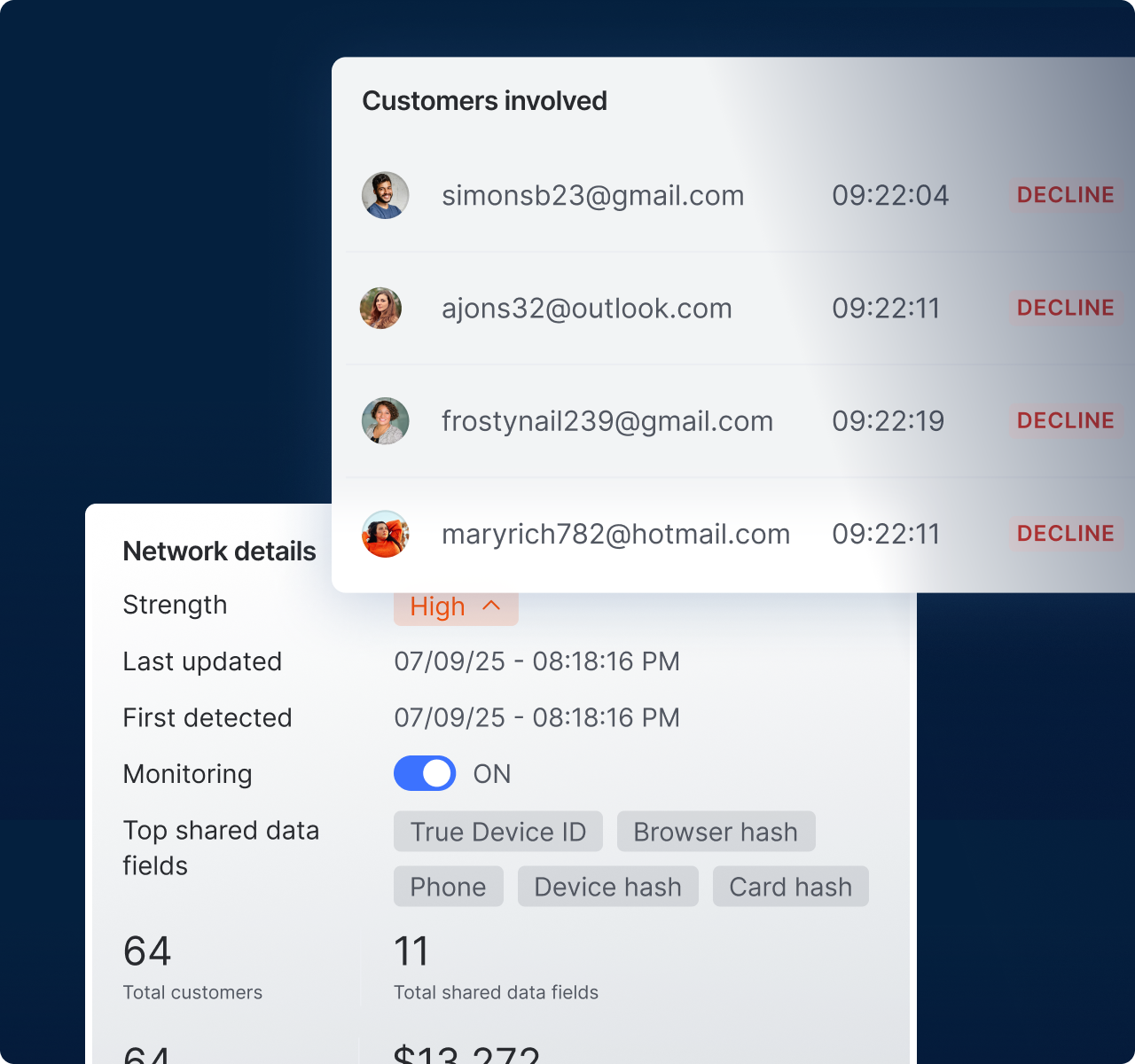
Network Detection
Find Suspicious Groups You Didn’t Know to Look For
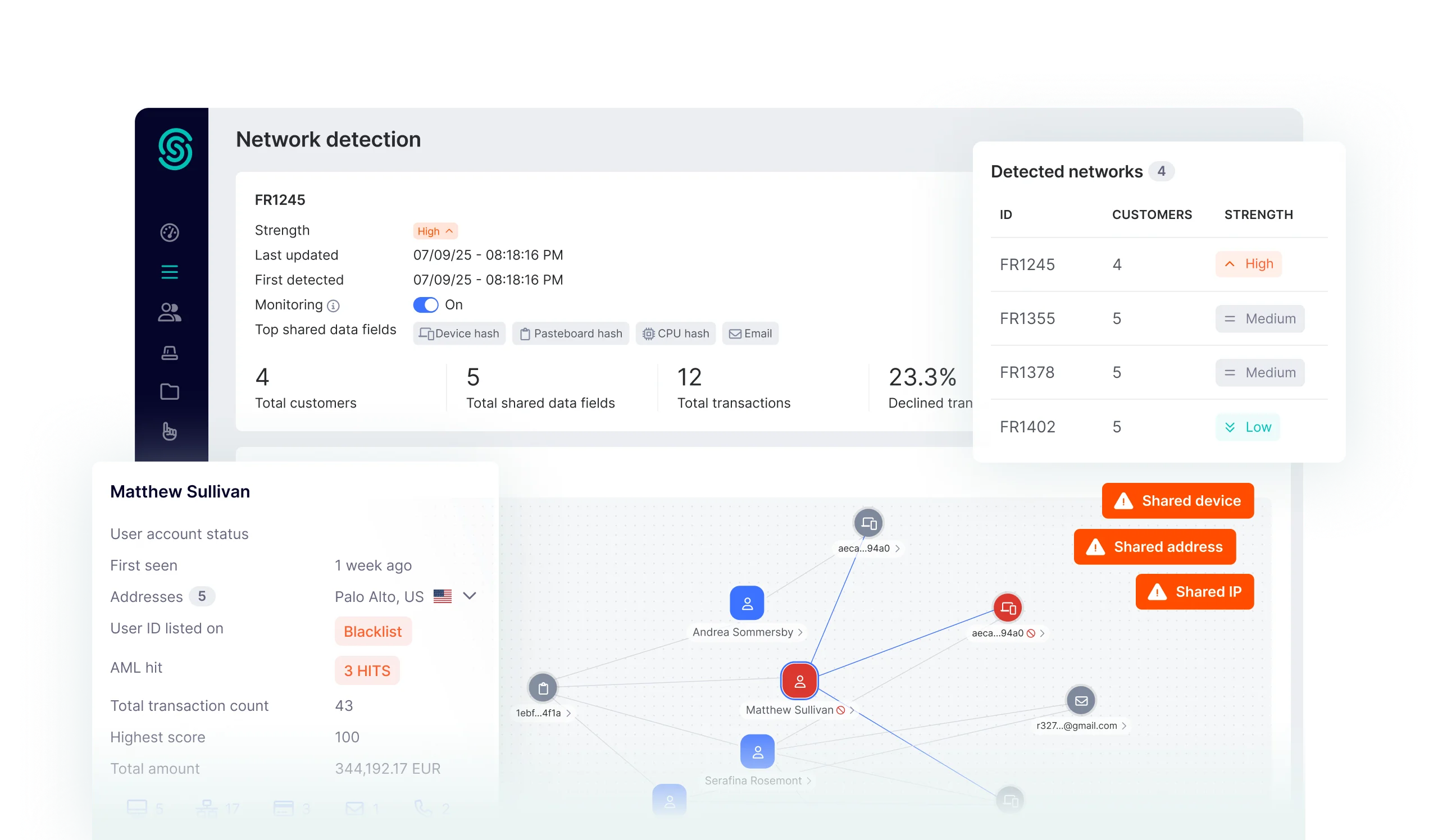
Catch groups of connected accounts that your rules never flagged. Get alerted when a new network forms, then assess their connection strength and the number of impacted transactions to decide where to focus first.
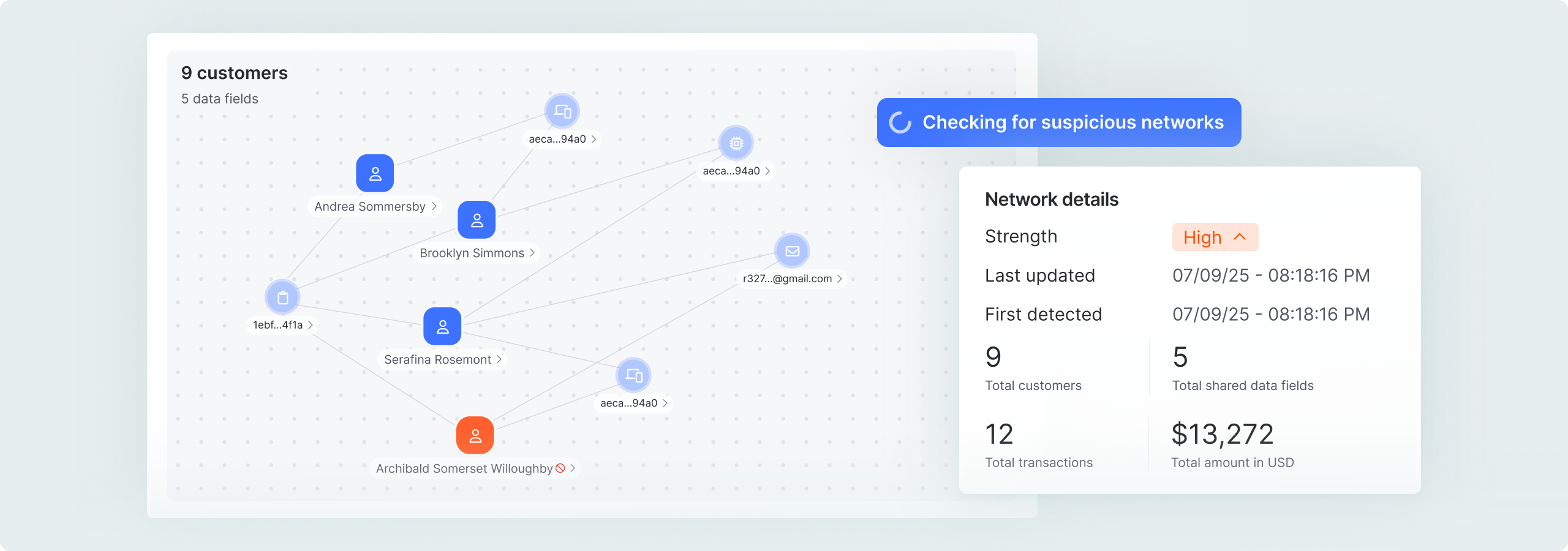
Built for fraud investigators
Built for the Fraud You Can’t See Yet
Start with a suspicious customer, transaction or detected network. Map relationships, prioritize connected customers or test a specific lead.
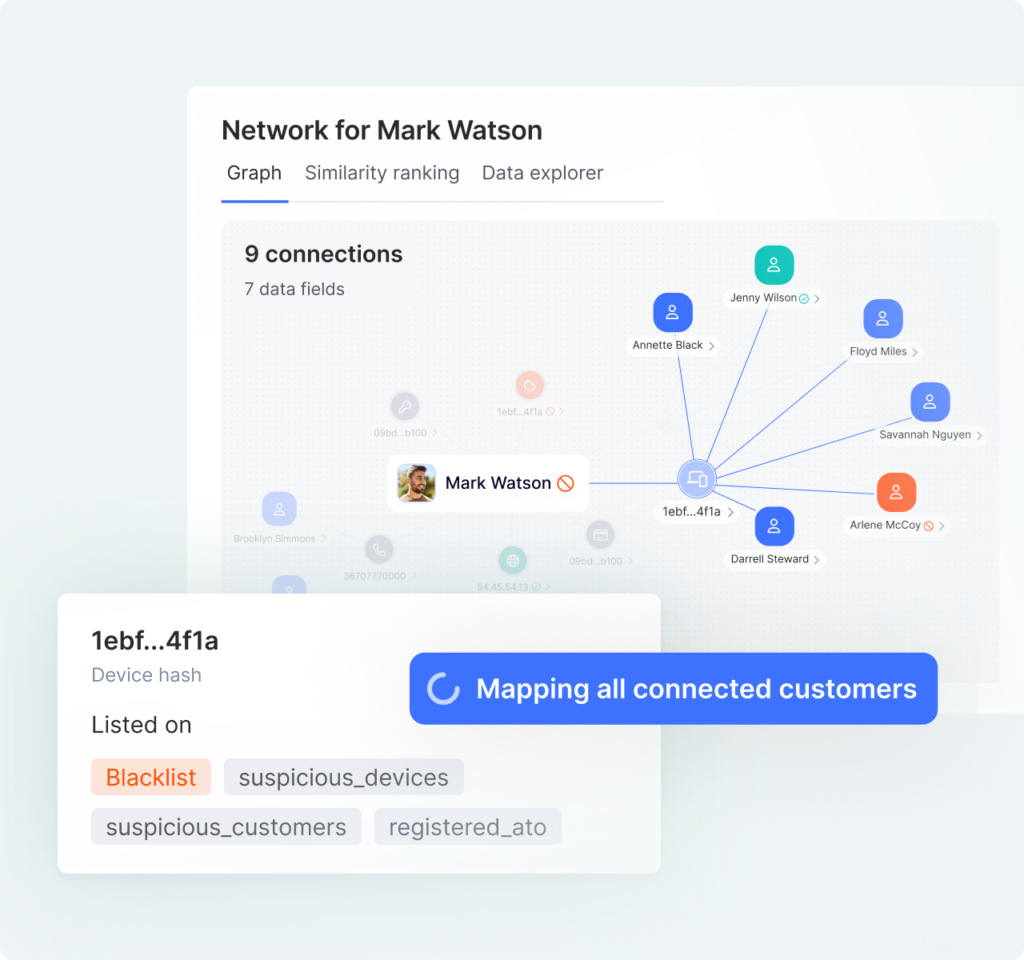
Graph
See How Connected Accounts Fit Together
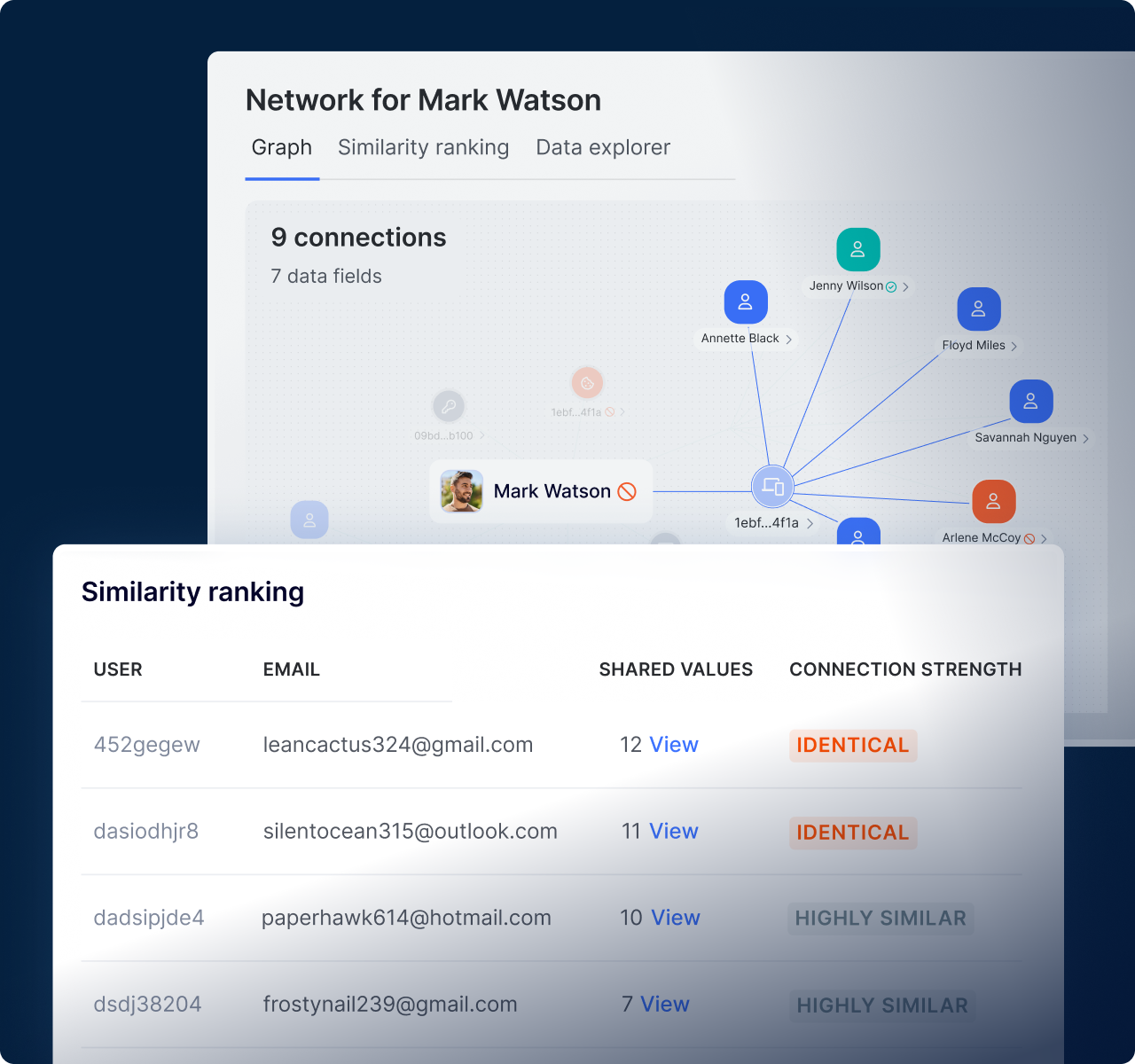
Map customers and their shared identifiers in an interactive graph. Examine the relationships around a suspicious account, with blacklisted and whitelisted values highlighted for context.
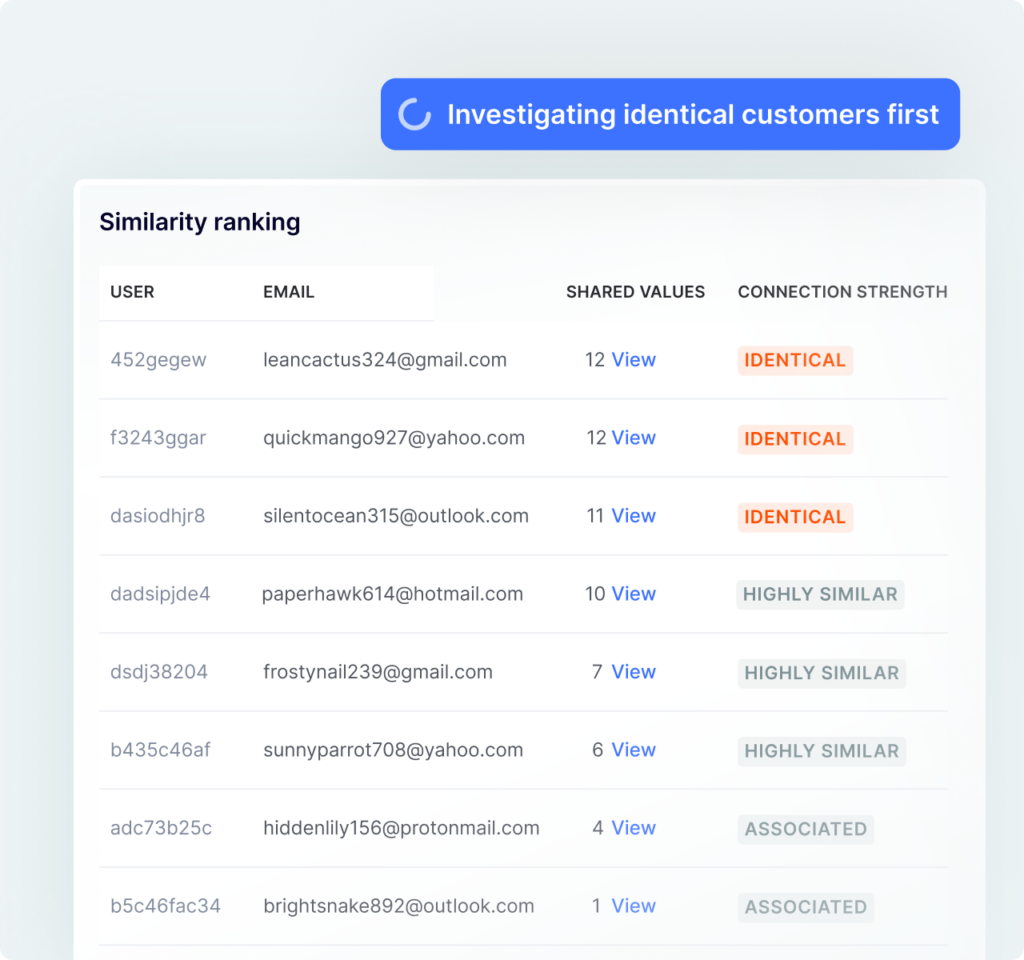
Similarity ranking
Focus on the Strongest Connections
See the customers most closely connected to the person you are investigating, ranked by connection strength. Compare customers side by side to assess their relationships easily.
Data Explorer
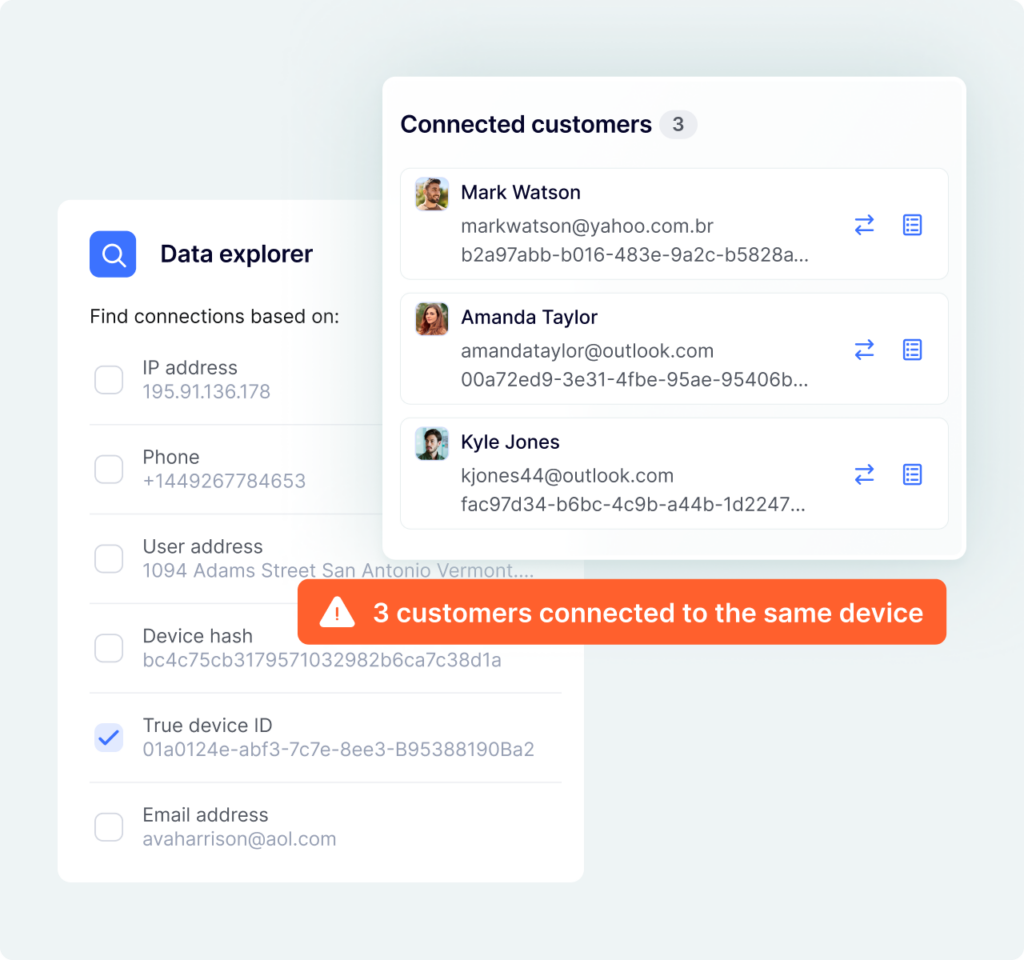
Check Who Else Shares a Specific Identifier
Select a persistent device ID, password hash, IP address or other data point to find customers sharing the same value. Combine identifiers to make your search more precise.
From investigation to action
Turn Network Findings Into Fraud Controls
Focus detection on the signals that matter to your business. Build rules from confirmed patterns and keep watch as suspicious networks grow.
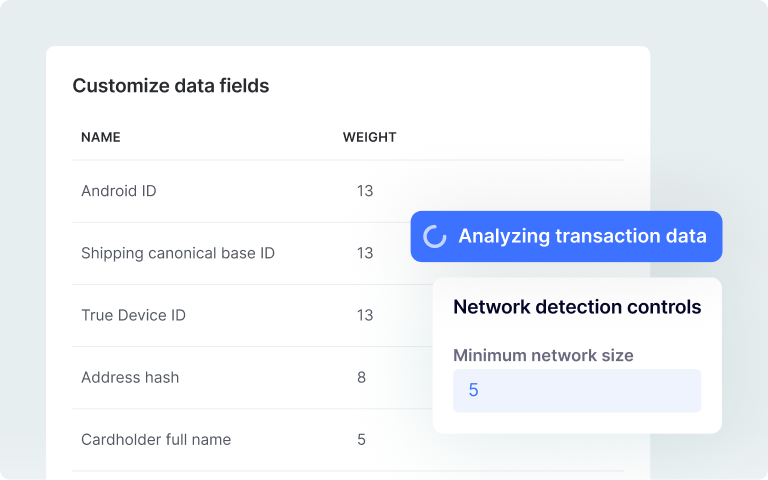
Focus Detection on the Signals That Matter to You
Choose which signals form networks, adjust their weights and set the minimum group size. Exclude known shared values to reduce irrelevant connections.
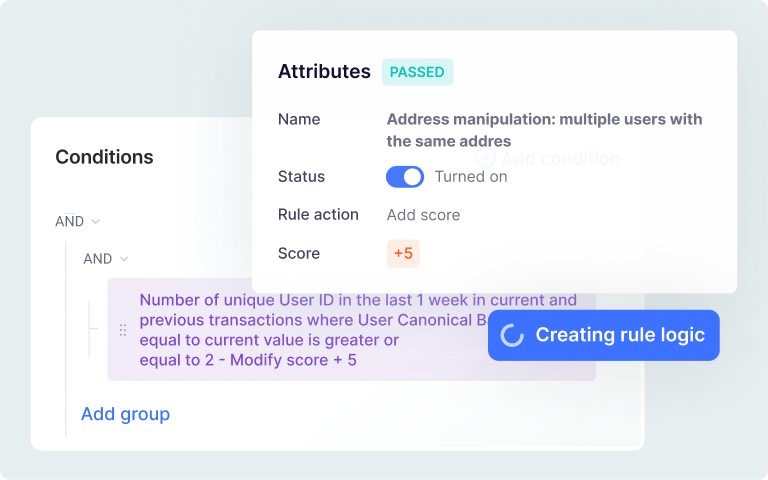
Act on the Patterns You Uncover
Add confirmed risky identifiers to lists and build rules from the patterns you uncover. Apply what you learn from one network to strengthen future decisions.
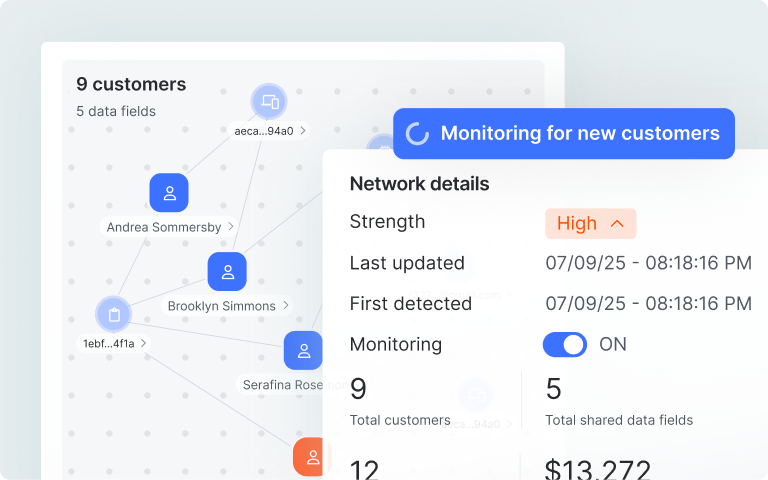
Keep Watching as Networks Evolve
Get notified when a new customer joins a network you are monitoring, so you can return to the investigation as the group changes.


Choose How to Integrate with SEON
The choice is up to you: integrate directly with SEON’s APIs or through the AWS Marketplace.
Learn More About Network Analysis
-
Fraud rings cause even more harm than individual fraudster accounts – find how to stop them.
-
Uncover synthetic IDs and fraud rings with network scoring and link analysis, beyond what legacy tools can catch.
-
Company Industry Fintech Use Cases Multi Accounting Card Testing Bot Detection Chargeback Management About Tradeify Tradeify is a futures proprietary…
-
Key takeaways: The Problem: Approved Accounts, Coordinated Theft Last year, a Buy Now, Pay Later (BNPL) platform approved a slightly…
-
 Case study
How Take Profit Trader Uncovered Hidden Account Networks and Tightened Fraud Controls with SEON
Company Industry Fintech Prop Trading Use Cases Digital Footprint Identity Fraud Onboarding About Take Profit Trader Take Profit Trader (TPT)…



Frequently Asked Questions
What is network analysis in fraud prevention?
Network analysis examines relationships between customers to help uncover coordinated activity. Shared data can reveal connections that reviewing an account alone would miss.
How is Network Detection different from the investigation views?
Network Detection automatically discovers suspicious groups. Similarity Ranking, Graph and Data Explorer help analysts examine connections starting from a selected customer.
Does a shared device or IP address prove fraud?
No. Legitimate customers can share identifiers. Review the wider context before deciding, and configure detection exclusions for known legitimate shared values.
Is Network Detection an instant transaction blocking tool?
No. It runs in the background on eligible transaction data. A transaction is typically ready for analysis within two hours of receipt. Findings support investigations and improvements to your fraud controls.
Uncover Invisible Fraud Networks
“SEON clearly shows linked accounts and relevant risk signals, which makes investigations faster, more structured and easier for the team to act on.”
Catalin, KYC Team Manager, SolidStake
Trusted by 5,000+ global organizations:


Speak With a Risk Expert
Just like you, we hate spam. We won’t call you and we may only send you relevant emails, which you can opt out of at any time. By submitting this form, you agree to our Terms Of Service and acknowledge that you have read and accept our Privacy Policy.