
New Account Fraud Detection & Prevention Solution
Stop New Account Fraud Before KYC
Fake and synthetic signups pass a document check. They can’t produce the digital footprint, device, IP, email and phone history a real applicant has. SEON catches them at registration and routes them to KYC.
Trusted by the World’s Most Ambitious Companies






FRAUD ENTERS AT SIGNUP
Why KYC Alone Misses Fake Signups
KYC confirms a document is valid. It does not confirm the person submitting it is real, or that one operator is behind a wave of other signups. SEON checks the signals that exist before any document is submitted.
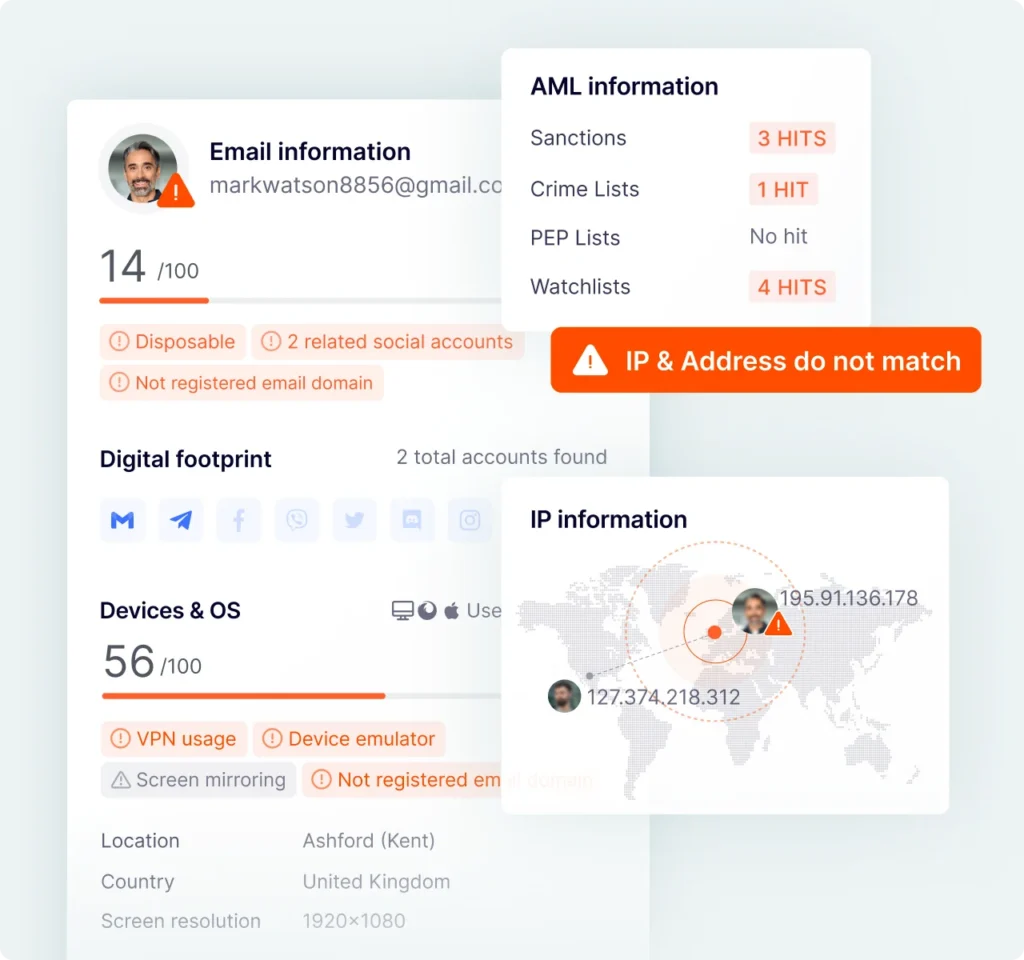
Catch Synthetic Identities Before They Onboard
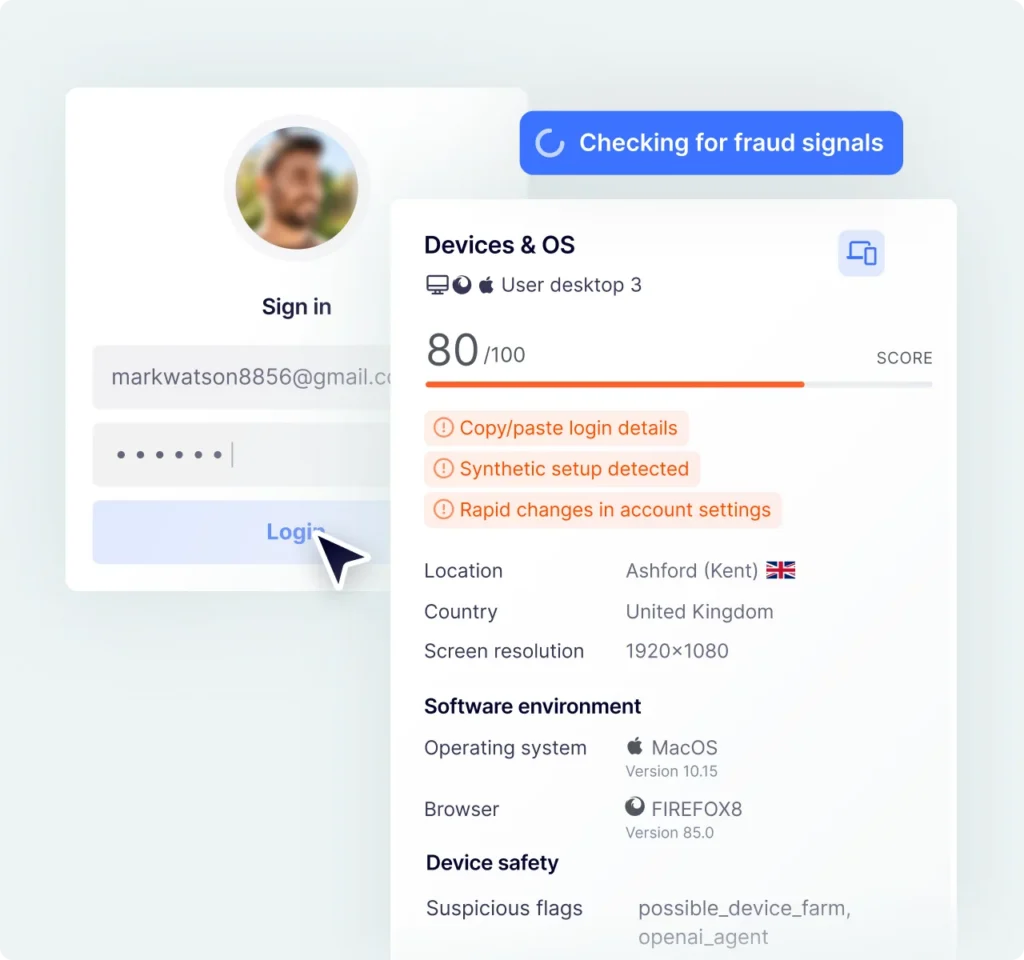
Block Bots and Mass Registration Attacks
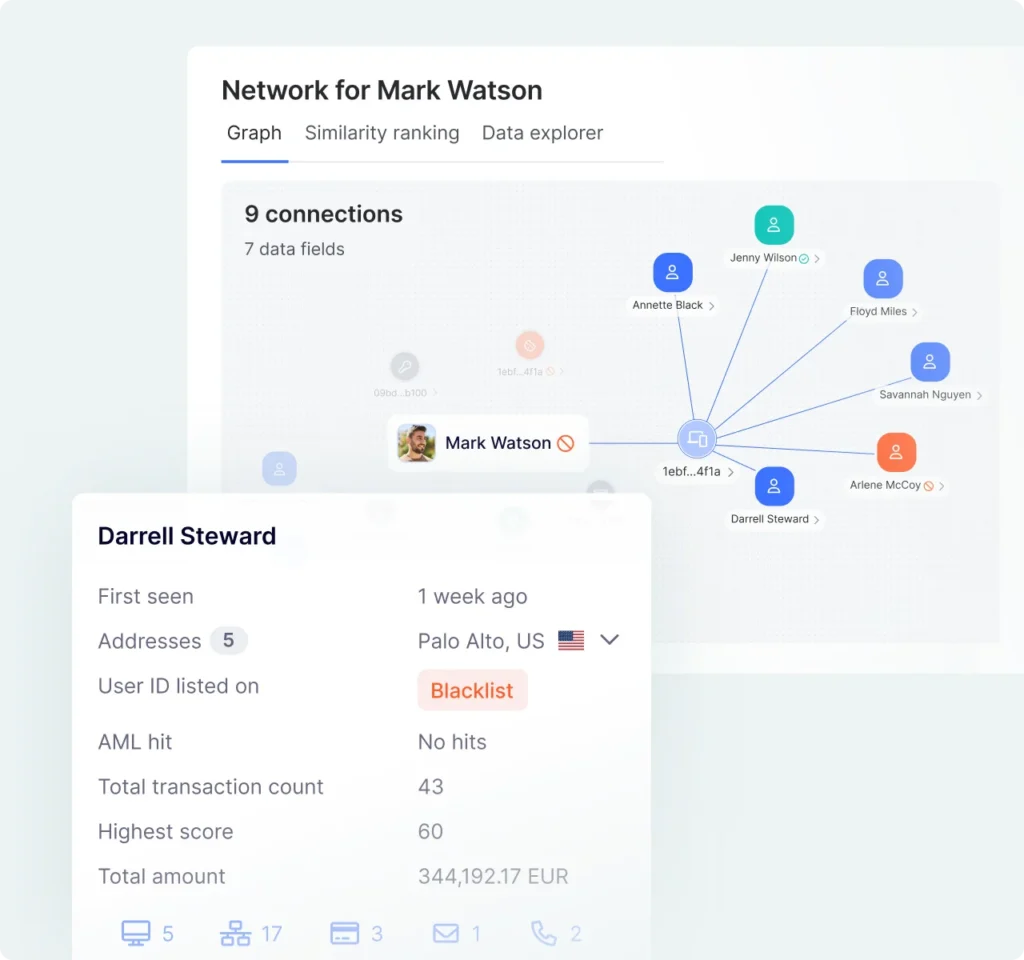
Uncover Duplicate Accounts and Fraud Rings
Send Only Risky Applicants Through KYC
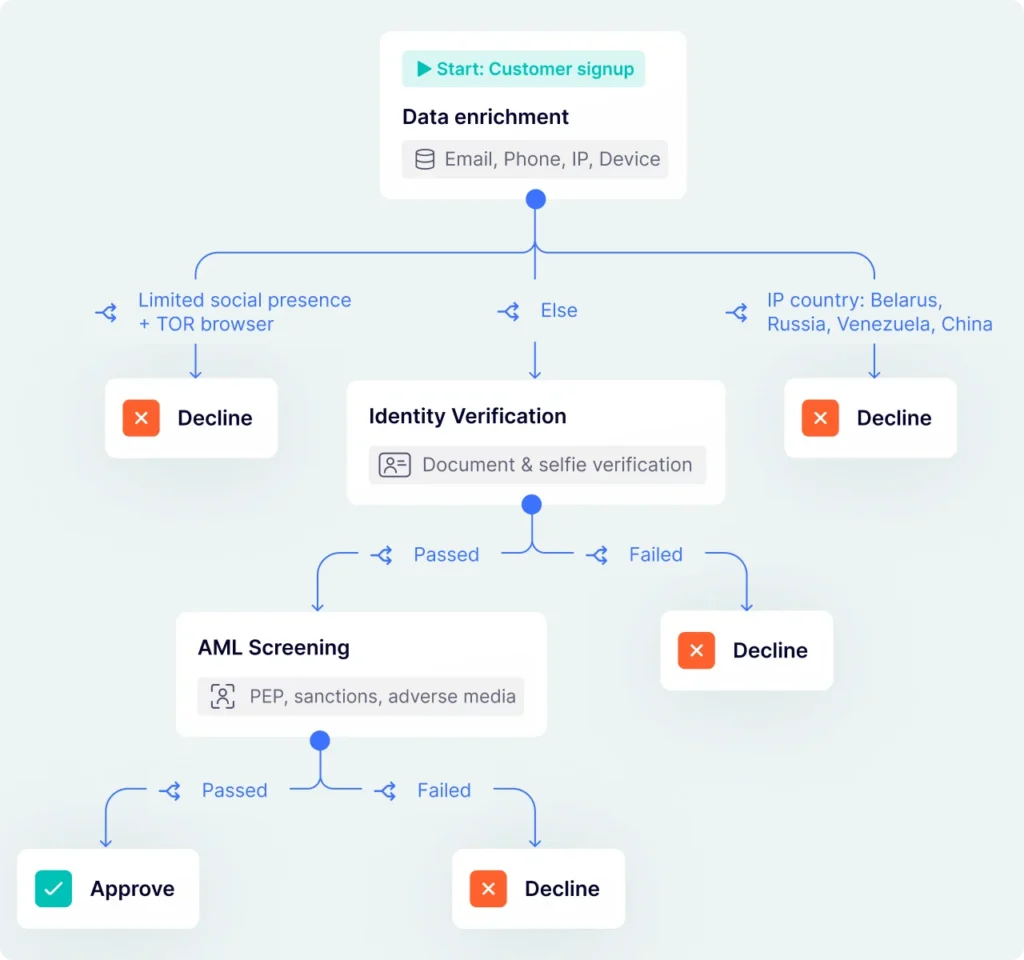
How It Works
Four Checks Between the Signup Form and an Approved Account
SEON returns a decision in milliseconds, so each step runs while the applicant is still on the page.
1.
Enrich the Signup
Email, phone and IP build a digital footprint from the first form field
2.
Profile the Device
Device intelligence flags emulators, proxies, spoofing and reused hardware
3.
Score the Intent
Rules and AI weigh 1,100+ signals into one explainable risk score
4.
Act on the Decision
Approve, decline or escalate to ID verification and case management


Choose How to Integrate with SEON
The choice is up to you: integrate directly with SEON’s APIs or through the AWS Marketplace.
Discover How Companies Win

“Integrating SEON’s digital footprint tools into our KYC process allowed us to implement dynamic friction, triggering additional checks only when needed. This approach reduces our KYC costs and helps us screen customers efficiently.”

Kaspars Magaznieks
Head of Fraud, Sun Finance

“SEON’s digital footprint insights enabled us to improve approval rates for our customers by 5%, significantly enhancing our ability to onboard new customers quickly, resulting in notable ROI for our organization.”

Costin Mincovici
Chief Credit Officer, tbi Bank
Learn More About New Account Fraud
-
Learn how to detect and prevent synthetic identity fraud with tools like digital footprinting, device intelligence, and machine learning.
-
Download our free guide to secure efficient digital bank onboarding and tackle evolving fraud risks.
-
New account fraud explained: how it happens, red flags, and ways to stop fake or stolen-identity signups during onboarding.


Frequently Asked Questions
What is new account fraud?
New account fraud happens when someone opens an account with a fake, stolen or synthetic identity. It also covers bots opening accounts at scale. The account is then used to claim signup bonuses, take out credit, launder money or act as a mule. Because the application data often mixes real and fabricated details, it frequently passes a standard document check.
How do you detect new account fraud before KYC?
Screen the data a user hands you at registration. Email age and online presence, phone number validity, IP reputation and device characteristics all reveal risk before any document is requested. SEON combines these into a single explainable risk score, so you can decline obvious fraud, escalate uncertain cases for ID verification, and approve genuine customers in seconds.
What is multi-accounting?
Multi-accounting is one person running several accounts on the same platform, usually to claim signup bonuses repeatedly, evade limits or return after a ban. SEON surfaces linked accounts using shared devices, IP addresses and behavioral patterns, then lets you act on the whole cluster rather than one account at a time.
Does screening for new account fraud slow down onboarding?
No. SEON’s API responds in milliseconds and runs before your KYC step, so low-risk customers see no extra friction. Verification is triggered only when risk warrants it, which means genuine users onboard faster and each approved customer costs less to verify.
How is this different from ID verification?
ID verification confirms a document is real and belongs to the person presenting it. It does not tell you whether that person intends to defraud you, and it costs money on every check. New account fraud screening reads device, network and digital footprint signals first, then sends only the applicants that need it into verification.
Take the First Step Toward New Account Fraud Prevention
“NewForm exists to be a safe, trusted space for our members, it’s something we care deeply about. When it became clear that bad actors were getting in and the tools we had weren’t enough to stop them, we knew we needed a better solution.”
Jen Weiner, Systems Architect, NewForm
Trusted by 5,000+ global organizations:



Book Time With Our Experts
This form may not be visible due to adblockers, or JavaScript not being enabled.
Just like you, we hate spam. We won’t call you and we may only send you relevant emails, which you can opt-out of at any time. By submitting this form, you agree to our Terms Of Service and acknowledge that you have read and accept our Privacy Policy.