
BNPL & Lending Fraud Prevention
Stop Fraud at Every Lending and BNPL Decision Point
Bureau data and static ID checks miss modern fraud. Catch synthetic IDs and loan stacking with first-party signals, and approve genuine borrowers from application to repayment.

Trusted by the World’s Most Ambitious Companies










Faster Approvals and Fewer Losses for Lenders and BNPL Providers
8 sec
average loan decision time

90%
drop in fraudulent registrations

25%
drop in fraudulent transactions

Protect Every Step of the Lending Journey
Fraud moves through the entire borrower lifecycle. Protect every decision from onboarding to repayment, whether it happens on a loan application or at buy now pay later checkout.
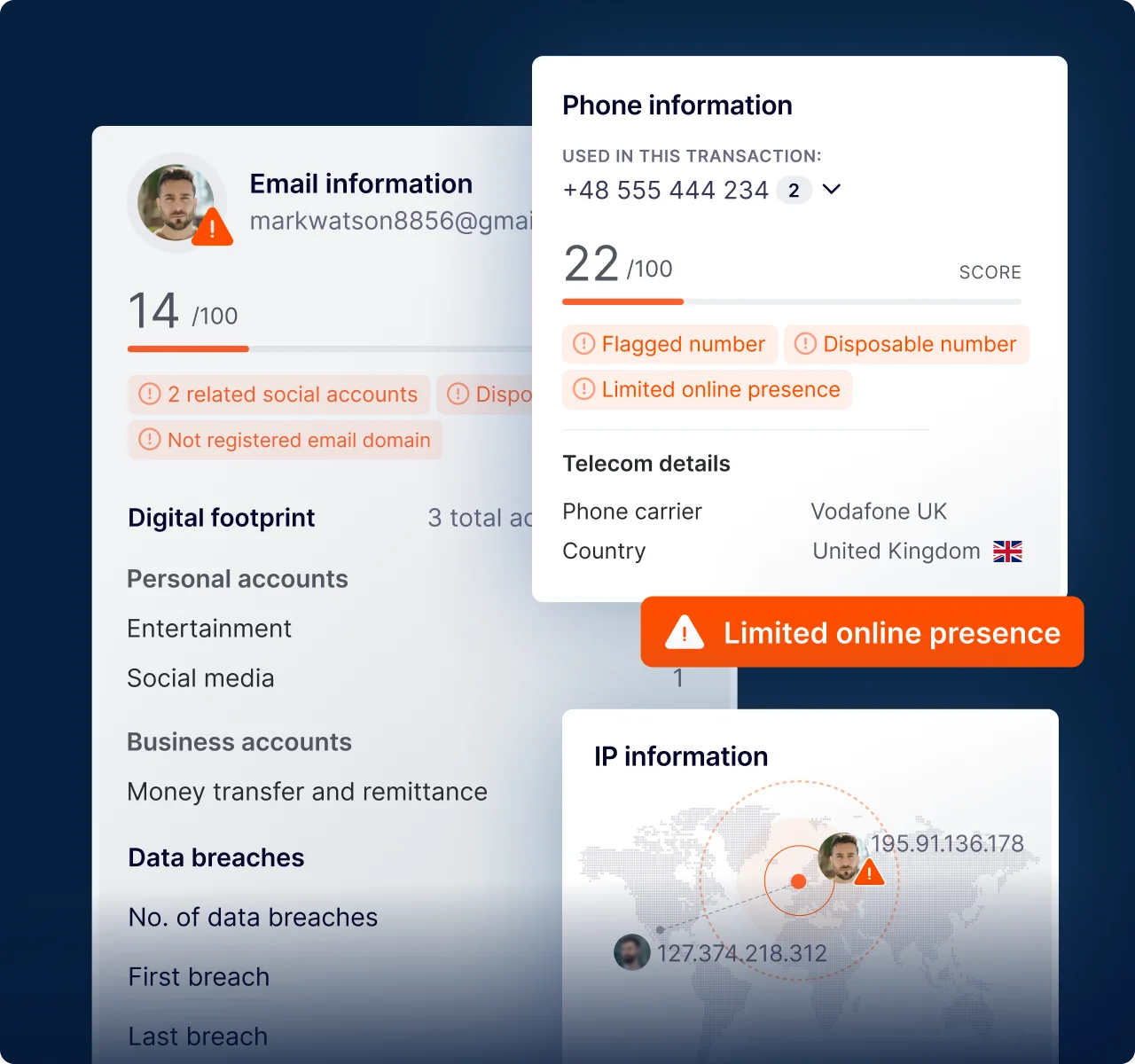
Application
Reveal the full digital footprint behind every applicant, drawing on email, phone and IP data before KYC begins, so genuine borrowers move through verification quickly and risky applicants are stopped before costly checks.
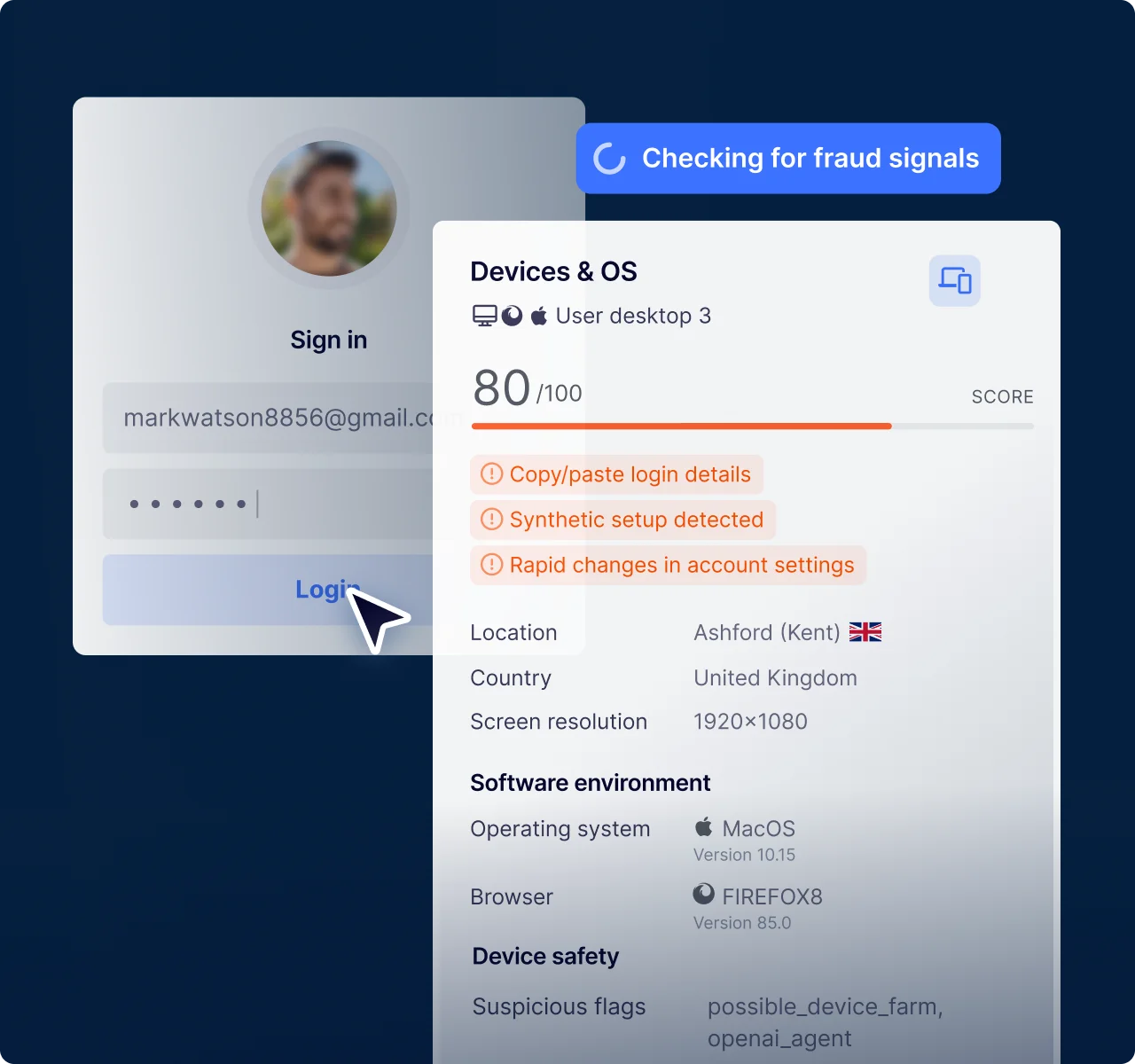
Login
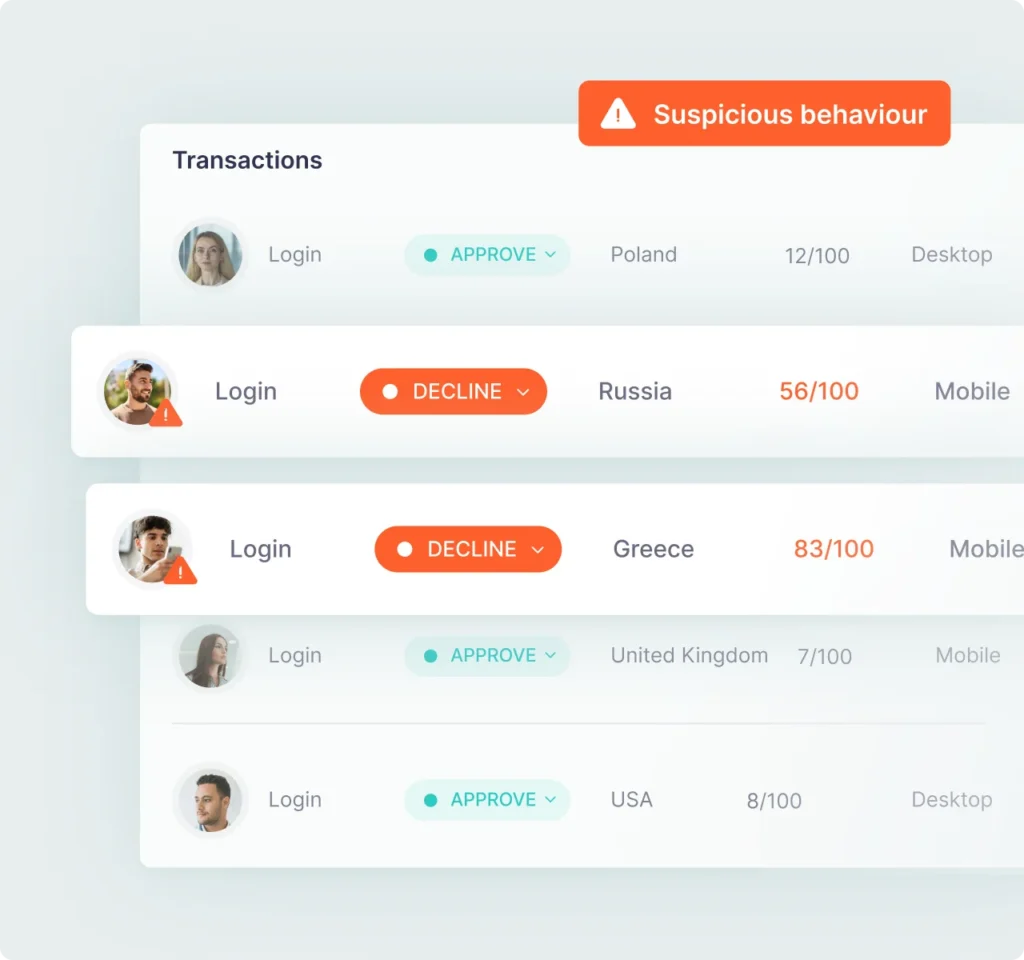
Pinpoint suspicious logins on returning borrowers in real time using device signals and velocity checks to stop account takeovers before funds or credit lines are exposed.
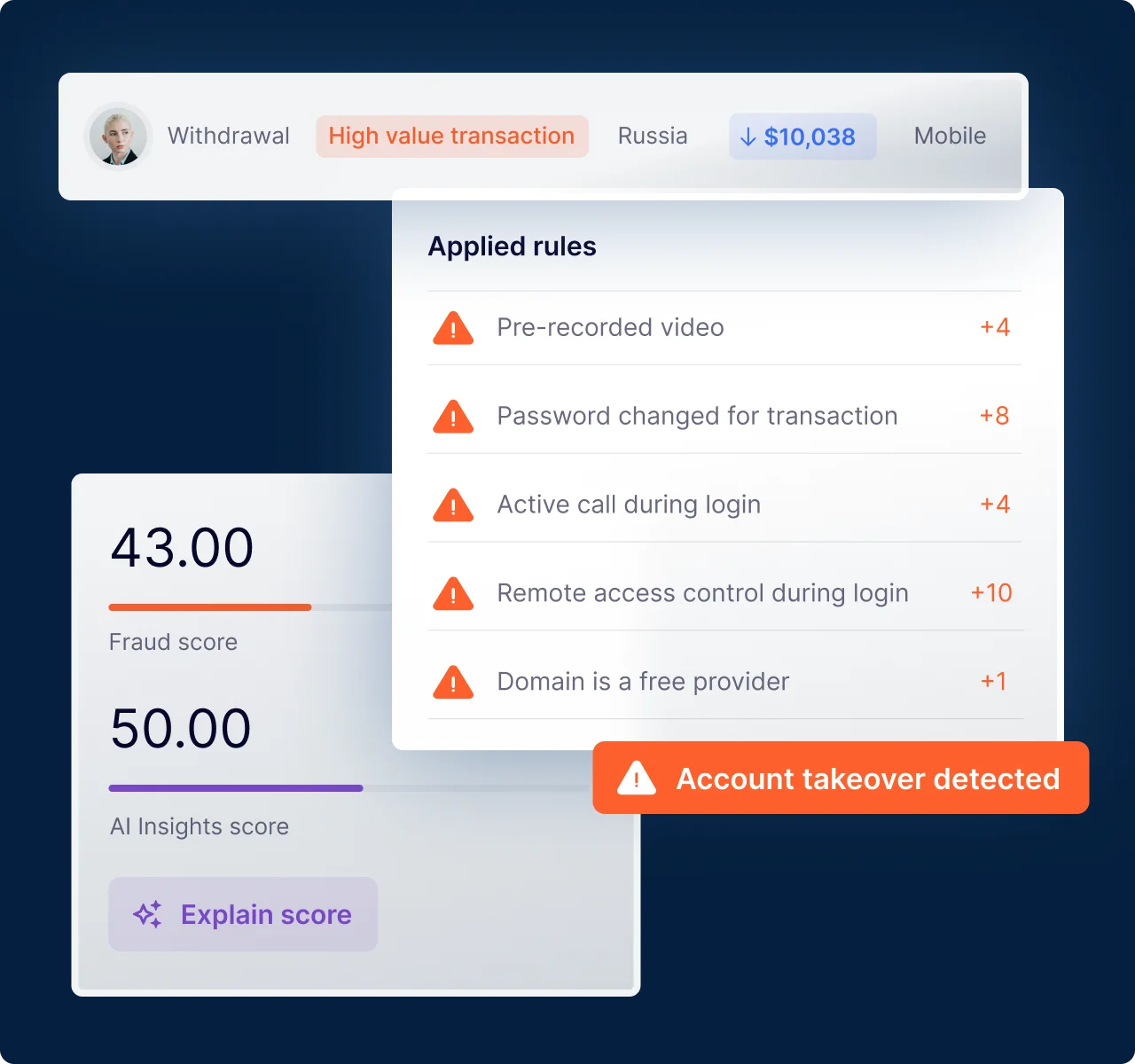
Repayment & Account Changes
Detect first-party fraud, stolen cards and chargeback risk across installments. Stop suspicious bank detail or device changes before they trigger fraudulent payouts.
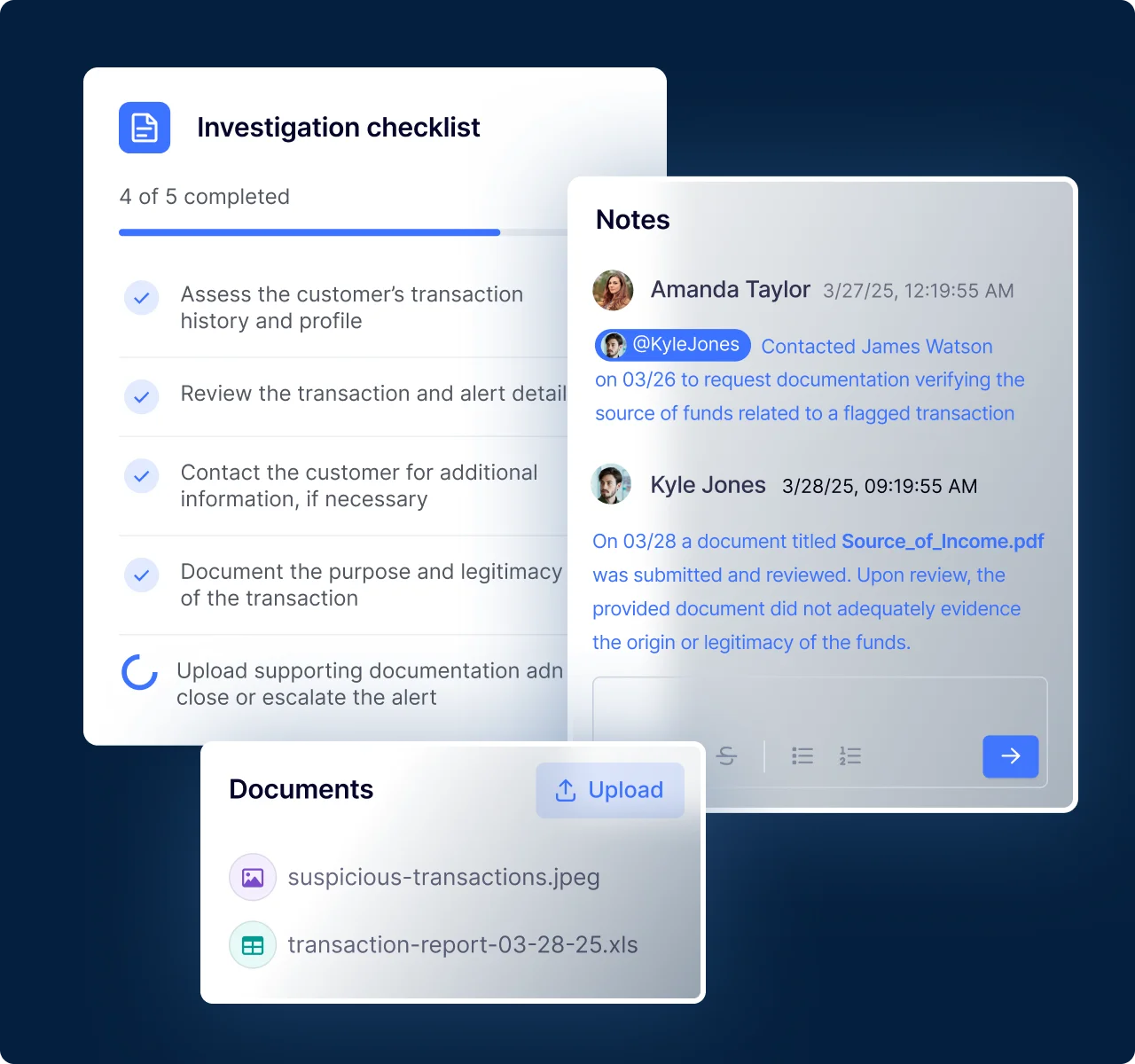
Investigations
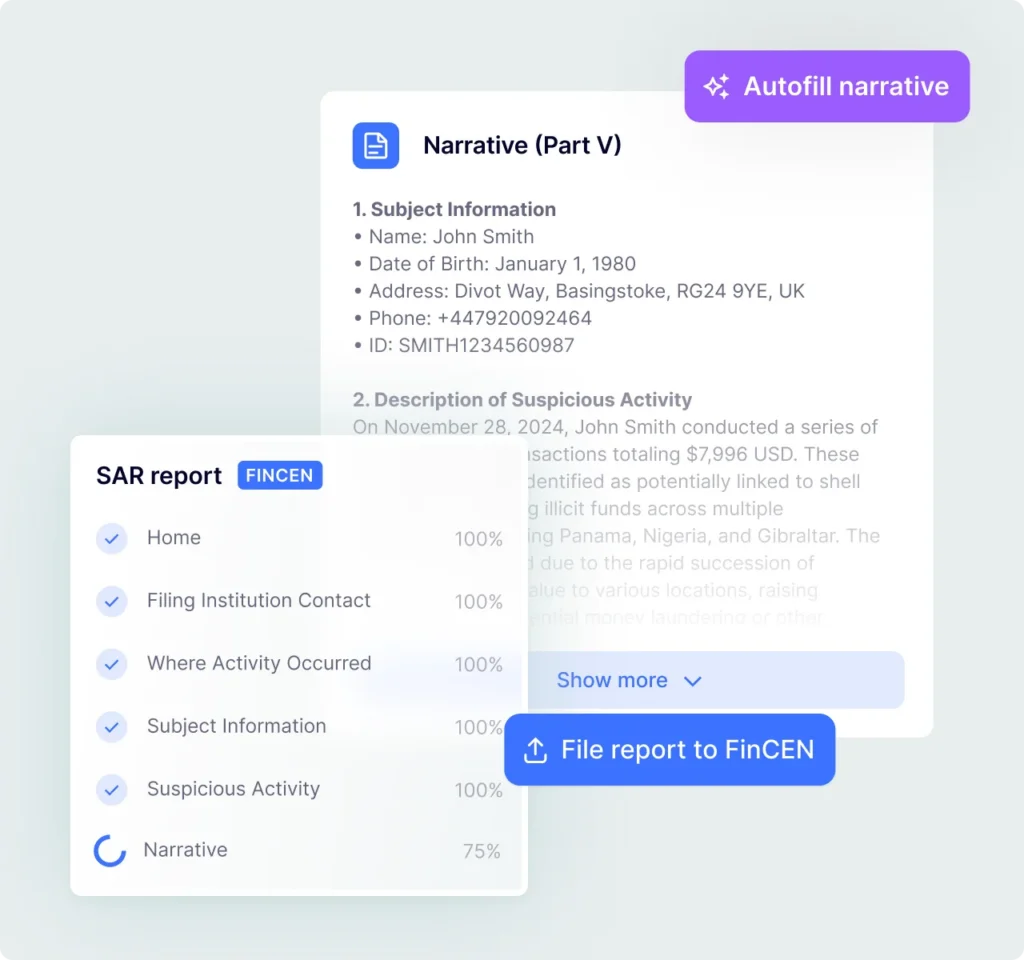
Replace manual processes with AI-supported case management, explainable decisioning and clear audit trails at every point of the customer journey.
GROW SAFELY
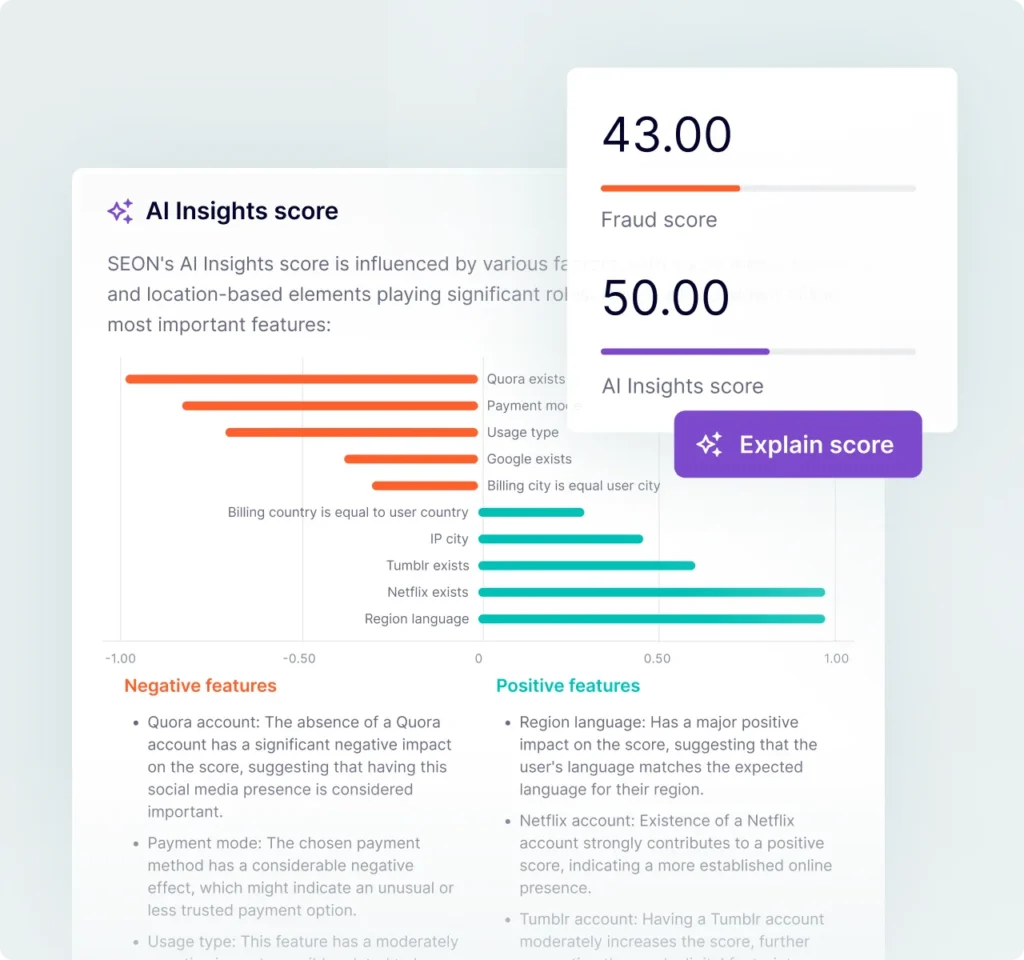
Approve More Thin-file Borrowers with Confidence
CATCH APPLICATION FRAUD
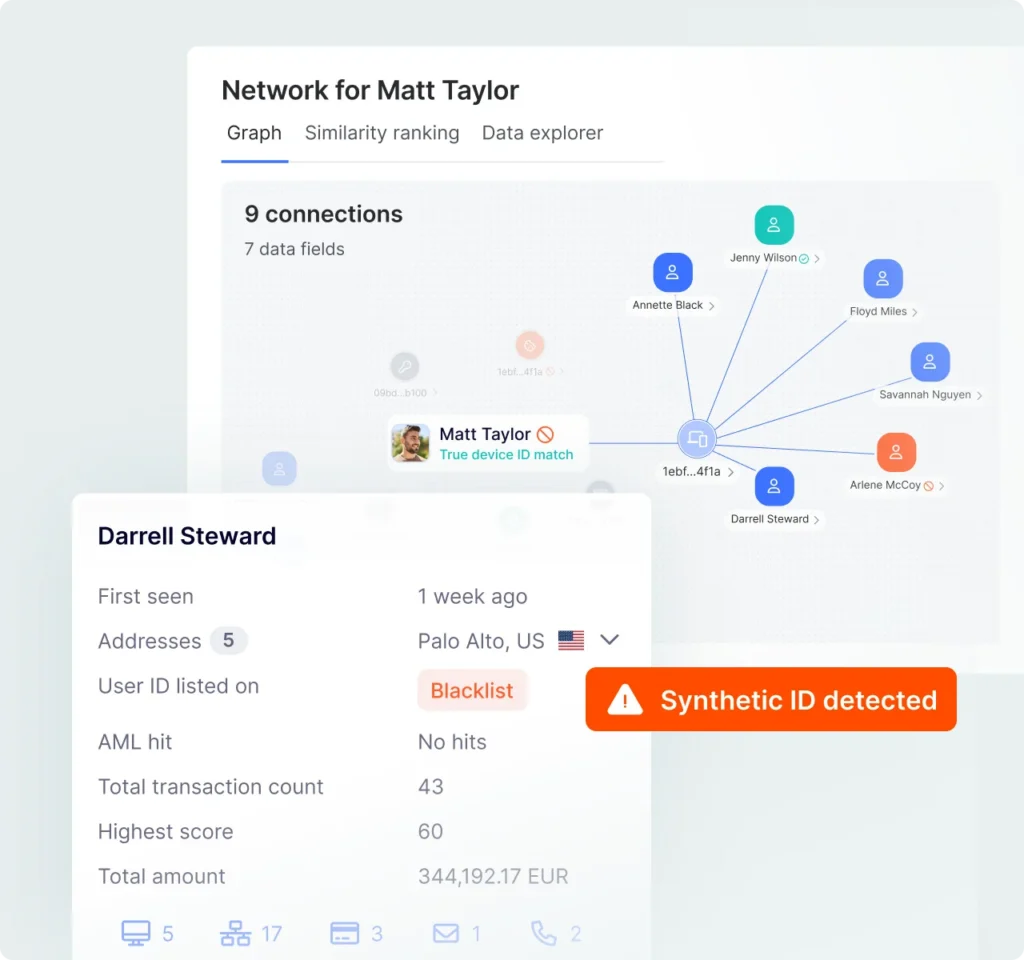
Stop Synthetic IDs & First-Party Fraud
MONITOR THROUGHOUT THE CUSTOMER JOURNEY
Fraud Doesn’t Stop at Approval
ONE PLATFORM
Unified Platform for Fraud, Credit Risk & Compliance
DEPLOY QUICKLY & efficiently
Built with Risk and Technical Leaders in Mind
Fraud prevention that fits your roadmap and protects the borrower experience.
Borrower-first design
Protect the applicant experience, keeping approvals fast and friction low.
Go live in less than 14 days
A single API, minimal integration work and a proven onboarding process.
Flexible deployment
Rules-based or AI-driven scoring that feeds your existing credit models.
Discover How Companies Outsmart Fraud

“When I ask my team, do we really need that extra data? Is the ROI worth it for us? The answer is always yes. Yes, it adds value – especially when we look at SEON’s price per API request, it makes complete sense for Revolut.”

Dmitri Lihhatsov
Fincrime Product Owner at Revolut

“We now use the returned data [from SEON’s social media profiling] both to confirm identities, and as a debt collection tool to contact non-paying customers.”

Kaspars Magaznieks
Head of Fraud, Sun Finance
Managed Risk Services
Partner with SEON’s lending fraud experts to scale your defense using strategies proven across industry-leading companies.
Learn More About BNPL & Lending Fraud Prevention
-
Identify high-risk BNPL customers and prevent never-pays. Learn to spot fraud risks with AML and digital footprint data.
-
Let’s see how bad agents exploit the lending process and how to stop them.
-
Why is transaction monitoring a problem for BNPL firms?
-
Discover what BNPL fraud is, how your business can detect it and what you can do about it.
-
93% of lenders report credit-loss impact from fraud in 2026, and 61% identified synthetic identity fraud as the fastest-growing threat…





Frequently Asked Questions
What is lending fraud prevention?
Lending fraud prevention uses real-time risk intelligence to detect and block fraudulent activity across the entire customer lifecycle, not just during the initial application. It protects lenders from synthetic identity fraud, application fraud, account takeover (ATO) on existing borrower profiles, stolen payment methods during loan servicing and first-party default schemes.
What is loan stacking?
Loan stacking is when a borrower takes out multiple loans from different lenders within a short window, often before those loans appear on a credit file. SEON detects it by linking applications across devices, emails and networks in real time, catching stacking patterns that bureau data alone would miss.
How does SEON detect buy now pay later fraud without slowing checkout?
SEON scores each transaction in real time using digital footprint, device and behavioral signals, returning a decision in milliseconds. Legitimate shoppers are approved instantly, while risky applications are flagged or declined, so conversion rates stay high without incurring fraud losses.
Can SEON improve credit decisioning, not just fraud detection?
Yes. Lenders feed SEON’s digital signals into their own scorecards and underwriting models to sharpen approval quality. Customers like tbi Bank and Robocash use SEON’s data to segment applicants by risk and predict repayment likelihood alongside traditional credit data.
Take the First Step Toward Better Risk Decisions
“We now see close to zero successful identity fraud cases. And as a BNPL company, this has a direct impact on other metrics, such as a 90% drop in fraudulent registrations and a 50% drop in chargebacks.”
Claus Linde, Chief Product Officer, ViaBill
Trusted by 5,000+ global organizations:


Book Time With Our Experts
Just like you, we hate spam. We won’t call you and we may only send you relevant emails, which you can opt-out of at any time. By submitting this form, you agree to our Terms Of Service and acknowledge that you have read and accept our Privacy Policy.