For most of the past decade, a fintech applying for a bank charter could expect to wait years and, more often than not, to be refused. The Office of the Comptroller of the Currency (OCC), a record the current Comptroller has called “a disgrace.” The door has since swung open: the regulator received 40 applications for new bank charters in 18 months, decides most within roughly 120 days and has granted conditional approvals to Nubank, Revolut, Coinbase and Stripe’s Bridge. The operators who have been through it agreed on one point: approval is the easy part.
Key Takeaways
What Happened at Money20/20 USA 2026
The charter debate was one of four fraud themes at this year’s show. Our recap covers all of them, from thin-file applicants to AI trained solely on transaction data.
Bank Charter vs Sponsor Bank: What Changes
A bank charter is the license a regulator grants to take deposits, lend and move money under the institution’s own name, with the capital, governance and examination obligations attached. In the US, it comes from the OCC for national banks, from a state regulator for state banks or from the Federal Deposit Insurance Corporation (FDIC) and a state for industrial loan companies, and it is what separates a bank from a company offering bank-like products.
Without one, a fintech delivers accounts, cards and loans through a sponsor bank, which holds the license, carries the regulatory liability and approves what the fintech can offer. This arrangement, often called banking as a service (BaaS), has built most of the industry, and the control it hands the sponsor is what the charter debate is about.
Why Fintechs Are Applying for Bank Charters Now
Fintechs want charters for control: over which merchants they approve, which products they launch, how much risk they accept and how fast they grow. Each of these decisions currently runs through a sponsor bank, whose risk appetite is often more conservative than the fintech’s and whose approvals can take months.
The regulator has changed as much as the applicants. Comptroller Jonathan Gould said in May that the OCC no longer has “a zero risk tolerance,” and that 29 charters were approved by mid-September 2026, compared with 14 in all of 2025. Stablecoins drive much of the demand: 23 of the 40 applications since January 2025 include digital asset activity, ahead of the GENIUS Act’s January 2027 effective date.
What a Bank Charter Costs a Fintech
The visible cost is capital. Revolut’s conditional approval requires $95 million in paid-in capital and a 10% Tier 1 leverage ratio for three years; Mercury was asked for $300 million, and four of Revolut’s planned products need separate non-objection before launch.
The regulator also expects the company itself to change before approval. Panelists at Money20/20 described changing their ownership and voting structures to satisfy the regulator, adding four experienced bankers to the board, hiring 18 to 20 banking and compliance specialists plus a separate risk team, pending addition to spending months in negotiations with card networks nobody had budgeted for. Even then, one panelist said the application was the lighter half: building the bank is one project, running it under permanent supervision is another, with the second being the hardest by a distance.
Approval is also no longer guaranteed by a good business plan. The OCC turned down bunq over what S&P reported as “significant supervisory and compliance concerns,” a reminder the four-month timeline applies to applicants whose risk programs already look like a bank’s.
Apply, Buy or Partner: The Three Routes to Banking Powers
The right route depends on what the fintech needs to do, and the narrowest option covering it usually wins.
Apply for a charter: A full national bank charter suits fintechs that take deposits and lend at scale; Nubank received conditional approval in January, and Revolut in September. A national trust charter covers custody and fiduciary activity, including stablecoin reserve management, without deposits or lending, which is why Ripple, Circle, Coinbase and Bridge chose it, though community banks have sued the OCC over the rule behind it. An industrial loan company, chartered in Utah and insured by the FDIC, serves a defined lending or payment purpose; Ford, GM, Edward Jones and Stellantis received approvals in 2026, with PayPal and Affirm among the applicants.
Buy a bank: TabaPay, processing roughly $10 billion a month, spent more than two years on a charter application after sponsor approvals slowed its growth, then raised $155 million to buy Transact Bank outright instead. Buying skips the application but inherits an existing bank’s examiners, legacy systems and Federal Reserve approval for the change of control.
Partner with a sponsor: The default for everyone else, and one a charter rarely replaces. A fintech-owned bank built for payments still needs partners for lending or issuing, and Stripe is pursuing limited-purpose charters for individual business units while keeping bank partners elsewhere. Sponsors are also choosing more carefully: those operating under their own consent orders now select partners by the quality of their fraud and compliance controls.
Approval Is Where the Hard Part Starts
Running a bank is harder than being approved to run one, and operators who hold charters say so without exception. Approval starts a permanent cycle of examination, testing, model validation and board reporting, with every new product routed through formal change management.
Opinions split on whether oversight makes fintechs slower. One camp argues it inevitably adds approvals and coordination. The other argues governance makes decisions more measured, and a fintech specialized in one area can build a bank equally specialized. Both agree on the cultural cost: “fail fast” is a shipping philosophy, and an examiner reads it as a control weakness.
The consequences are already on record. In May 2026, the OCC announced an enforcement action against Community Federal Savings Bank, sponsor to Wise and Airwallex among others, over financial crime failures tied to the growth of its payment processing. A fintech holding its own charter inherits exactly the same exposure, with no sponsor standing between it and the examiner.
The Fraud Controls a Charter Assumes You Already Have
A charter assumes the applicant already runs bank-grade fraud controls across the whole customer journey, because the sponsor who used to absorb the losses and answer for the gaps is gone. Onboarding and identity fraud, multi-accounting, account takeover, transaction fraud and, for the stablecoin applicants, wallet and custody abuse all become the fintech’s own exposure, alongside the financial crime program of due diligence, screening, transaction monitoring and suspicious activity reporting the examiner will read first.
The Money20/20 session on sponsor banking at scale made the timing explicit: governance and data infrastructure belong in the design from the beginning, since adding them after the first exam is a far more expensive route. The fintechs who found the application smoother were the ones whose fraud and financial crime teams already worked from the same data, with an explainable reasoning behind every decision an examiner might pull.
The same controls decide the partner route. Panelists noted that preparing for a charter and the stronger risk management it forces tends to improve existing sponsor relationships, since a fintech that can show its onboarding fraud rate, its account takeover losses, and the logic behind each decision is the partner a sponsor under scrutiny wants to keep.
When Pursuing a Charter Makes Sense
Most fintechs should continue to grow with a sponsor. Early-stage companies stay partnered, companies without scale or steady profitability hold off, and the business case is strongest for larger fintechs with established products, sufficient capital and a specific operational constraint a sponsor imposes.
Four questions tell a fintech whether they are ready. Can the objective be reached through an existing partnership? Does the company have the capital to meet a requirement between $95 million and $300 million and still fund growth? Is leadership prepared to test, document and sign off on every product change before it ships, instead of fixing it after launch? And would the current fraud and financial crime program pass a bank exam tomorrow, with the records to prove it?
The last is the most common reason newly approved banks struggle — and the one most within a fintech’s control. SEON’s VP of Risk & Compliance, Nauman Abuzar, points to three priorities for applicants: “close findings before the filing goes in, document where the capital comes from and seat an executive who can speak to U.S. banking laws and regulations.”
How SEON Helps Fintechs Grow Toward a Charter Without Growing Fraud Risk
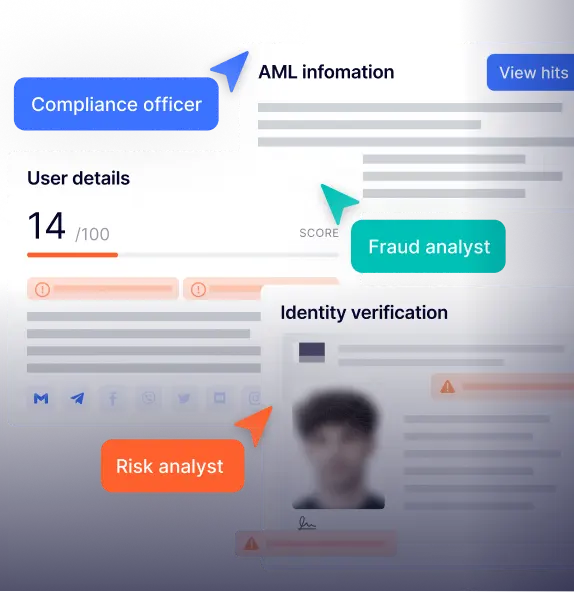
SEON gives fintechs fraud intelligence and decisioning across the customer journey, whether the goal is a charter, a sponsor renewal or growth into a new market. Digital footprint, device, identity and behavioral signals stop suspicious signups and synthetic identities before KYC without slowing genuine customers; the same signals catch account takeover, multi-accounting and transaction fraud once the account is live, and risk teams can adjust rules as products and markets change, with an explainable reason and audit trail behind every decision. The data also feeds the risk models fintechs own and manage, with 1,100+ signals that check each customer from independent angles, such as an email address’s age, whether a phone number was recently ported or whether a device is running an emulator. A fraudster can fake a name or a document, but making all of those signals agree is much harder. Nubank, one of the largest digital banks in Latin America, uses SEON and received conditional approval for a US national bank charter in January.
Build the Bank Before You Need the License
The charter boom has inverted the old risk. For a decade, the danger was applying and being refused; now it is being approved and discovering what the sponsor bank had been doing all along. The fintechs who come through well will be the ones who built a bank’s fraud and risk program before they needed a bank’s license, and the ones who stay with a sponsor by choice will have done the same work for a different reason.
Scale the Business, Not the Fraud Exposure
Examiners and sponsor banks ask the same thing: can you prove your fraud controls work? See what 1,100+ real-time signals reveal across your customer journey, with the audit trail to back it up.
FAQ
Why do fintechs want a bank charter?
A charter gives a fintech direct control over product launches, merchant approvals, risk appetite and growth, all of which otherwise depend on a sponsor bank’s approval. It also lets the fintech hold deposits, lend on its own balance sheet and keep the margin a sponsor would take.
Should a fintech apply for a charter, buy a bank or stay with a sponsor?
Stay with a sponsor until the company has scale, steady profitability and a constraint the partnership can’t resolve. Applying suits fintechs with a clear product scope and the capital to match; buying a bank trades the application for an existing institution’s examiners and systems. All three depend on fraud and risk controls strong enough to satisfy a regulator or a partner.
How long does it take a fintech to get a bank charter in 2026?
The OCC now decides most applications in about 120 days, with conditional approvals for Nubank, Bridge and Upstart landing close to the mark. Final approval, capital raising and opening typically add six to twelve months, and the FDIC runs a two-phase process with up to a year between contingent and final authorization.
How much capital does a fintech need for a bank charter?
Requirements are set case by case. Revolut’s conditional approval requires $95 million in paid-in capital with a 10% Tier 1 leverage ratio for three years, while Mercury was asked for $300 million. Smaller community banks have opened with $30 to $35 million in capital.
What is the difference between a national trust charter and a full bank charter?
A national trust charter permits custodial and fiduciary activities, such as stablecoin reserve management, without accepting deposits or making loans, which is why Coinbase, Circle and Stripe’s Bridge chose it. A full national bank charter allows deposits and lending and carries heavier capital, liquidity, compliance and reporting obligations.
What fraud and compliance requirements come with a bank charter?
A chartered fintech owns its fraud losses and controls across onboarding, login and transactions, plus the full financial crime program of due diligence, screening, transaction monitoring and SAR filing, under ongoing examination. Sponsor banks used to carry these obligations; after a charter, the fintech is examined on them directly, and the fraud threats facing digital banks become its own problem.