
Device Intelligence Solution
Expose the Risk Behind Every Device
SEON’s proprietary device signals verify device integrity, identify returning devices and uncover shared fraud infrastructure. From remote access detection to full-session monitoring, every signal feeds directly into one unified decisioning engine.
Trusted by the World’s Most Ambitious Companies











Five Layers of Device Intelligence, One Integration
Catch the fraud your current checks miss with custom rules built on hundreds of device signals
True Device ID
Recognize a returning device with 99.9% accuracy, even after factory resets, reinstalls and incognito mode. Layered device, browser and cookie hashes give you the right precision for every decision.
Device Integrity
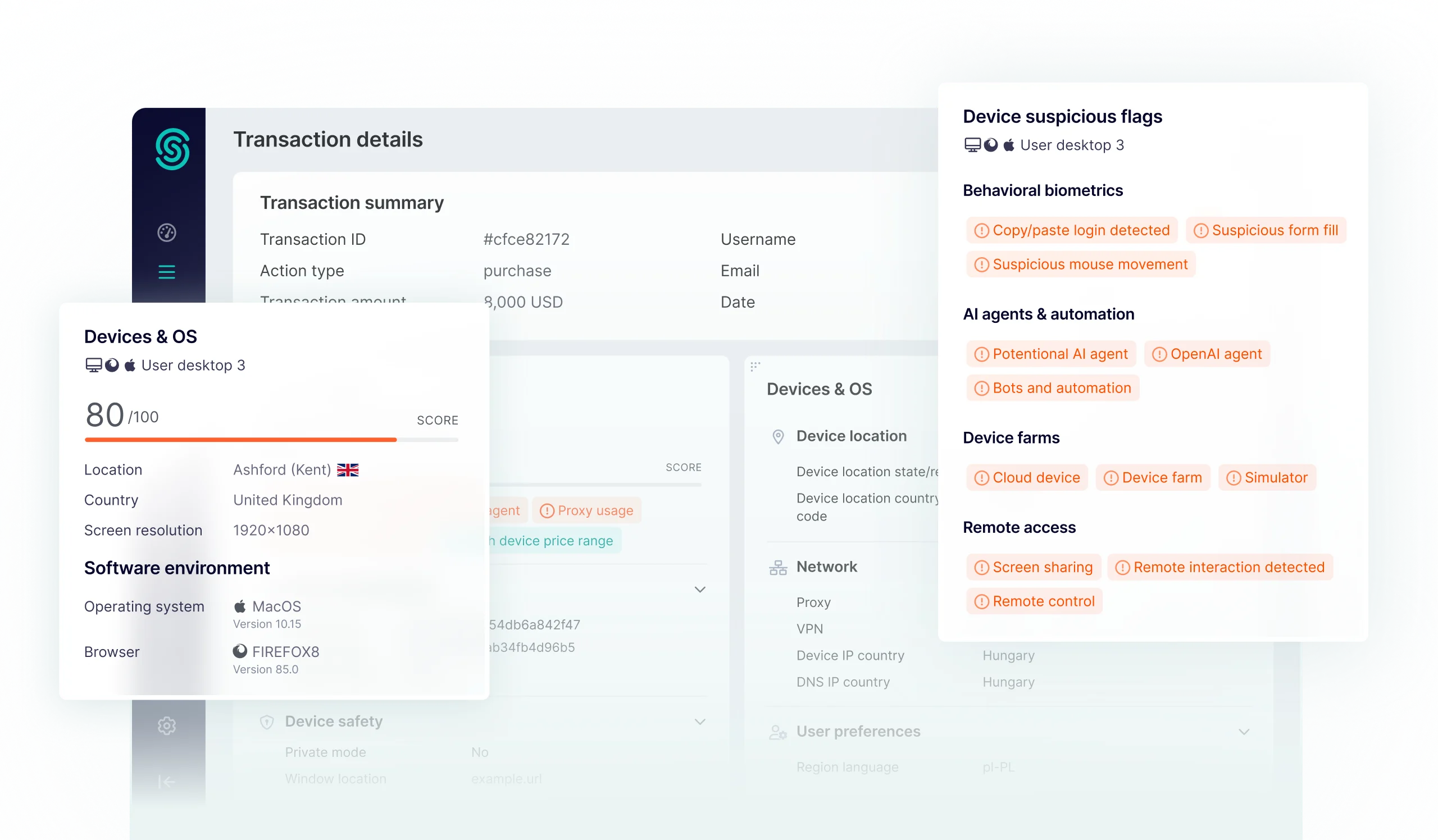
Detect emulators, virtual machines and cloud devices in real time, before one fraudster can pose as a thousand users. Sensor and hardware signals, from USB debugging to charging patterns, expose device farms that individual checks would pass.
AI Agent & Bot Detection
Stop AI agents that browse, fill forms and check out without a human behind them. SEON returns named flags for OpenAI, Devin, Manus and Opera Neon agents, and catches undeclared automation through spoofing detection and behavioral signals.
Behavioral Biometrics & Session Monitoring
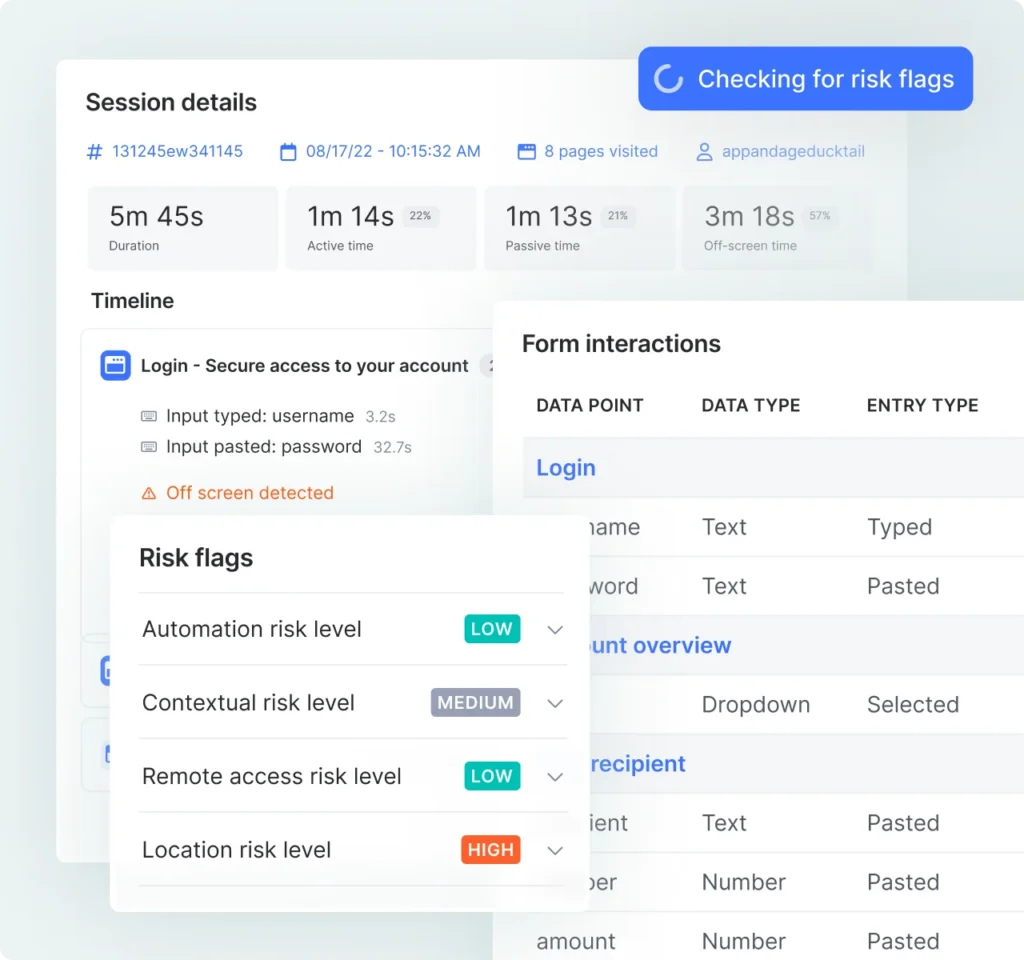
Verify the human behind every action by how they type, tap and fill forms. SEON monitors the full session, flagging remote access, active-call coaching and takeovers where credentials pass but the person doesn’t match.
Network Intelligence
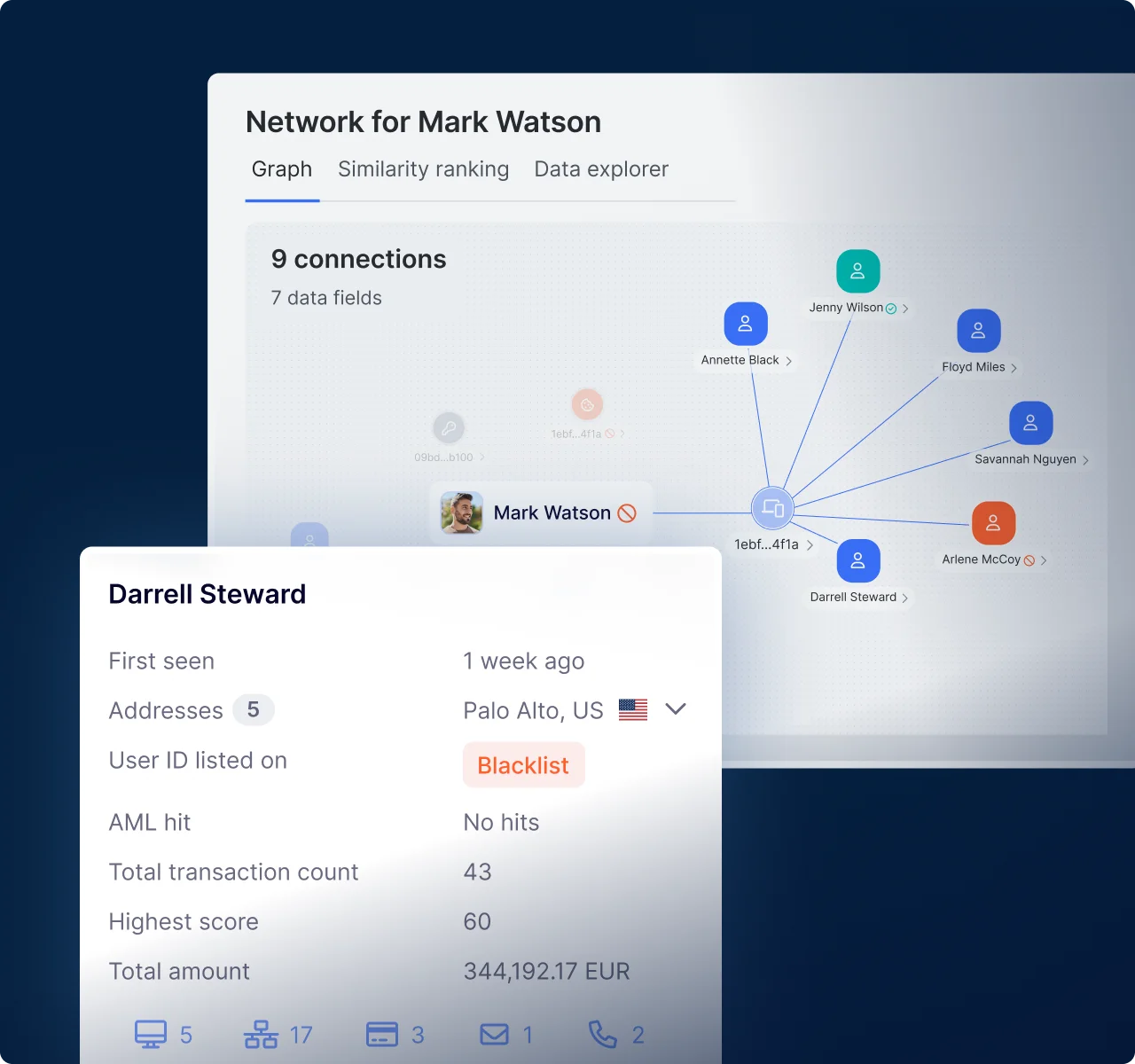
Determine the true IP behind proxies and VPNs, and cross-check GPS, IP and WebRTC data to detect location spoofing. Shared Wi-Fi, carrier and spoofing hash signals link devices, surfacing fraud rings even when every device looks clean.
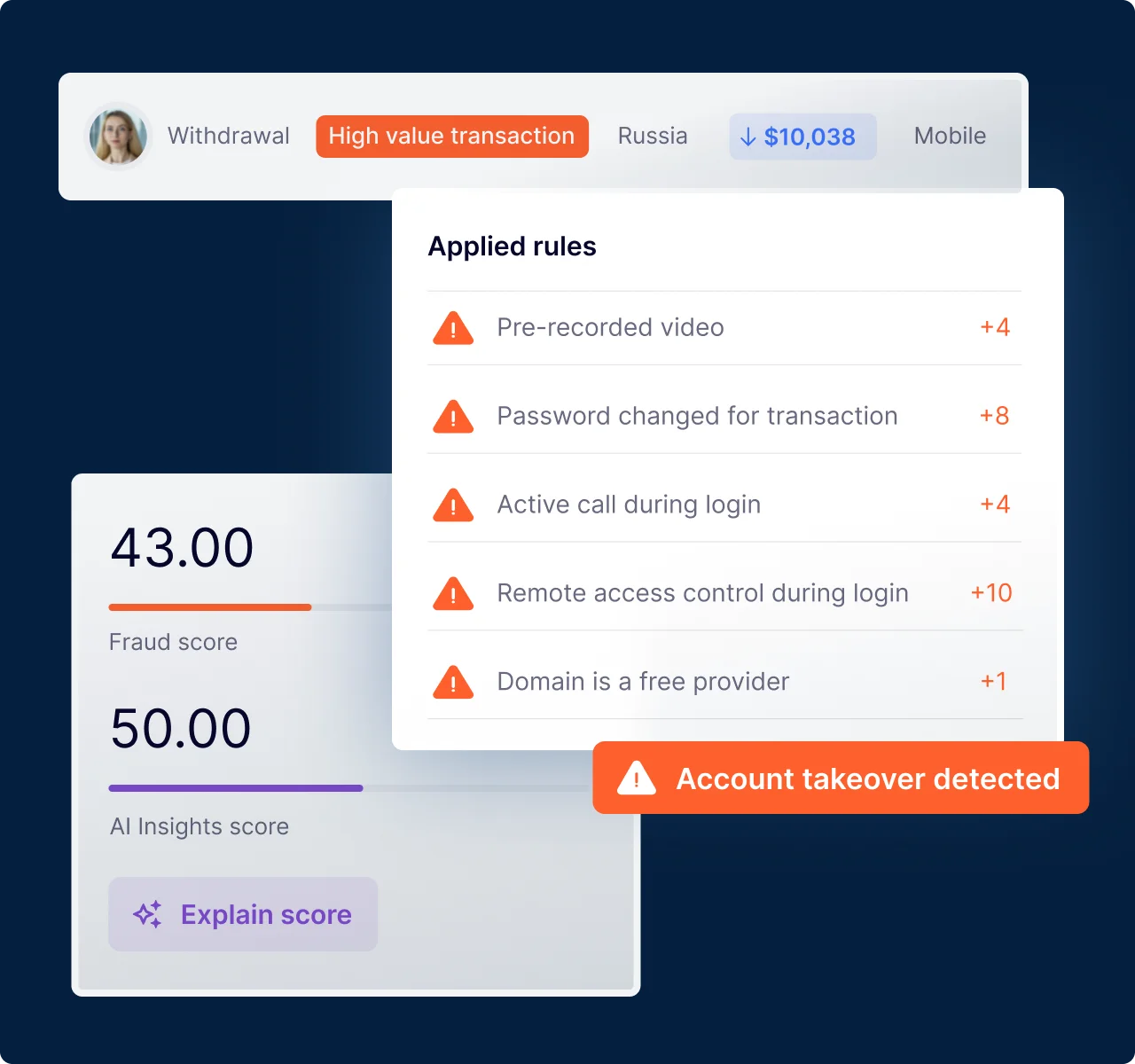
Built for the Fraud You Can’t See Yet
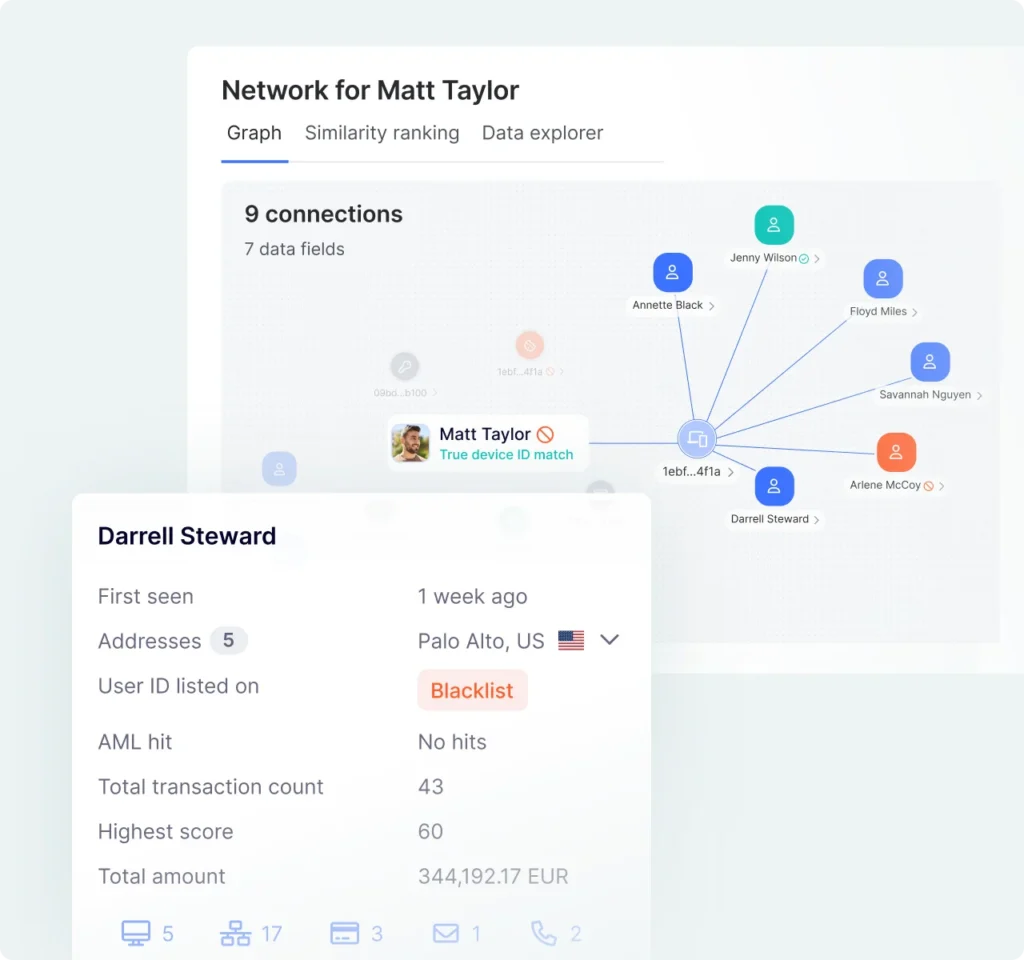
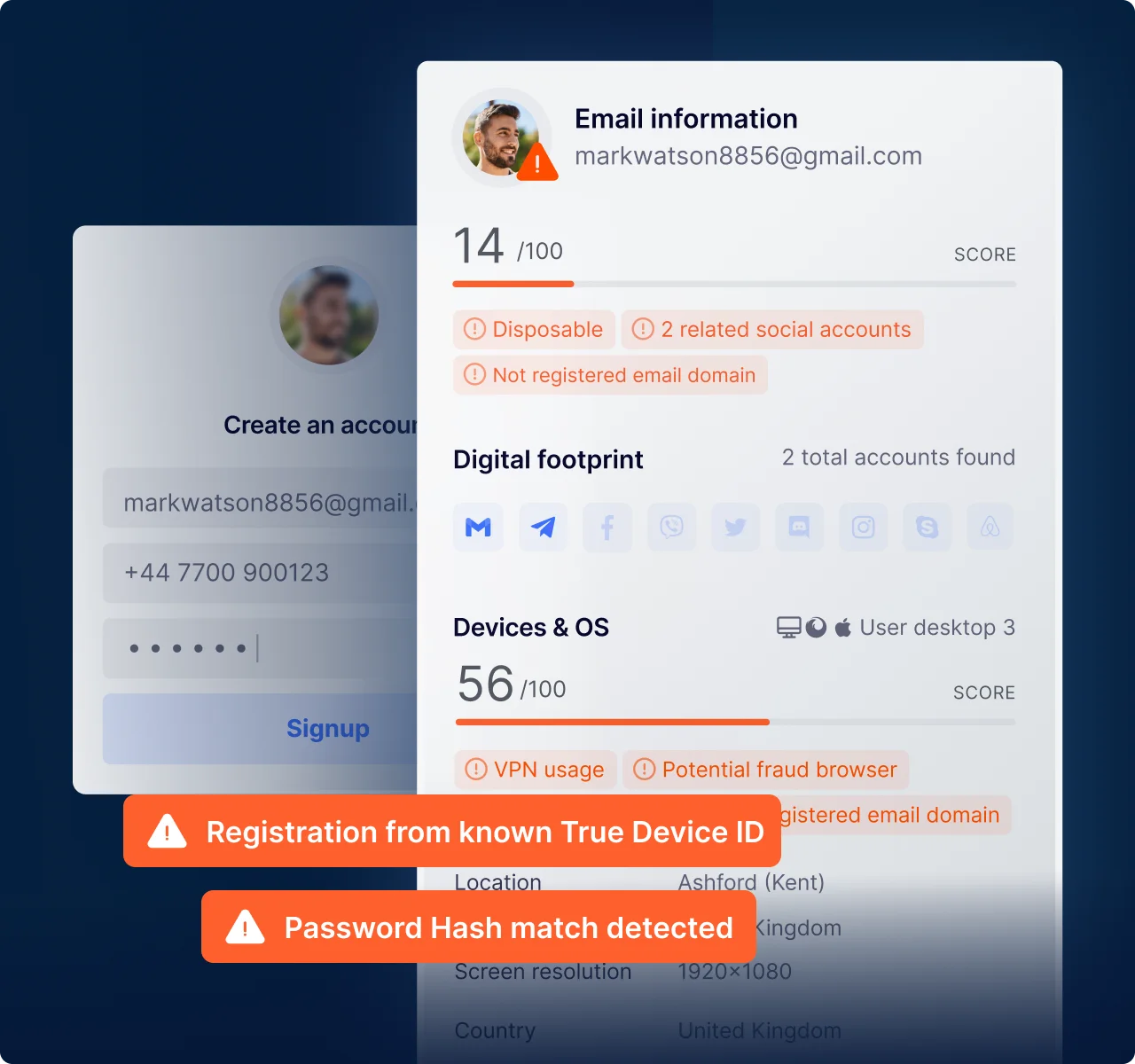
Uncover Fraud Rings Hiding Behind Clean Devices
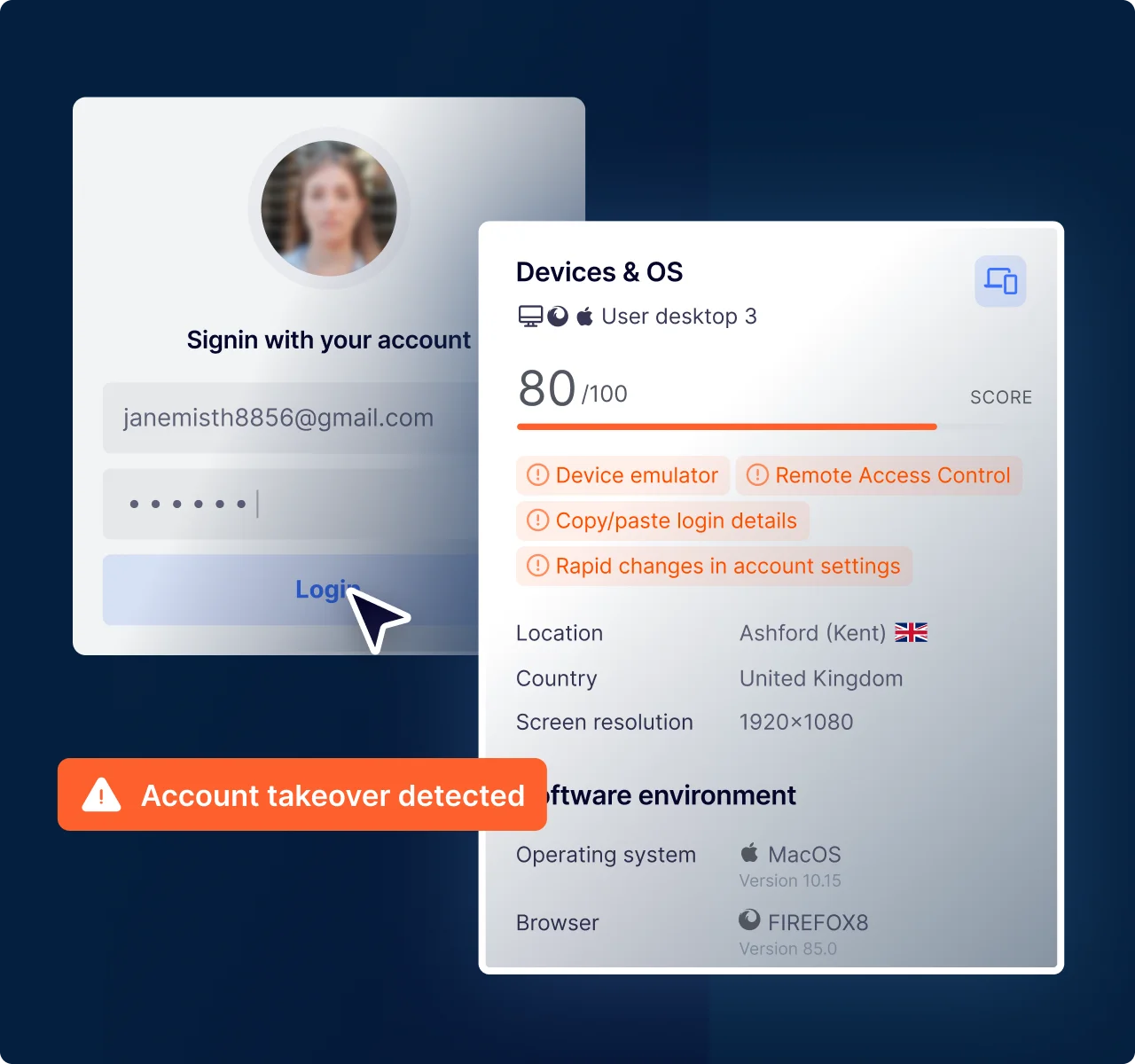
Monitor the Full Session, Not Just the Login
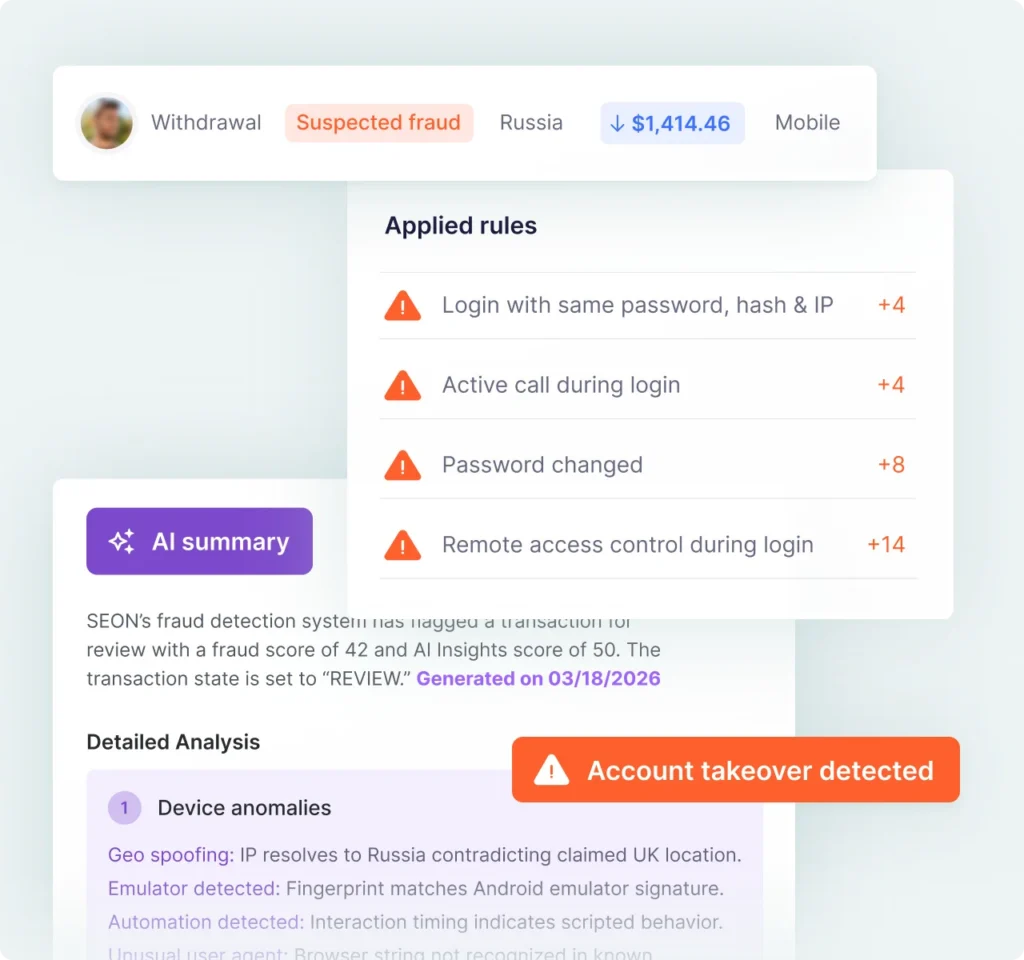
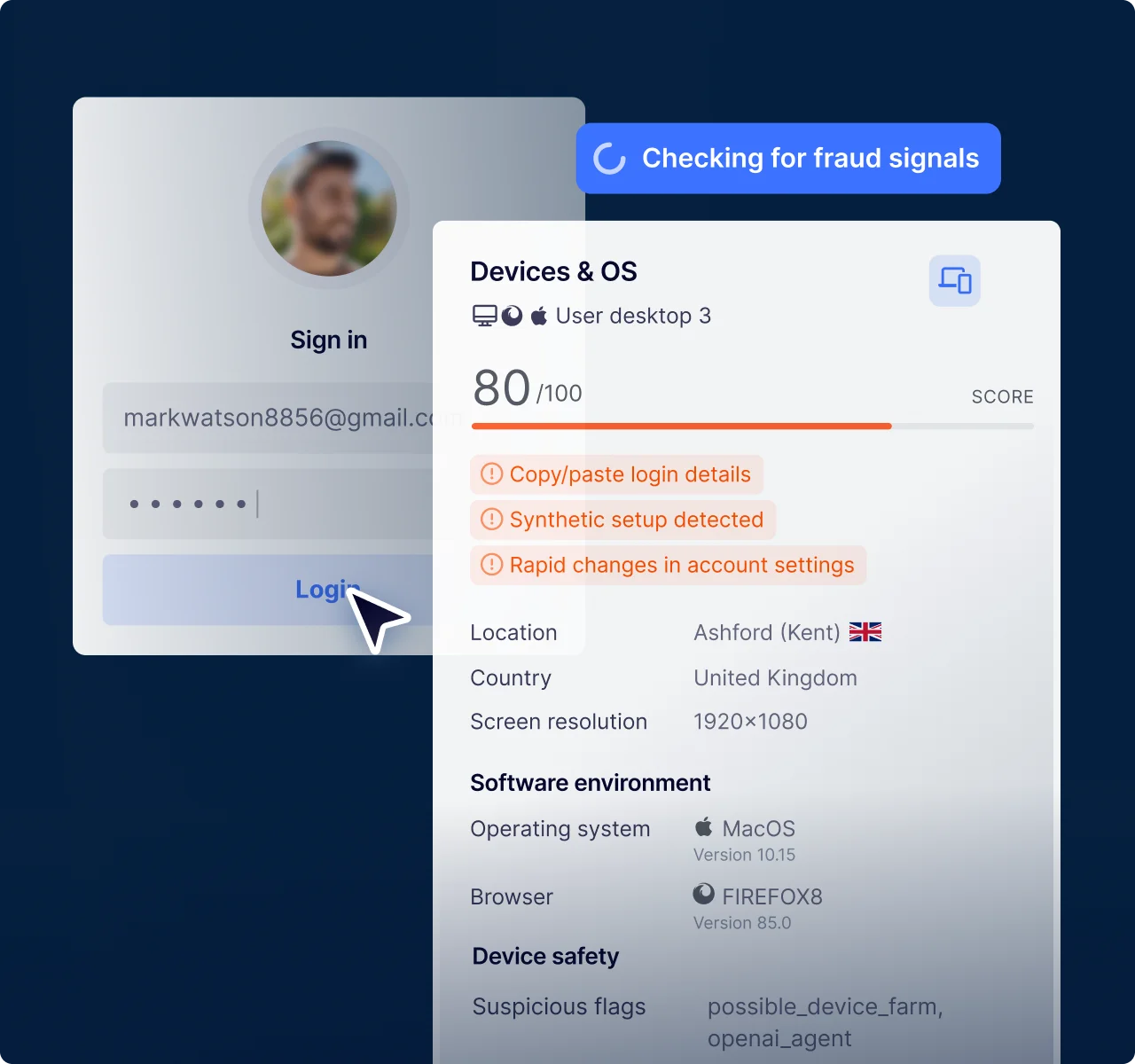
Explain Every Decision With Full Transparency
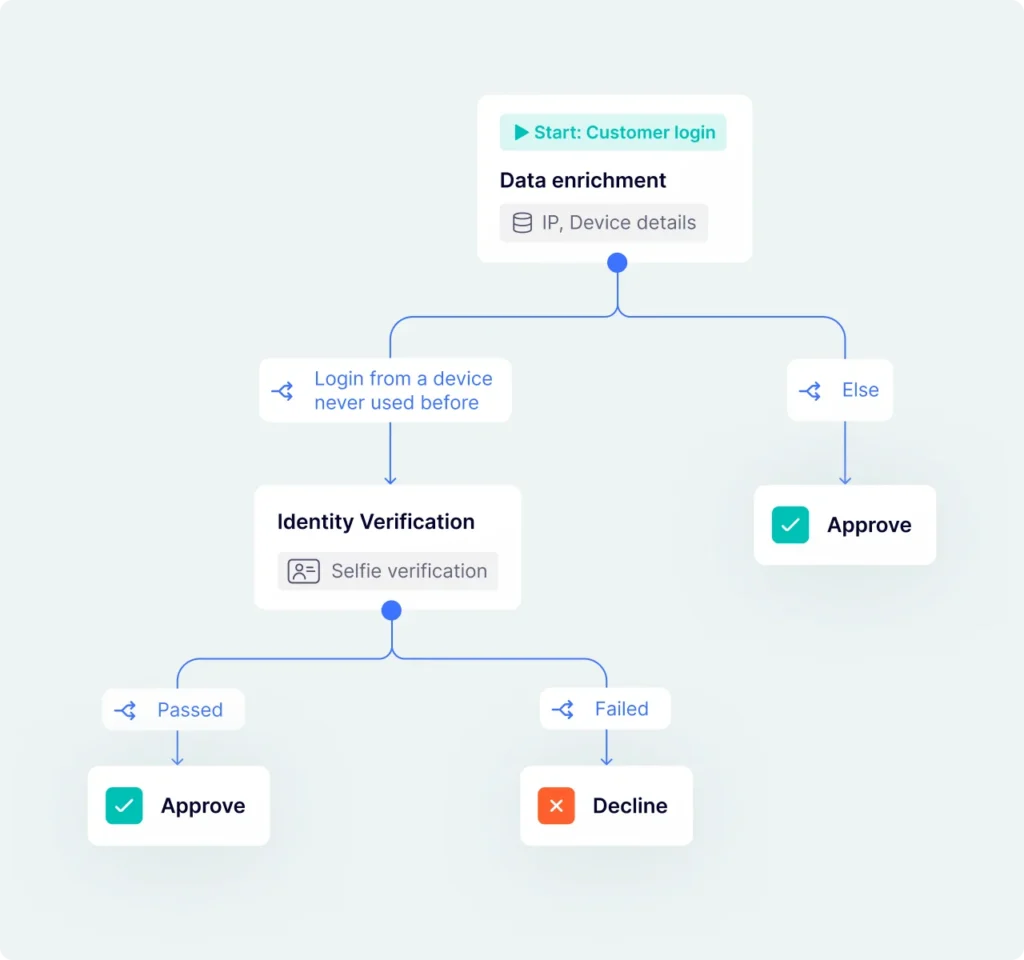
Run Every Signal Through One Decisioning Engine
Discover How Companies Win

“SEON’s device intelligence immediately showed strong results. When you go to our checkout and press “buy,” SEON gets the device data, scans it and scores it. I also realized it could help with takeovers against fraud rings who have been trying to steal our customer accounts for years.”

Daniel Martinez
Head of Operations, Rebtel

“We rely on device intelligence to filter out junk users. We immediately saved about 6% of costs on our automated KYC checks.”

Sergey Bogdanov
Chief Risk Officer, Mokka
Learn More About Device Intelligence
-
Learn how device intelligence detects and prevents fraud using advanced data and behavioral insights.
-
How VPNs are detected, and what VPN use might mean.
-
Have you ever signed up for a service with different accounts? You might have, without noticing, broken their terms and…
-
Learn how to detect and prevent account takeover fraud using advanced tools like device fingerprinting and behavior analysis.






Choose How to Integrate with SEON
The choice is up to you: integrate directly with SEON’s APIs or through the AWS Marketplace.

The #1 AI Platform for Fraud Prevention & AML Compliance
With over 380 reviews, SEON is the market leader and G2’s best fraud prevention platform.
FAQ
What is a device intelligence solution?
A device intelligence solution collects and analyzes data from user devices to identify fraud risk. It examines hardware attributes, software configurations, network characteristics and behavioral patterns to create persistent device profiles, detect spoofing attempts and link suspicious activity across accounts.
Can a device intelligence solution detect mobile app fraud?
Yes. Native SDKs for iOS and Android capture device-specific attributes, including hardware identifiers, OS configurations, installed apps and behavioral patterns. Mobile-specific fraud indicators, such as app cloning and rooted devices, are flagged automatically.
What happens when fraudsters attempt to spoof device fingerprints?
Spoofing attempts often create detectable inconsistencies. SEON identifies mismatches between reported attributes and actual device behavior, flagging attempts to manipulate fingerprints or emulate different device types.
Can device intelligence detect AI agents and autonomous browsers?
Yes. SEON returns named flags for specific agent frameworks including OpenAI Operator, Devin, Manus and Opera Neon, plus generic agent, headless browser and scripted interaction detection. Since an undeclared agent will not identify itself, SEON pairs them with behavioral biometrics and spoofing flags, so automation is caught by how the session behaves, not only by what it declares.
What is the difference between device fingerprinting and device intelligence?
Device fingerprinting produces an identifier. Device intelligence interprets it. Fingerprinting tells you a device has returned. Device intelligence tells you whether the device is genuine, whether it is virtualized or remotely controlled, whether a human is driving it and how it connects to other accounts on your platform
Can device intelligence detect device farms and emulators?
Yes, through three complementary checks. possible_cloud_device reads hardware-level indicators of virtualized Android environments. possible_device_farm flags behavioral and environmental signals of coordinated farm operations. potential_simulator catches emulated environments via integrity checks. SEON tracks real-device cloud farms, remotely controlled physical handsets that produce no emulator signals and need behavioral and network detection.
Take the First Step Toward Transformative Fraud Prevention
“SEON significantly enhanced our fraud prevention efficiency, freeing up time and resources for better policies, procedures, and rules.”
Chief Compliance Officer, Soft2Bet
Trusted by 5,000+ global organizations:


Speak With a Risk Expert
This form may not be visible due to adblockers, or JavaScript not being enabled.
Just like you, we hate spam. We won’t call you and we may only send you relevant emails, which you can opt-out of at any time. By submitting this form, you agree to our Terms Of Service and acknowledge that you have read and accept our Privacy Policy.