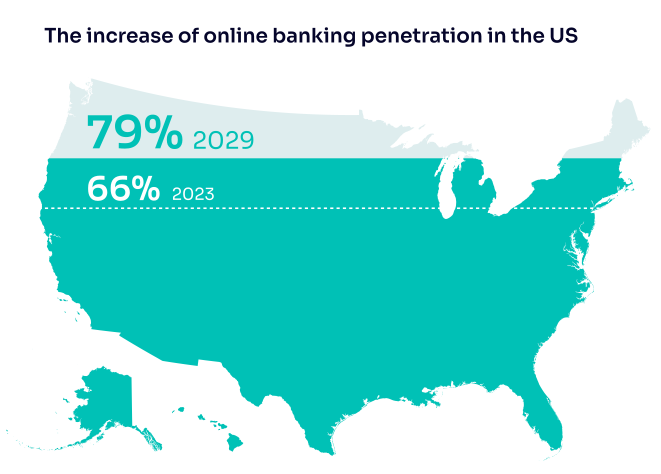
The digital banking revolution has transformed how financial institutions engage with customers — but convenience creates risk. Online banking penetration in the US reached 66% in 2023 and is expected to exceed 79% by 2029, meaning the attack surface for fraud is growing just as fast.
For fraud management teams the pressure is constant: onboard customers quickly, stay compliant and keep fraudsters out.
This guide will explore how digital banks can reduce onboarding risks without compromising efficiency. We’ll examine the unique challenges posed by online account creation, identify fraud detection software to mitigate risks and highlight the role of advanced technology in securing the onboarding process.
Critical Challenges in Digital Onboarding
Fraudsters now employ sophisticated tactics like synthetic identities, using stolen credentials and fabricated documents to create accounts. These bad actors often operate multiple accounts simultaneously, exploiting digital platforms that lack stringent security measures.
Yet because 63% of customers abandon onboarding due to friction or complexity, banks can’t rely on added security steps alone: they must identify these bad actors without slowing down legitimate users.
Key Risks Addressed in This Guide:
- Identifying fraudsters and bad actors: Using digital profiles to block those exploiting digital platforms.
- Preventing account takeovers (ATO): Mitigating credential-stuffing attacks and unauthorized transactions.
- High onboarding abandonment rates: Addressing the €6.43 billion annual cost of poor onboarding experiences.
Strategic Solutions for Reducing Onboarding Risk
Reducing onboarding risks requires a multifaceted approach that integrates advanced technology with intelligent processes. By AI and machine learning and automation, digital banks can streamline their onboarding processes while minimizing fraud and operational costs.
Pre-KYC Checks: Screening Out Fraud Early
Pre-KYC checks are critical for identifying bad actors before they reach resource-intensive verification stages. By implementing these early screenings, digital banks filter out suspicious users and ensure only legitimate applicants advance to costly KYC verification.
Digital Footprint Analysis for a Complete Digital Picture
Basic identity checks alone can’t reveal whether a user is who they claim to be — banks need contextual signals. Digital footprint analysis examines diverse sources such as IP addresses, device fingerprints and social media activity to create comprehensive digital profiles for more effective risk assessment.
Automated Risk Scoring, Machine Learning and AI
Automated systems assign fraud scores in real time based on digital and behavioral signals. These technologies continuously learn from new data, while AI and machine learning identify subtle patterns and emerging fraud tactics that traditional manual reviews often overlook.
What is Inside the Full Guide?
Download the complete guide to explore the technologies and intelligent processes shaping the future of digital banking:
- Device fingerprinting: Detects proxies, emulators and spoofed environments in real time, flagging bad actors who mask their identity before they get through the door.
- Digital footprint analysis: Cross-references social media presence, browser data and behavioral signals to build a fuller picture of who is actually on the other side of the screen.
- Machine learning and AI: Continuously adapts to new fraud tactics, surfacing subtle patterns and emerging threats that static rules and manual reviews miss.
- Continuous monitoring: Tracks behavioral shifts across the customer lifecycle, catching threats that slip through at signup before they cause damage.
You might also be interested in: