The 2026 FIFA World Cup flooded sportsbooks with millions of new accounts, and their fraud systems couldn’t tell which ones were real. The warning came before the first whistle. In a SEON survey ahead of the tournament, nearly half of American bettors said they didn’t trust betting platforms to protect their data, yet they planned to bet anyway. And they did, shattering every record. One major operator called it the equivalent of 10 Super Bowls.
For most of those bettors, the payout wasn’t the point. The wager was the price of admission to the biggest social event of the year. Hosted on American soil with a halftime show and full entertainment treatment, the tournament drew record viewership: 63 million Americans watched the final, nearly 2.5 times the 2022 audience.
Offices, friend groups and family group chats tried their luck. So did organized fraud rings. Together, they created a flood of new accounts that made it impossible for operators to distinguish fake from real. The question is why, and the answer isn’t just volume. Every peak event in sports betting creates the same flood, and the problem starts with how these accounts enter the system.
The First-Timer Flood
A legitimate first-time bettor and a synthetic account enter the system the same way. As both accounts are brand new, the signals that separate a real person from a fake one, such as account age, transaction history and consistent behavioral patterns, don’t exist yet.
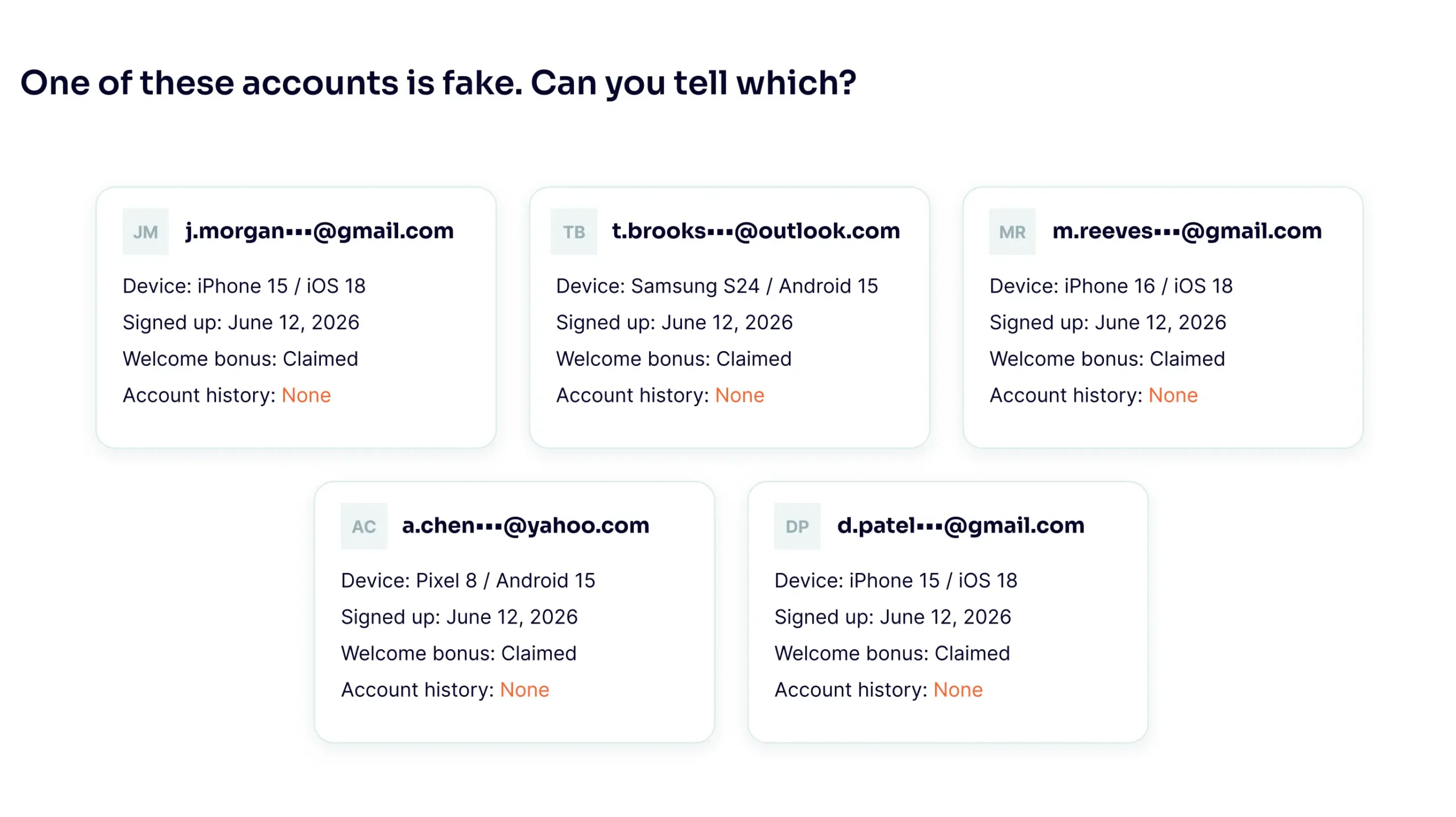
Five colleagues from the same corporate network sign up within an hour and claim the welcome offer. To a rule-based fraud system, that looks like coordinated multi-accounting. Scale it across 50 states on a World Cup match day, and the system flags legitimate customers at the same rate it flags fraud.
This leaves operators with two bad options. Flag aggressively and block real bettors during the window they spent months building a campaign budget to win. Or loosen the thresholds and let fraud through. The information that would tell the two apart hasn’t had time to accumulate.
Every Growth Spend is Fraud Fuel
Every promotion that pulls in real bettors also draws fraud rings to the same offer. In SEON’s World Cup survey, free bets were the top reason players tried a new platform. They are also the single biggest reason fraud rings open accounts.
The damage starts at signup, but the real cost hides further downstream. Some accounts that survive onboarding don’t disappear after collecting the welcome bonus. They build trust with consistent play and start qualifying for retention offers, loyalty milestones and VIP tier offers. These payouts are larger than welcome bonuses and trigger fewer checks as systems treat account age as a trust signal. A fraud ring that cleared registration months ago can harvest retention bonuses without raising any eyebrows.
Our 2026 Betting & Gaming Fraud Report shows where the money goes. Promotion and bonus abuse account for 23% of operator fraud losses. Loyalty abuse adds 18%. Account takeover contributes 27%. Combined, 68% of all operator fraud losses come from categories that feed off the promotional stack, from the welcome bonus at signup to retention payouts months later.
The Operation Wasn’t Built For This
More than a third of operators already run false-positive rates between 26% and 50% on an ordinary day. A tournament window makes it worse: every false positive is a real bettor blocked or a withdrawal delayed at the worst possible time. The system doesn’t simply slow down under peak load, but completely falls apart and loses the ability to tell what’s real.
Hiring doesn’t fix the unfolding crisis. The report found 47% of operators prioritized headcount in their 2026 fraud budgets, but you can’t recruit and train analysts for a four-week event. People scale linearly while tournament fraud scales in spikes. And every analyst hour spent manually reviewing an office pool that got flagged as multi-accounting is an hour gained for fraud to bleed more bonuses elsewhere.
What Needs to Change
The answer isn’t more people or tighter rules. Both assume the system works and needs help at the margins. What breaks during a peak event is the system itself.
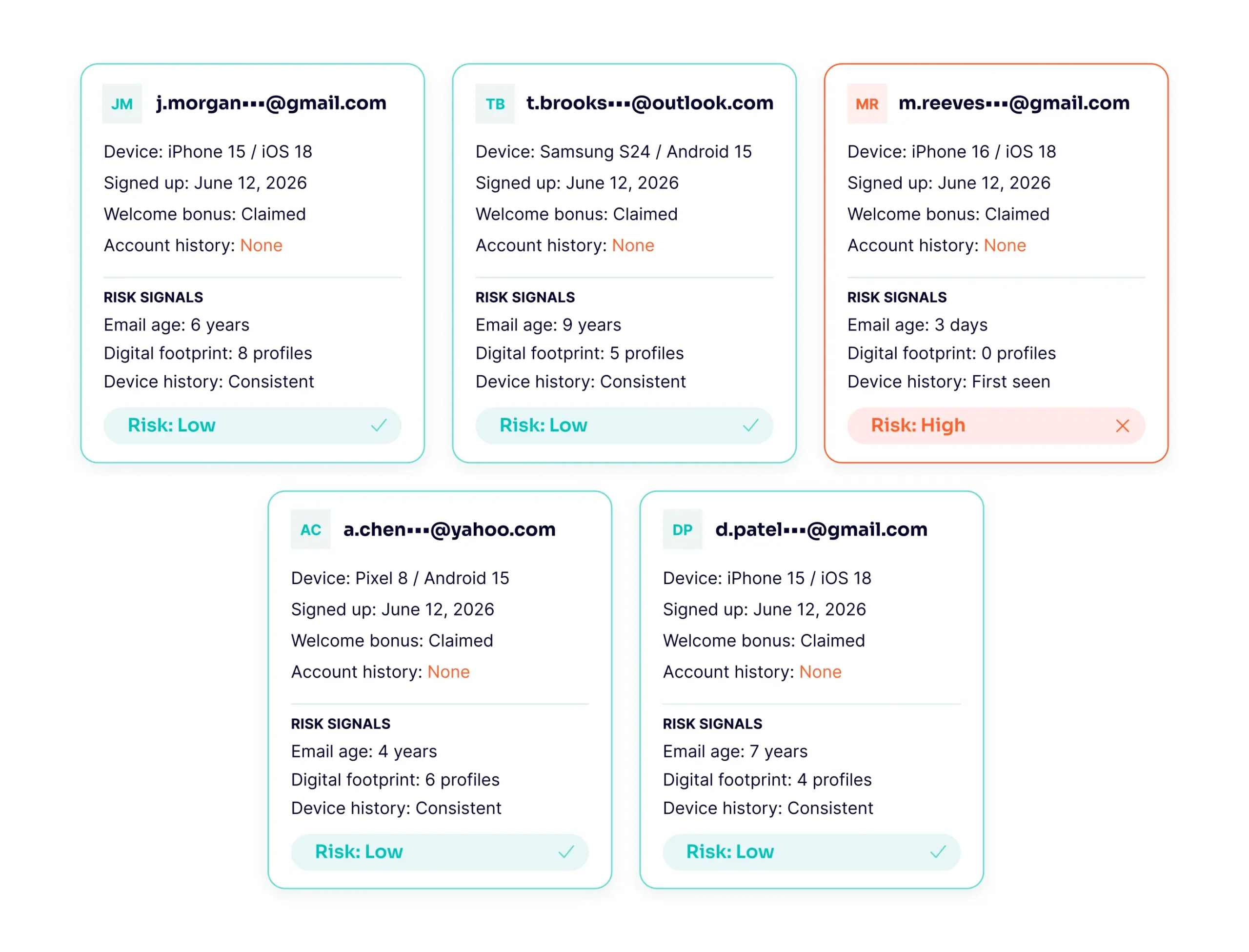
At the front door, pre-KYC risk signals surface fraud before an account reaches the verification queue or claims a bonus. Email age, device fingerprint, behavioral velocity and digital footprint analysis separate real from fake at the point of entry. Those five colleagues wouldn’t trigger an alarm, as their email histories and device patterns would set them apart from a fraud ring within seconds, without an analyst opening a case.
But signup is only half the problem. The accounts that slip through and age into retention eligibility require the same level of scrutiny, which requires a unified view across the player lifecycle. When KYC, fraud and AML sit on separate platforms (55% of operators call that data visibility “extremely or very challenging”), a flag at registration never surfaces when the same account later claims a loyalty bonus. A connected system tracks the thread from first deposit to every payout after it.
This Won’t Be the Last Flood
The World Cup may be over, but the problem it exposed isn’t. Every peak event in sports betting creates the same flood, and most operators aren’t equipped to sort through it. The cycle doesn’t pause between tournaments; it just starts again.
The next peak event won’t wait for operators to catch up. The Super Bowl, March Madness and the Champions League final compress the same cycle into a shorter window, and operators who haven’t changed their architecture will run the same playbook: more bonuses, more fraud, more manual review, thinner margins.
Knowing this cycle exists is one thing, but breaking it is another. On August 19, we’re hosting a live webinar with SBC on how operators stop this pattern without slowing growth.