For the past two years, organizations have raced to integrate generative models and machine learning capabilities into their environments, driven by the promise of unprecedented operational efficiency. Many B2B tech leaders now find themselves staring at sophisticated algorithms that process information without actively moving the needle on revenue or decision speed. The experimentation phase has expired, and the era of demanding predictable ROI has arrived.
The core problem stems from treating AI as a plug-and-play silver bullet rather than a complex infrastructural commitment. When organizations purchase capabilities without preparing their underlying systems, they trap themselves in costly integration bottlenecks. The numbers highlight the disconnect: while AI investment continues to surge globally, only 5% of businesses currently derive significant value from the technology, while 60% derive no value at all.
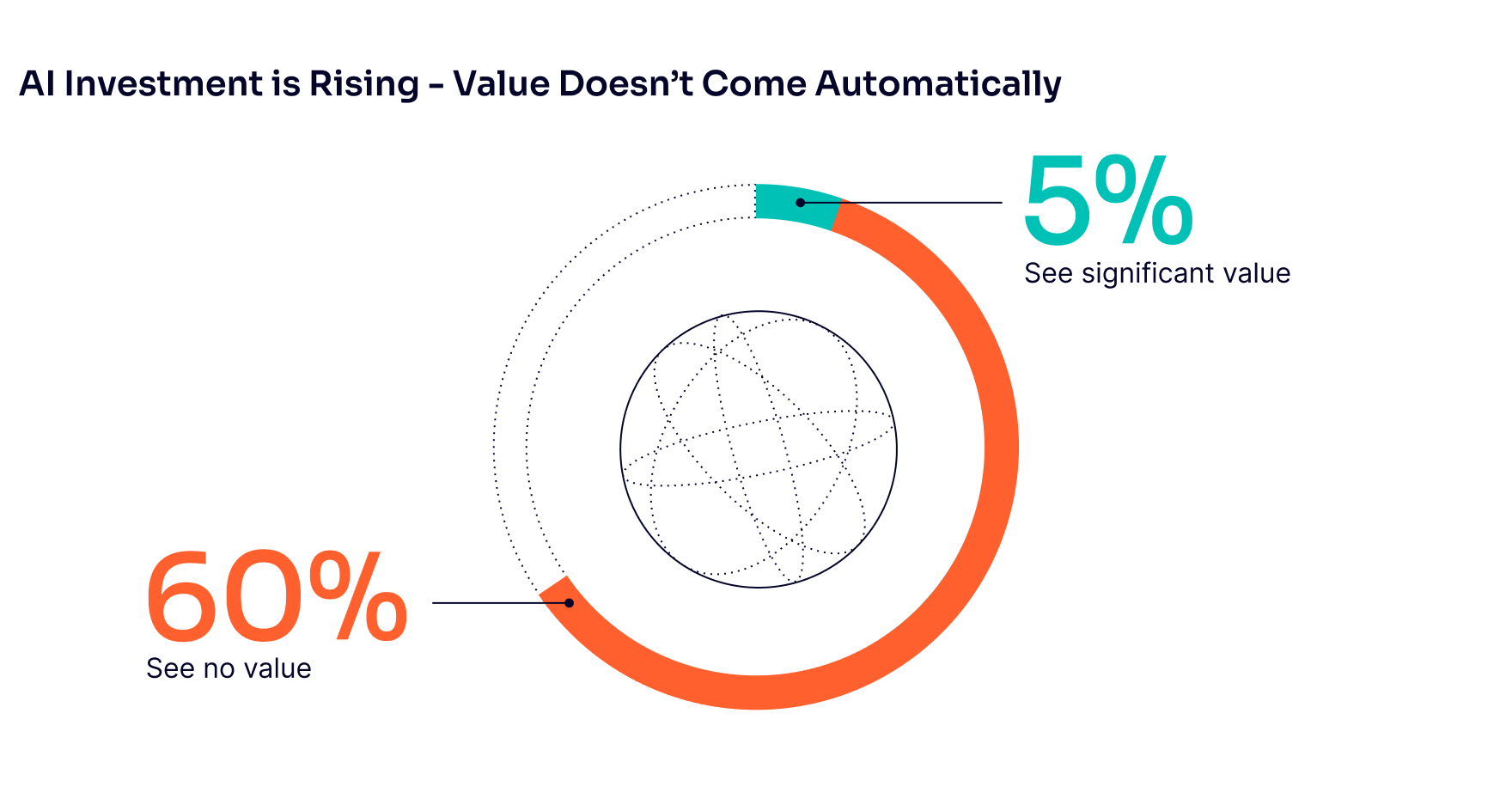
That gap between capital expenditure and execution exists because companies force advanced intelligence tools onto siloed, horizontal fraud intelligence architectures, expecting the software to independently bridge operational gaps.
Algorithms alone generate no ROI, data foundations and governance frameworks do. Extracting actual commercial value from AI requires leaders to enforce rigorous data hygiene, architect seamless workflows and mandate active human oversight. The irony is that the organizations treating AI as infrastructure — unglamorous, deliberate, foundational — are the ones getting the most out of it.
Data Infrastructure Trumps Algorithms
The most advanced machine learning model in the world will fail if the data feeding it is fragmented, outdated or inconsistent. Still, most enterprise AI procurement conversations center entirely on model capabilities — the algorithm’s sophistication, processing speed and feature set — while the underlying data architecture receives little to no scrutiny. Organizations essentially purchase a Formula 1 engine and bolt it onto a vehicle with a broken transmission.
In financial services, where data quality determines whether AI fraud detection flags a genuine threat or a false positive blocking a legitimate customer, that distinction carries direct commercial and compliance consequences. In fact, Gartner reports that only 43% of organizations consider their data ready for enterprise AI deployment. The remaining 57% run models against incomplete or ungoverned datasets and wonder why outputs are unreliable.
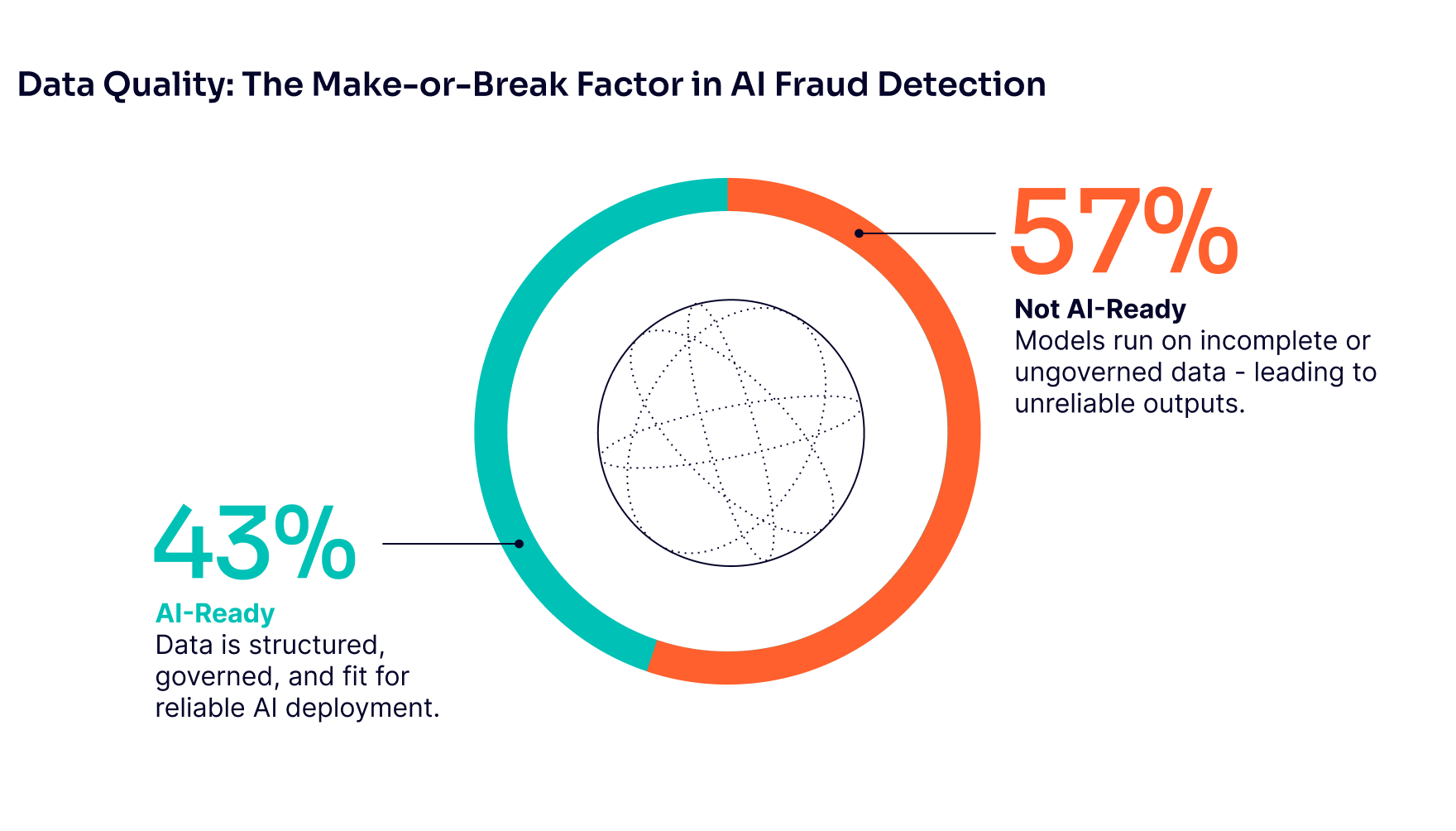
Ungoverned data produces ungoverned results — hallucinations, compliance violations and bias incidents trace directly back to foundational data quality failures. Enterprise spending on AI data readiness compounds at 155% annually, dramatically outpacing investment in the models themselves. Before evaluating which AI capabilities to procure, leaders must audit their data infrastructure. An algorithm is only as intelligent as the foundation beneath it.
The Workflow and Integration Gap
Deploying AI without redesigning the operational workflows around it produces friction rather than efficiency. The typical enterprise environment is a patchwork of legacy systems, third-party tools and data pipelines built over decades with zero consideration for the interoperability modern AI demands. Introducing an intelligence layer on top of that architecture forces teams to bridge gaps the technology was supposed to eliminate manually — a contradiction that erodes ROI at the point of deployment.
Fewer than a third of businesses have successfully connected their AI initiatives directly to measurable changes in profit and loss. The culprit, in most cases, is legacy architecture: fragmented data, incompatible tooling and brittle business logic that slows integration to a near standstill. Analysts have gone so far as to predict that declaring “tech debt bankruptcy” may become common, as companies are forced to dismantle legacy stack obligations entirely just to create room for functional AI deployment.
Successful adoption requires mapping the exact operational workflows the technology will enhance before a single model goes live. AI output must directly trigger automated actions or inform human decisions, without requiring a manual data transfer step. Every handoff between systems is a point of failure, and in high-velocity environments like payments or fraud operations, those failures compound quickly.
Governance and the Human Element
Full automation is a compelling sales pitch. As an operational reality inside regulated industries, it is a liability. As AI systems grow increasingly autonomous — executing decisions at machine speed across fraud detection, credit decisioning and compliance workflows — their risk profiles scale in direct proportion to their autonomy. The organizations absorbing the most damage are those treating human oversight as a temporary phase rather than a permanent operating requirement.
The 2025 AI governance advisory was unambiguous: enterprise AI controls must legally and operationally include explicit goal alignment, verifiable audit trails and manual override capabilities to mitigate the elevated risk levels associated with autonomous systems. Worth noting here — much of what the market currently labels AI is actually repackaged machine learning with a generative veneer. That distinction matters when organizations make procurement decisions and regulators begin demanding explainability.
Buying capability without understanding what actually sits under the hood is, in itself, a governance failure. In fraud detection specifically, a model that generates false positives without a human review layer does two things simultaneously: it blocks legitimate customers and creates compliance exposure. Neither outcome is acceptable at scale.
The human-in-the-loop framework deserves a permanent seat in AI governance architecture, equal in priority to model performance metrics and infrastructure planning. Leaders who embed human oversight into the design phase, rather than bolting it on after deployment, produce systems that are more defensible to regulators, more accurate over time and more trusted internally. Intelligence without accountability is a risk vector, and in 2026, regulators across the EU, UK and US are paying close attention.
Value Over Hype
The organizations winning with AI in 2026 are asking a fundamentally different question than their competitors. Rather than trying to use AI more, they are asking what specific business problems demand an algorithmic solution and whether our systems have the integrity to support it. That distinction separates companies compounding their ROI from those compounding their technical debt. Yes, AI is a force multiplier, but only for organizations that have already built something worth multiplying.
Fragmented tools create blind spots. SEON brings fraud detection, transaction monitoring and compliance workflows into a single view.
Speak with an expert