Companies



Industry
Retail
iGaming
Payments
Use Cases
Payment fraud
Bonus Abuse
Transaction Monitoring
Most risk and compliance teams are still treated as cost centers. The best operators know better. When fraud prevention works the way it should, it doesn’t just protect revenue; it enables growth, improves customer experience and builds the kind of trust that is itself a competitive advantage.
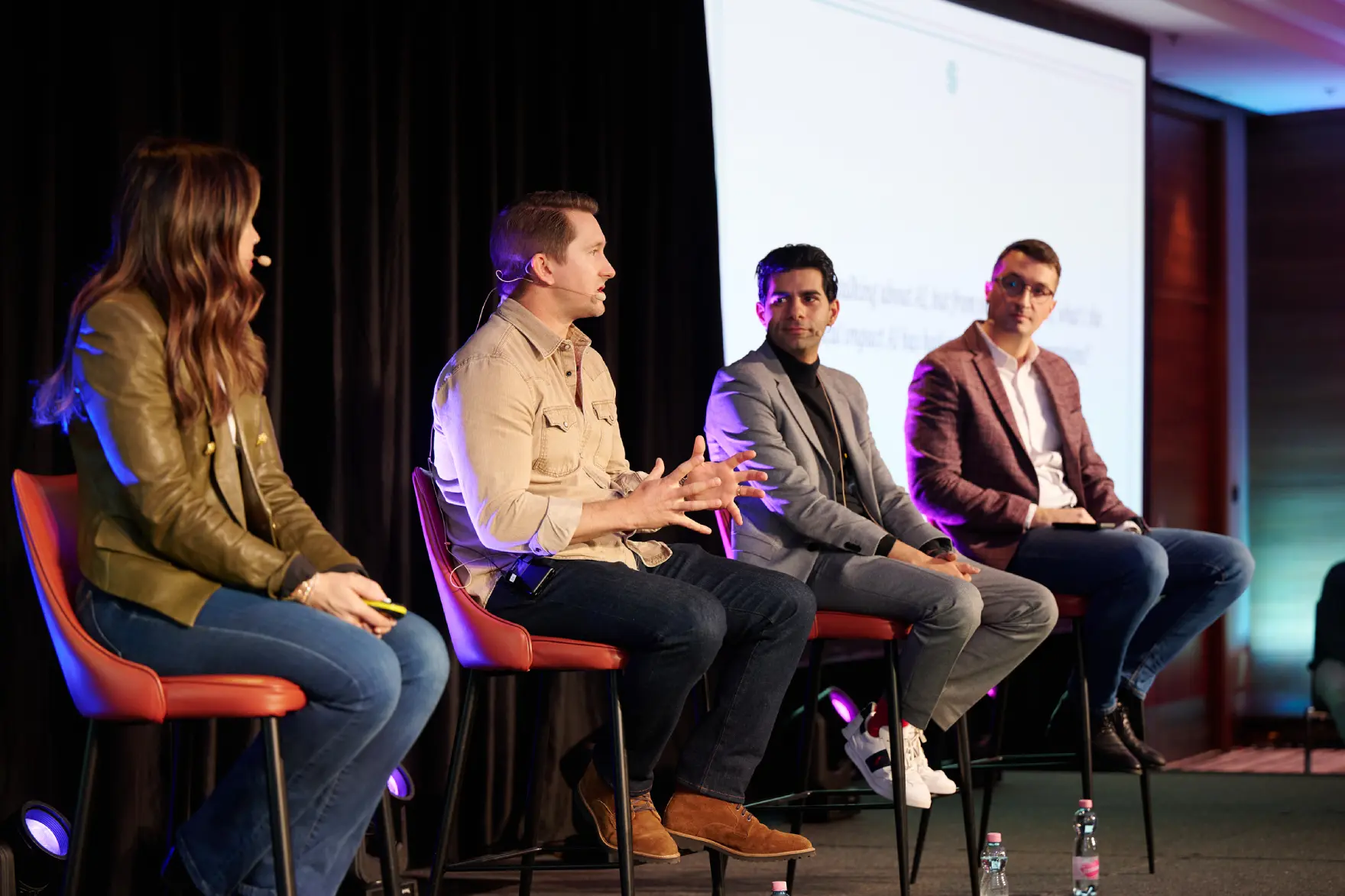
That gap between how fraud is perceived and how it actually functions was the thread running through a panel we hosted at our recent company kickoff. We sat down with Michael Draper, VP of Engineering and Technology at Tecovas, Filip Gvardijan, Head of Fraud Prevention at Superbet and Mostafa Hassanin, Group CISO/CSO at SMG Swiss Marketplace Group. These three leaders run fraud and risk operations at very different companies, at very different scales, in very different industries. What they shared was candid, specific and forward-looking.
Here is what we took away.
Fraud found them before they went looking for it
None of these teams went looking for a fraud problem. The problem found them.
Michael Draper had been at Tecovas for just a few months when his finance team flagged a retail fraud issue. Coming from a technology background and working for a retail brand that takes a deliberately tech-first approach, Michael ran an RFP, evaluated several competitors and quickly concluded that a black box solution was not going to work. Transparency in how decisions were made was non-negotiable.
Filip Gvardijan’s entry point was different. He joined Superbet in the middle of a significant bonus abuse incident in one of their jurisdictions. SEON was already in place but had not been fully configured. “What surprised me, and where I left with a very positive impression, was the ease of configurability. It was easy to adapt the system to a pattern we were seeing. We started seeing the effects immediately.”
Mostafa Hassanin leads a 14-person group security function at SMG (Swiss Marketplace Group), with engineering teams embedded in each vertical. His relationship with trust and safety (incuding. fraud detection and prevention) goes back further; he started using SEON at Ricardo, one of SMG’s brands. His priority from the start was data enrichment. “It was very important to have a data enrichment stage to collect as many signals as possible, so that we can employ that in any way, shape or form to catch fraud.”
Quiet is the goal
One of the more striking moments in the conversation came when Michael described his experience after implementation as refreshingly simple and hands-off. For an engineering leader with a full portfolio to manage, a fraud tool that simply works – without constant intervention – is not a small thing. “It has been very quiet on the SEON front on my side. And that’s good.”
Filip made a similar point in different terms. Superbet processes hundreds of millions of requests to SEON’s fraud API each month. “The amazing thing is there’s no drama. It’s boring. Nothing happens. In fraud, reliable and boring are elite.”
Speed is the defining challenge
When asked where they had seen the biggest shift over the past year, all three came back to the same word: speed.
“The shift is speed. It’s become really relentless. Cycles are no longer weeks, and we don’t have weeks to adapt. It’s now days or even hours with some promos.” He pointed to a recent announcement that an AI system had identified nearly 500 zero-day vulnerabilities in open-source code; the kind of discovery that, in the wrong hands, gets sold on the black market for six figures. “Fraud doesn’t innovate slowly. We can’t shift slowly either.”
Filip Gvardijan, Head of Fraud Prevention at Superbet
Mostafa’s team has seen a 30 percent increase in attacks attributable directly to AI; this is on top of the 20 to 30 percent year-on-year growth in cybersecurity threats that was already baked in. He described organized fraud groups operating with the structure and investment of a proper business, significant resources dedicated purely to becoming better at attacking. His conclusion was blunt: you cannot fight this with two or four fraud analysts. “AI versus AI – it has to be this way. Don’t bring a knife to a gunfight.”
Michael acknowledged that while Tecovas has been somewhat shielded from the most sophisticated threats, the team is bracing for what’s coming. “We haven’t seen it yet, but we will. And luckily, I believe we’re prepared because we have this product in place.”
What AI is actually doing in operations today
The panel got specific when the conversation turned to practical AI impact, and Filip pushed back on some of the hype. “Currently, AI is not about catching new fraud geniuses using novel patterns we haven’t seen before.” The real value he sees is in triage, summarization and investigation reports. The harder problem, he said, is connecting events and data sources into a single interface so analysts do not have to move between systems. He described a near-term future where an analyst can prompt a tool directly: “show me users who registered and withdrew within 30 minutes of placing a deposit, for the last seven days, across Romania and Brazil, and tell me what changed week over week. As volume increases, you need to focus on network level, infrastructure level and analytics.”
Mostafa described how his team already uses what he calls adaptive security, letting AI take decisions based on a risk range, with automated responses depending on the severity. Rather than locking an account and directing the customer to call support, the system gives users a path to recover the account themselves, stepping them back through verification. “I don’t want my experts doing repetitive work. I want them to make the judgment calls, and I want the AI to give them the information to do that.”
Michael’s AI focus was more internal. The implication for fraud tooling is clear to him: products that are not AI-forward, do not have accessible APIs and are not intuitive will fall behind fast. “If users could just go in and have a conversation with a tool that is scoped and specific to their data set, that is much easier than learning how to configure a product.”
A fraud ring, a police badge and the human stakes
The conversation then moved from the abstract. Mostafa described how his team identified a coordinated fraud ring and worked alongside law enforcement to bring the perpetrators to justice. The team received formal recognition for their work. “We call the analyst who worked on it Officer Ollie now.” He was not just telling a good story. He was making a point about why this work matters beyond the bottom line. “It’s social responsibility. It is important for society that we do this.”
What they would do differently
Asked to reflect on decisions they would repeat and those they would approach differently, each fraud leader gave a candid answer.
Filip said he would absolutely reinvest in clean, fast event data pipelines – the operational hygiene that makes everything else possible. What he would do differently is put more work into stress readiness: rehearsing what happens when something breaks, when false positives start hitting VIP customers, when stakeholders are pressing for answers. “No one cares about fraud systems when everything is working fine. As soon as something doesn’t work, everybody cares. It is a very high stress environment.”
Mostafa said he would integrate SEON differently. Because implementations happened brand by brand, each sits in a separate instance. As SMG grew, we looked for synergies, but the fragmentation became a constraint. “At that point, we had good information and we made a good decision. But that is what I would do differently.”
Michael’s reflection was more personal. He said he would have taken the problem not just as a technology workstream and focused on the business consequences. “Returns fraud and policy abuse can cripple your team. If you don’t have a chargeback solution, your accounting team has to go and run down chargebacks while trying to maintain operations.”
Conclusion
The throughline across all three was the same. The fraud problem is not getting simpler. The teams fighting it are getting more sophisticated. And the tools that will earn their trust are the ones that give their analysts better information, faster, with less noise, and get out of the way when they need to move.